The internet is often perceived as a permanent archive, a vast repository of information where nothing truly disappears. However, for those who monitor the secondary market for domain names, the reality is far more fluid and, at times, unsettling. When a website ceases to function—whether due to a business closure, a non-profit’s dissolution, or a personal project’s end—the domain name itself enters a high-stakes afterlife. In this space, the value of a URL is rarely determined by its name alone, but rather by the "ghost" of its former authority: the SEO metrics, the backlink profile, and the residual organic traffic it still commands from search engines like Google.
Industry expert Sean Markey recently returned from a brief hiatus to document the most intriguing domain sales from September, primarily sourced from major auction platforms NameJet and SnapNames. His findings offer a rare glimpse into the "rabbit holes" of the domain industry, revealing how expired URLs are being repurposed for everything from "Potemkin village" content sites to sophisticated international betting schemes and elaborate "EEAT" (Experience, Expertise, Authoritativeness, and Trustworthiness) theater.
The Rise and Fall of Eramuslim.com: A Lesson in Mismanaged Potential
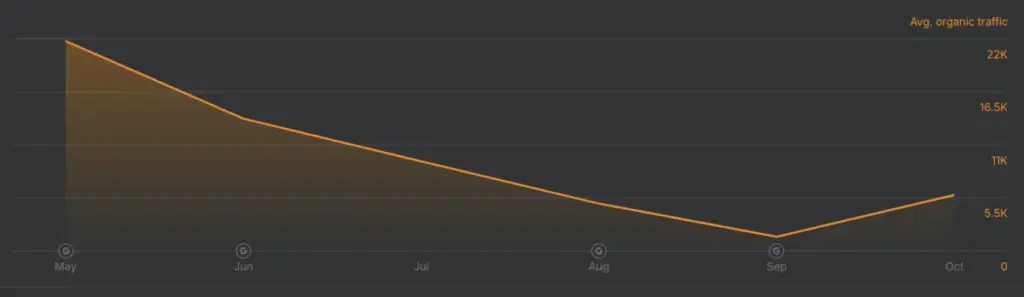
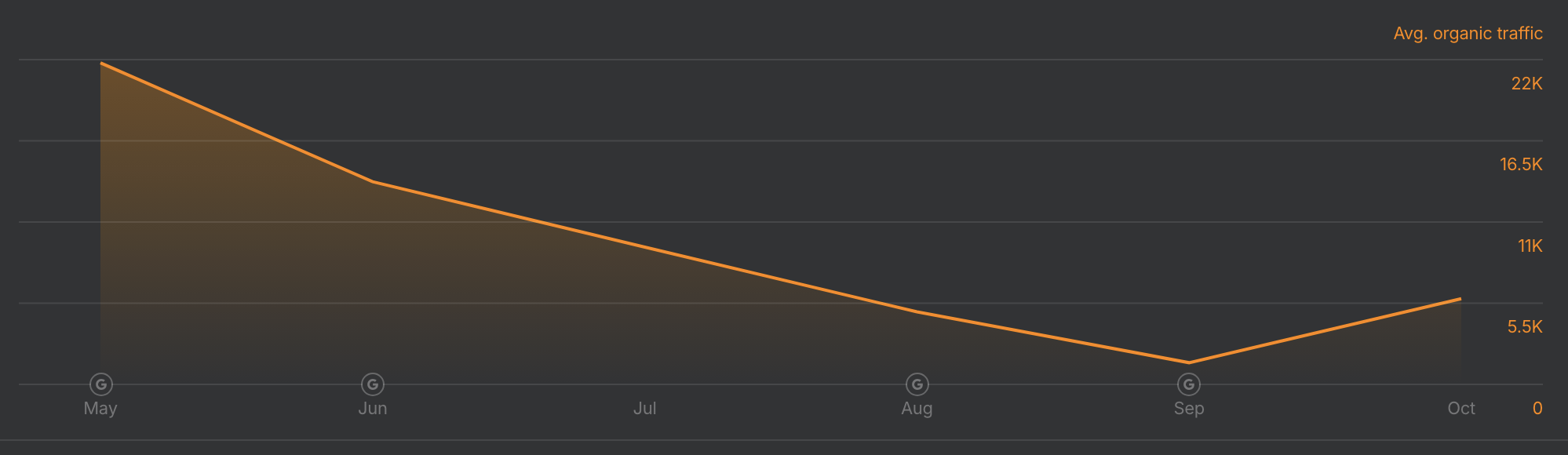
One of the most notable sales in the September cohort was Eramuslim.com, which fetched $3,215 at SnapNames. To the uninitiated, this might seem like a high price for a non-English site, but for an SEO professional, the value was clear. At the start of 2026, the site was attracting between 34,000 and 39,000 organic visits per month. Even as the domain went through the expiration process and "dropped," it maintained an estimated 7,000 monthly visits.
The buyer’s strategy was immediate and aggressive: they reconstructed a version of the original site to capture that residual traffic. This is a common, though ethically debated, tactic in the domain world. By making a new site look like the old one, owners hope to keep search engine crawlers and users from realizing the ownership has changed.
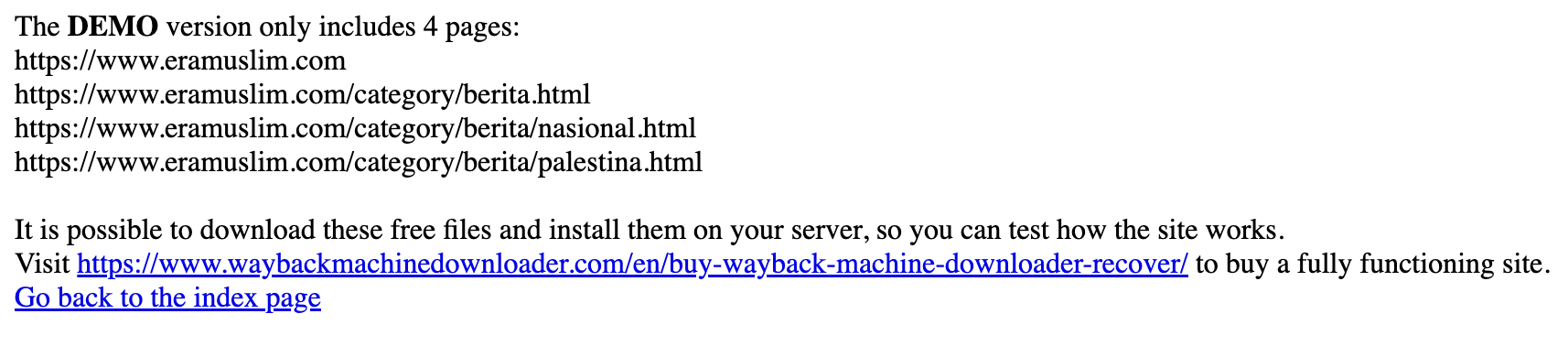
However, the case of Eramuslim.com serves as a cautionary tale. While the site’s traffic initially bounced back to over 5,000 visits, it soon began to plummet. Upon closer inspection, the reason became clear: the site was a "Potemkin village." While the homepage and navigation appeared functional, clicking on any specific article revealed a total lack of content. The buyer had spent over $3,000 on the domain but failed to invest the few hundred dollars necessary for a full site rebuild. As a result, the valuable organic traffic that made the domain worth its price is now evaporating. This highlights a critical reality in the secondary market: a domain’s past authority can only carry it so far if the new content—or lack thereof—fails to meet the basic requirements of a functional website.
From Public Service to Shadow Betting: The Curious Case of HRRJ.org
Perhaps the most jarring example of a domain’s "afterlife" is HRRJ.org. Formerly the official website for the Hampton Roads Regional Jail in Portsmouth, Virginia, the domain became available after the jail’s board voted to close the facility in 2023. Despite the physical jail no longer operating, its digital presence remained incredibly strong. The domain continues to rank as the number one result for "hampton roads regional jail inmate search" and holds a top-three position for the jail’s name itself.
However, the new owner of HRRJ.org is not interested in criminal justice. The domain was sold for $3,600 and was quickly integrated into a sophisticated international "cloaking" operation. While the site appears dead or inaccessible to most Western visitors, it has been repurposed to rank for Turkish betting keywords. Specifically, a subfolder on the site ranks number one in Turkey for "deneme bonusu çevrimsiz"—a term related to betting trial bonuses with no wagering requirements.
This is not an isolated incident. Markey identified a cluster of eight domains bought in September for a combined $28,011, including a neurology practice (neneuro.com), several restaurants (mofongorest.com, antoniosonline.com), a pub (thearkpubandeatery.com), and a gym (alexfitness-sf.com). All of these domains now share the same Cloudflare nameservers and employ a tactic known as cloaking.
Cloaking is a deceptive technique where the content presented to the search engine spider is different from that presented to the user’s browser. In this instance, Google sees a high-ranking Turkish betting page, which allows the site to dominate search results. Meanwhile, regular visitors are often blocked, and other crawlers might be redirected to the websites of defunct small businesses. This strategy is designed to shield the site from competitors or users who might file spam reports, effectively allowing the owners to "churn and burn" the domain’s remaining authority for maximum profit before the search engines eventually catch on and de-index the site.
The "Czar of Noir" and the Bitcoin Foundation: Hijacking Authority
The third significant case study involves EddieMuller.com, which sold for $2,301. Eddie Muller is a well-known figure in the film world, often referred to as the "Czar of Noir." He is the host of Noir Alley on Turner Classic Movies and the founder of the Film Noir Foundation. His personal domain was a prime piece of digital real estate, ranking number one in the U.S. for "noir films."
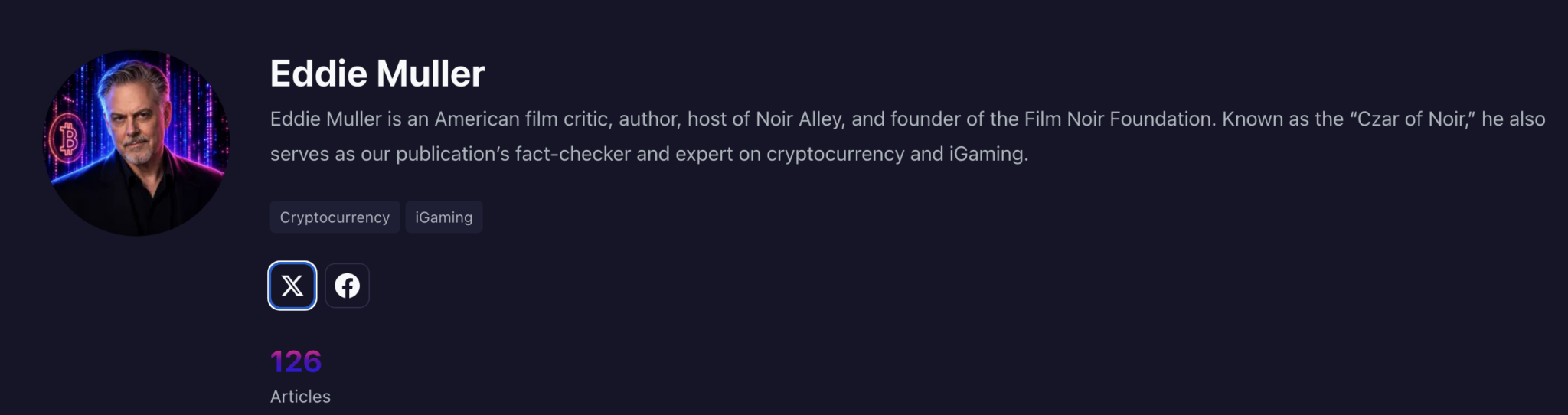
In years past, an SEO might have bought such a domain to build a movie review site or an affiliate blog. In today’s market, however, the play is much more cynical. EddieMuller.com now redirects to an author page on BitcoinFoundation.org, a crypto news site with significant organic reach. The author page features a biography of Muller, implying that the "Czar of Noir" has joined the Bitcoin Foundation as a contributor.
A quick fact-check reveals no connection between Muller and the cryptocurrency world. Instead, this is a calculated move to manipulate Google’s EEAT metrics. By linking a high-authority personal domain to a specific author profile on a larger site, the owners are attempting to "transfer" Muller’s real-world reputation and digital authority to their crypto platform. This "EEAT theater" is a diabolical attempt to trick Google’s algorithms into believing that the crypto site’s content is backed by a recognized expert, even if that expert’s field of study has nothing to do with digital currency.
Mapping the September Market: High Stakes and High Ratings
Beyond these individual stories, the broader data from September’s sales reveals a market obsessed with Domain Rating (DR), a metric used to predict how well a site will rank. The sales show a clear trend: buyers are willing to pay a premium for domains with a history of trust, regardless of the original niche.
Among the highest-priced sales was Gameone.com, which sold for $21,000 with a DR of 41. Other significant sales included Thousanddays.org, a high-authority non-profit domain that sold for $8,230 with a DR of 69, and Parents-choice.org, which fetched $10,011. The diversity of the domains being purchased is staggering. From niche hobby sites like Lsprorally.com ($2,501) and Chili.org ($6,048) to professional associations like Pbwc.org ($2,701) and local tourism sites like Bahia-turismo.com ($2,301), every corner of the web is being harvested for its residual SEO value.
Interestingly, some domains saw a significant jump in their DR shortly after being sold. Slm.net, for instance, rose from a DR of 17 to 33, while Leesmolin.com jumped from 35 to 44. These shifts often indicate that the new owners are actively building new links or redirecting other assets to these domains to further inflate their perceived authority.
The "Dead Internet" and the Future of Search
The afterlife of these domains paints a somewhat bleak picture of the modern internet. It lends credence to the "Dead Internet Theory," the idea that a significant portion of the web is no longer composed of genuine human interaction or content, but is instead a graveyard of automated bots, redirected authority, and shell sites designed to manipulate search algorithms.
When a local jail’s website becomes a front for Turkish gambling, or a film historian’s name is used to lend false credibility to a Bitcoin blog, the utility of the open web is diminished. For SEO professionals and domain investors, these tactics represent the cutting edge of digital strategy. For the average user, however, they represent a growing layer of digital noise and deception that makes finding authentic information increasingly difficult.
As search engines like Google continue to update their algorithms to combat these "churn and burn" and "EEAT theater" tactics, the secondary domain market will undoubtedly evolve. For now, the auctions at NameJet and SnapNames remain a fascinating, if somewhat depressing, window into the lengths to which people will go to capture a piece of the internet’s disappearing authority. The transition from a functional website to an expired domain and finally to a redirected SEO asset is a cycle that shows no signs of slowing down, ensuring that the "fascinating afterlife" of URLs will continue to be a wild ride for those brave enough to follow the rabbit holes.
 Web Hosting & Domain Management
WIPO Panel Denies Reliance Industries’ Claim Over Jiolat.com, Citing Attempted Reverse Domain Name Hijacking
In a significant legal setback for one of the world’s most powerful...
 Web Hosting & Domain Management
Verisign Unveils New "Verisign Informed" Security Service and Moves to Secure .pki Top-Level Domain
In a significant expansion of its security and infrastructure portfolio, Verisign (NASDAQ:...
 Web Hosting & Domain Management
AI Automation Offers New Solution for Bulk Domain Transfer Authorization Challenges
The process of managing a large portfolio of domain names has long...