
Mapping the September Market: High Stakes and High Ratings
Beyond these individual stories, the broader data from September’s sales reveals a market obsessed with Domain Rating (DR), a metric used to predict how well a site will rank. The sales show a clear trend: buyers are willing to pay a premium for domains with a history of trust, regardless of the original niche.
Among the highest-priced sales was Gameone.com, which sold for $21,000 with a DR of 41. Other significant sales included Thousanddays.org, a high-authority non-profit domain that sold for $8,230 with a DR of 69, and Parents-choice.org, which fetched $10,011. The diversity of the domains being purchased is staggering. From niche hobby sites like Lsprorally.com ($2,501) and Chili.org ($6,048) to professional associations like Pbwc.org ($2,701) and local tourism sites like Bahia-turismo.com ($2,301), every corner of the web is being harvested for its residual SEO value.
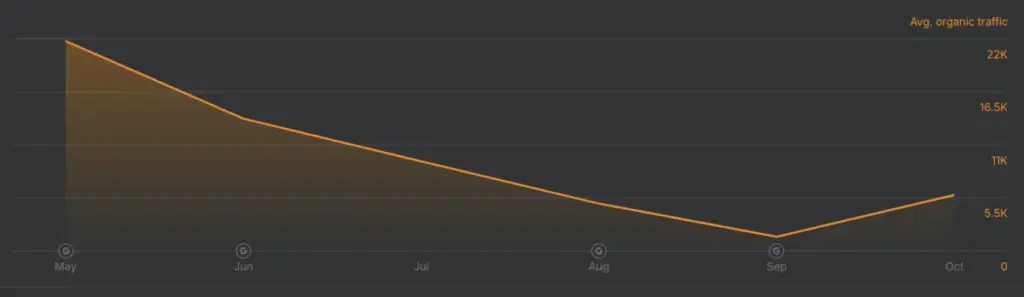
Interestingly, some domains saw a significant jump in their DR shortly after being sold. Slm.net, for instance, rose from a DR of 17 to 33, while Leesmolin.com jumped from 35 to 44. These shifts often indicate that the new owners are actively building new links or redirecting other assets to these domains to further inflate their perceived authority.
The "Dead Internet" and the Future of Search
The afterlife of these domains paints a somewhat bleak picture of the modern internet. It lends credence to the "Dead Internet Theory," the idea that a significant portion of the web is no longer composed of genuine human interaction or content, but is instead a graveyard of automated bots, redirected authority, and shell sites designed to manipulate search algorithms.
When a local jail’s website becomes a front for Turkish gambling, or a film historian’s name is used to lend false credibility to a Bitcoin blog, the utility of the open web is diminished. For SEO professionals and domain investors, these tactics represent the cutting edge of digital strategy. For the average user, however, they represent a growing layer of digital noise and deception that makes finding authentic information increasingly difficult.
As search engines like Google continue to update their algorithms to combat these "churn and burn" and "EEAT theater" tactics, the secondary domain market will undoubtedly evolve. For now, the auctions at NameJet and SnapNames remain a fascinating, if somewhat depressing, window into the lengths to which people will go to capture a piece of the internet’s disappearing authority. The transition from a functional website to an expired domain and finally to a redirected SEO asset is a cycle that shows no signs of slowing down, ensuring that the "fascinating afterlife" of URLs will continue to be a wild ride for those brave enough to follow the rabbit holes.
 Web Hosting & Domain Management
ICANN Selects Adelaide for 2027 Annual General Meeting, Marking a Strategic Return to Australia
The Internet Corporation for Assigned Names and Numbers (ICANN) has officially announced...
 Web Hosting & Domain Management
Domain Owners Face Imminent Price Hikes as Verisign Prepares to Increase .Com Wholesale Rates
The window of opportunity for domain name owners to secure current pricing...
 Web Hosting & Domain Management
Major Domain Registrars Challenge auDA Over Policy Shifts Threatening Millions of .au Registrations
A coalition of ten prominent domain name registrars has formally petitioned the...







