Display Technology and Visual Accuracy
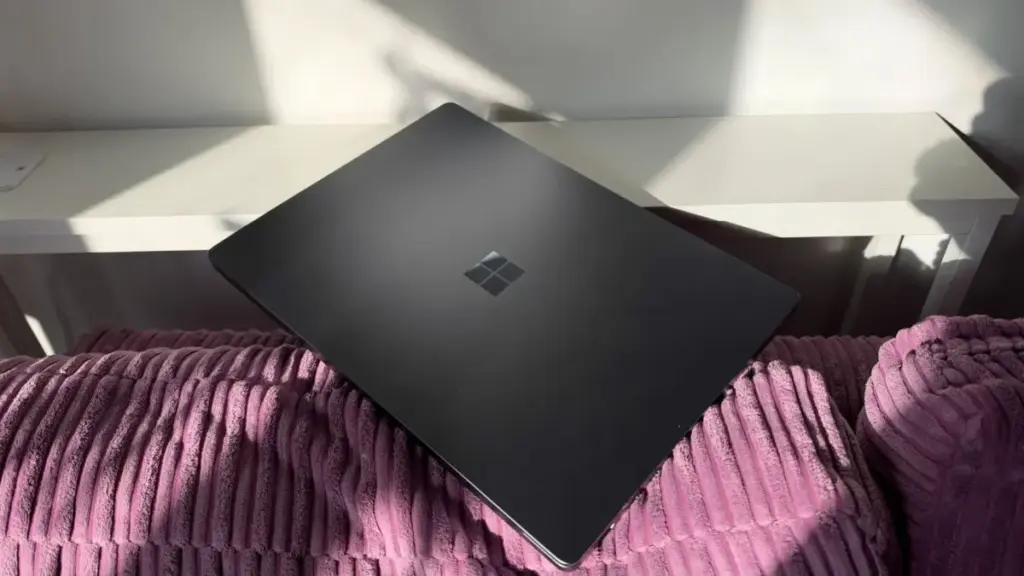
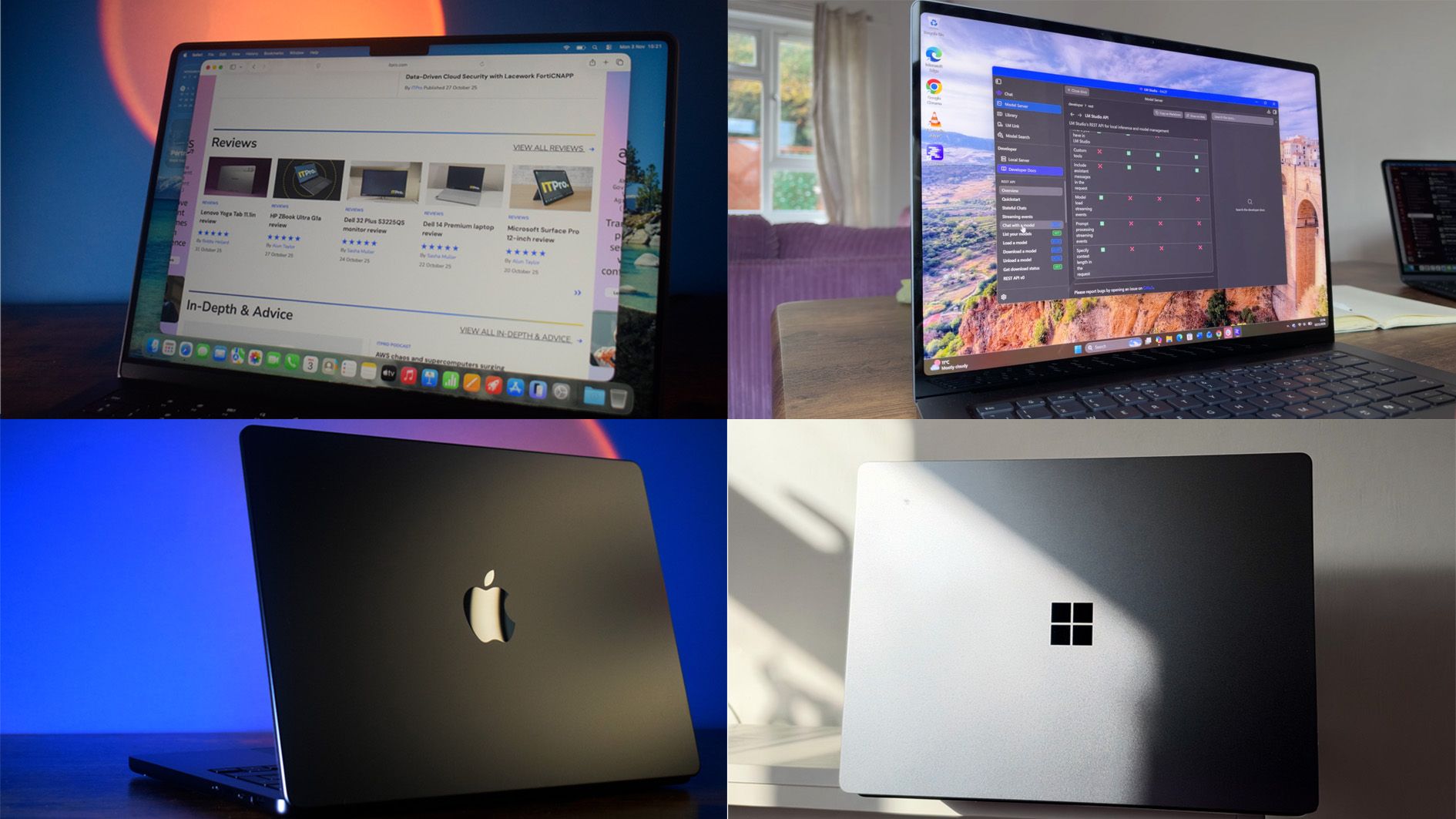
For creative professionals, the display is often the most critical component of a laptop. Both Microsoft and Apple have equipped these flagship machines with high-end panels, but their strengths lie in different areas. The Surface Laptop Ultra features a 15-inch PixelSense touchscreen with a resolution of 3270 x 2180 and a 120Hz refresh rate. The inclusion of touch functionality gives the Surface an edge in certain interactive workflows, such as UI/UX design or digital whiteboarding.
The M5 MacBook Pro, tested in its 14-inch configuration, utilizes a Liquid Retina XDR display with a native resolution of 3024 x 1964 and Apple’s ProMotion 120Hz technology. When subjected to colorimeter testing via DisplayCal software, both screens showed exceptional performance in the sRGB gamut, which is the standard for web content. The MacBook Pro achieved 99.7% coverage, while the Surface Laptop Ultra followed closely at 94.7%.
However, a significant divide emerged during Adobe RGB testing. The MacBook Pro produced a score of 85.8%, a figure that suggests it is well-suited for serious photo editing and print-grade color work. The Surface Laptop Ultra struggled in this category, scoring only 65.6%. Generally, a score of at least 70% is expected for professional-level creative work. While the Surface display is bright and vibrant for general use and video consumption, the MacBook Pro remains the superior choice for those whose livelihood depends on color accuracy.
The Power Struggle: M5 vs. RTX Spark
The heart of this comparison lies in the processing power. The Surface Laptop Ultra is powered by the Nvidia RTX Spark N1x, a 20-core processor paired with an Nvidia Blackwell RTX 5120-core GPU and 64GB of LPDDR5X RAM. Apple’s 14-inch MacBook Pro utilizes the 10-core M5 CPU and a 10-core GPU, supported by up to 32GB of unified memory.
Benchmarking these machines using Geekbench 6 reveals a nuanced performance landscape. The Surface Laptop Ultra holds the advantage in multi-threaded performance, recording a multi-core score of 18,771 compared to the MacBook’s 17,600. This makes the Ultra slightly more capable when it comes to intense, sustained workloads such as compiling large codebases or rendering complex 3D scenes. The RTX Spark chip is particularly adept at handling Large Language Models (LLMs) on-device, making it a tempting proposition for AI developers.
Conversely, the MacBook Pro dominates in single-core performance with a score of 4,248, dwarfing the Surface’s 1,859. Single-core speed is a primary driver for the perceived "snappiness" of an operating system and is vital for tasks that cannot be easily parallelized. While both machines are top-tier performers, the MacBook Pro feels exceptionally responsive in day-to-day applications, while the Surface shows its true strength in heavy-duty, multi-core industrial tasks.
Battery Life: The Efficiency Gap
 Helpdesk & IT Service Management (ITSM)
UK Businesses Face Critical 100-Day Countdown as PSTN Shutdown Looms
The United Kingdom’s business community has been issued a stark ultimatum as...
 Helpdesk & IT Service Management (ITSM)
Enterprises Grapple with Unintended Consequences as Half of Organizations Report Unauthorized AI Agent Actions
The rapid integration of agentic artificial intelligence into the modern enterprise has...
 Helpdesk & IT Service Management (ITSM)
Justice Department Charges Trio in Sophisticated $129 Million Deepfake Fraud Syndicate
In one of the most significant crackdowns on AI-enabled financial crime to...