
In the rapidly evolving world of consumer technology, it is often difficult for enthusiasts and early adopters to remember that they exist within a specialized "tech bubble." For those who have spent the last decade—or in some cases, several decades—tinkering with smart home protocols, soldering connections, or navigating the complexities of early X10 industry standards, the latest developments in home automation can sometimes feel like incremental updates. However, for the average consumer, the barrier to entry for a truly connected home has remained stubbornly high.
The recent unveiling of the Apple Home Collection, a curated suite of smart home accessories developed in close collaboration with industry giants LG and Schneider Electric, has sparked a wave of skepticism among the tech-savvy. Critics have pointed to the significantly higher price points of these devices, noting that they do not appear to offer radical new features compared to existing, lower-cost alternatives. Yet, this perspective may be missing the forest for the trees. By focusing on the hardware specifications alone, critics overlook the most significant hurdle to mass-market adoption: the user experience.
The Apple Home Collection represents a fundamental shift in how smart home technology is deployed and managed. It moves away from the "hobbyist" model of home automation and toward an "appliance" model, where the complexity of networking and configuration is entirely abstracted away from the end user.
The Limitations of the HomeKit Era
To understand why the Apple Home Collection is a potential turning point, one must look back at the trajectory of Apple’s smart home ambitions. When HomeKit was first introduced, it was hailed as a revolutionary step toward unifying a fragmented market. The promise was simple: a single app to control everything, a strict set of security standards, and the convenience of Siri integration. The HomeKit badge on a product box was meant to be a guarantee of quality and compatibility.
In practice, however, the reality often fell short of the vision. During the early years, setting up a HomeKit-enabled device was frequently a multi-stage ordeal. Users often had to download a manufacturer’s proprietary third-party app to perform initial firmware updates or configuration before the device could even be recognized by Apple’s Home app. This "bridge" requirement created a disjointed experience that felt less like a cohesive ecosystem and more like a collection of disparate gadgets forced to talk to one another.
Furthermore, the technical requirements Apple imposed on manufacturers were stringent, leading to a slower rate of adoption among hardware makers. While the Amazon Alexa and Google Home ecosystems flourished by prioritizing quantity and low cost, HomeKit remained a boutique option with a much smaller catalog of compatible devices. For many users, the process of troubleshooting a "No Response" error in the Home app made them feel less like homeowners and more like unpaid network engineers, constantly rebooting routers and resetting hubs to maintain basic functionality.
The Role of Matter and Thread
The industry eventually recognized that fragmentation was stifling growth. The introduction of the Matter and Thread standards was a major milestone intended to solve these interoperability issues. Matter provided a universal language for smart devices to communicate across different platforms, while Thread offered a low-power, self-healing mesh network to improve reliability.
While these standards significantly improved the landscape, they did not entirely solve the "onboarding" problem. Even with Matter, the process of adding a device to a network still required a level of technical literacy that many casual users found daunting. Scanning QR codes, ensuring devices are on the right 2.4GHz frequency, and managing "commissioning" windows still represented points of friction. The technology had become more stable, but it hadn’t yet become "magical."
The Apple Home Collection and the "AirPods" Moment
The Apple Home Collection aims to provide that missing piece of the puzzle: a frictionless setup experience. While geeks may scoff at paying a premium for a smart plug or a sensor that performs the same basic task as a $15 alternative, the value proposition of the Apple Home Collection isn’t found in the task itself, but in the ease of execution.
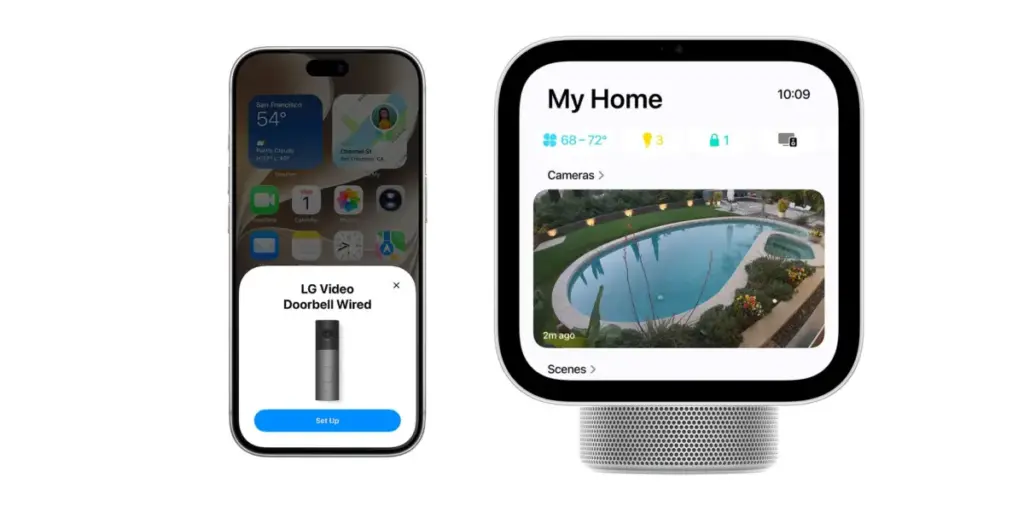
Early reports and hands-on demonstrations suggest that Apple has successfully applied its "AirPods-style" pairing logic to the home. For years, the gold standard of user experience has been the way AirPods connect to an iPhone—simply open the case near the phone, and a prompt appears. There is no searching through Bluetooth menus, no entering pairing codes, and no troubleshooting.
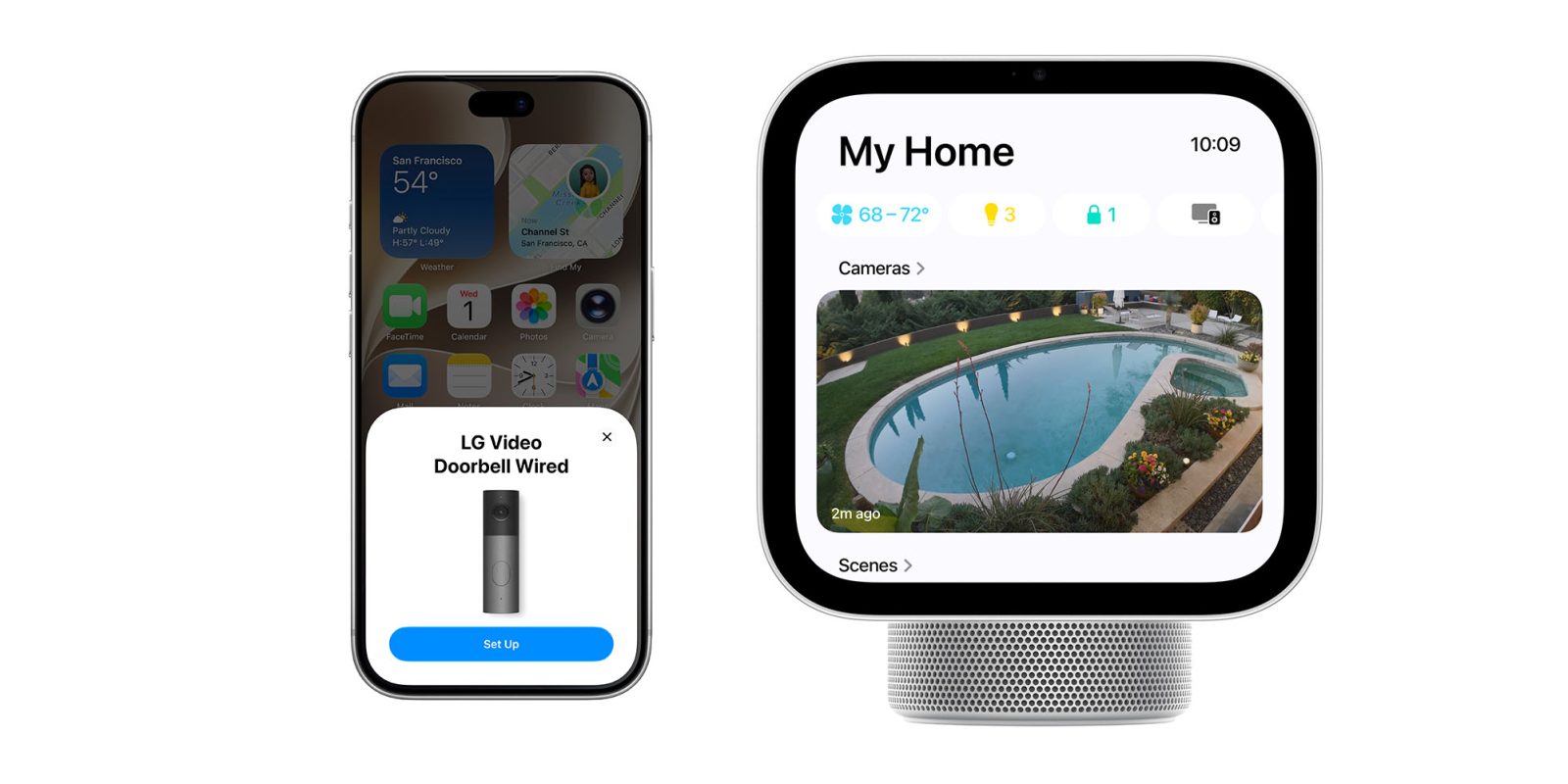
The Apple Home Collection brings this level of intuitive design to much more complex devices, such as the LG doorbell and various Schneider Electric components. Ajay Kumar of CNET recently highlighted this during a hands-on demonstration, noting how an Apple representative was able to pair and register a new device instantly while maintaining a casual conversation. The setup was managed entirely through the Apple Home app without the need for third-party software or complex networking steps.
This "instant-on" capability is facilitated by the deep integration between Apple’s software and the hardware co-developed with LG and Schneider. By controlling the stack from the silicon level to the user interface, Apple can eliminate the "handshake" issues that plague generic Matter devices. For a "normie"—the average consumer who wants the benefits of a smart home without the headache of managing it—this simplicity is the ultimate feature.
Expanding the Mass Market Appeal
We should not underestimate the impact that removing technical friction will have on adoption rates. Many consumers are intrigued by the idea of a smart home—automated lighting for security, smart thermostats for energy savings, and video doorbells for convenience—but they have been paralyzed by the apparent complexity of the setup.

When a product requires the user to understand the difference between a hub and a bridge, or requires them to navigate a clunky third-party app that asks for unnecessary permissions, the average consumer often decides the effort isn’t worth the reward. Apple’s strategy with the Home Collection is to turn the smart home into a series of "plug-and-play" appliances.
If a homeowner can buy a smart light switch or a security camera, bring it home, and have it fully operational within ten seconds of holding their iPhone near it, the psychological barrier to entry vanishes. This is the same philosophy that allowed the iPhone to dominate the smartphone market and the iPad to define the tablet category. It isn’t always about being the first to offer a feature; it is about being the first to make that feature accessible to everyone.
The collaboration with LG and Schneider Electric also lends a sense of "industrial-grade" reliability to the collection. These are established brands that consumers already trust for their appliances and electrical infrastructure. By pairing that hardware expertise with Apple’s software prowess and the new HomeView interface, the collection positions the smart home as a premium, reliable utility rather than a collection of tech toys.
The Future of the Connected Home
While the tech community will likely continue to debate the cost-to-benefit ratio of these devices, the broader market is poised for a shift. The Apple Home Collection is not designed for the person who enjoys spending their Saturday afternoon configuring a Home Assistant server or flashing custom firmware onto a smart plug. It is designed for the person who wants their home to "just work."
As Apple continues to integrate these devices with its broader ecosystem—leveraging the Apple TV as a home hub and utilizing the iPhone and Apple Watch as primary interfaces—the value of the "Apple Tax" becomes clearer. It is a payment for the absence of frustration.
For those who have been waiting on the sidelines of the smart home revolution, put off by the horror stories of connectivity issues and complicated installations, the Apple Home Collection represents a clear invitation to join. If Apple can truly deliver a setup process as simple as pairing a set of headphones, we may finally see the smart home move from a niche hobby to a standard feature of the modern household. The next step in mass-market adoption isn’t a new piece of hardware or a faster processor; it is the total elimination of the setup manual.
 Smart Home & IoT Solutions
Report: Apple ‘HomeView’ smart home hub will ship in November, come in four colors, A18 chip
While the announcement is imminent, consumers may have to wait a few...
 Smart Home & IoT Solutions
Report: Apple ‘HomeView’ smart home hub will ship in November, come in four colors, A18 chip
The HomeView is expected to be the centerpiece of a major hardware...
 Smart Home & IoT Solutions
Philips Hue Enhances Smart Home Ecosystem with Launch of SpatialAware and New Video Doorbell Features
The landscape of smart home lighting has undergone a significant transformation today...







