
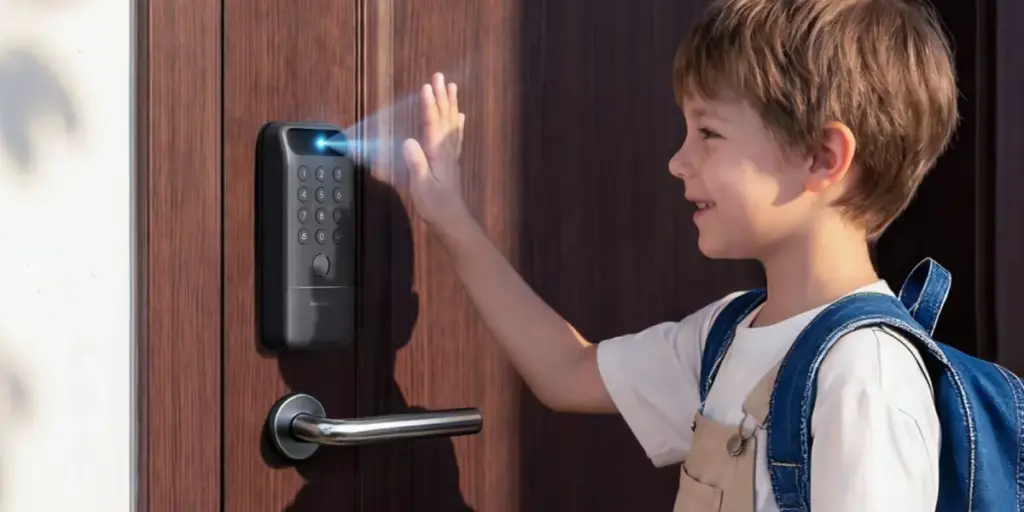
In the rapidly evolving landscape of smart home security, the quest for a seamless, "frictionless" entry experience has become the ultimate goal for manufacturers. SwitchBot, a company that built its reputation on clever retrofitting solutions for traditional appliances, has today announced a significant leap forward in its security portfolio. The company officially unveiled the SwitchBot Lock Vision and the SwitchBot Lock Vision Pro, two advanced smart locks designed to serve as the centerpiece of a modern automated home.
The new Lock Vision series represents a pivot for SwitchBot, moving from simple motor-driven deadbolt turners toward a comprehensive, integrated security solution. By incorporating high-end biometrics, robust connectivity standards, and sophisticated power management, SwitchBot is positioning itself to compete directly with established titans in the smart lock industry. For Apple Home enthusiasts, the announcement is particularly noteworthy as it marks a shift toward broader interoperability without the need for proprietary bridges.
Advanced Biometrics and 3D Facial Recognition
The defining characteristic of the SwitchBot Lock Vision series is its focus on biometric diversity, specifically the introduction of 3D facial recognition. While many smart locks rely on 2D cameras that can occasionally be fooled by high-resolution photographs or video screens, SwitchBot has opted for a more secure depth-mapping approach.
The Lock Vision hardware utilizes an infrared projector that casts over 20,000 invisible points onto a user’s face. This allows the system to create a precise 3D depth map, ensuring that the person standing at the door is a living, breathing human rather than a static image. According to the company, this system is designed for speed and reliability, claiming an unlock time of under one second. Furthermore, the internal algorithms are sophisticated enough to recognize authorized users even as their appearance changes—whether they are wearing glasses, hats, or even heavy makeup and wigs.
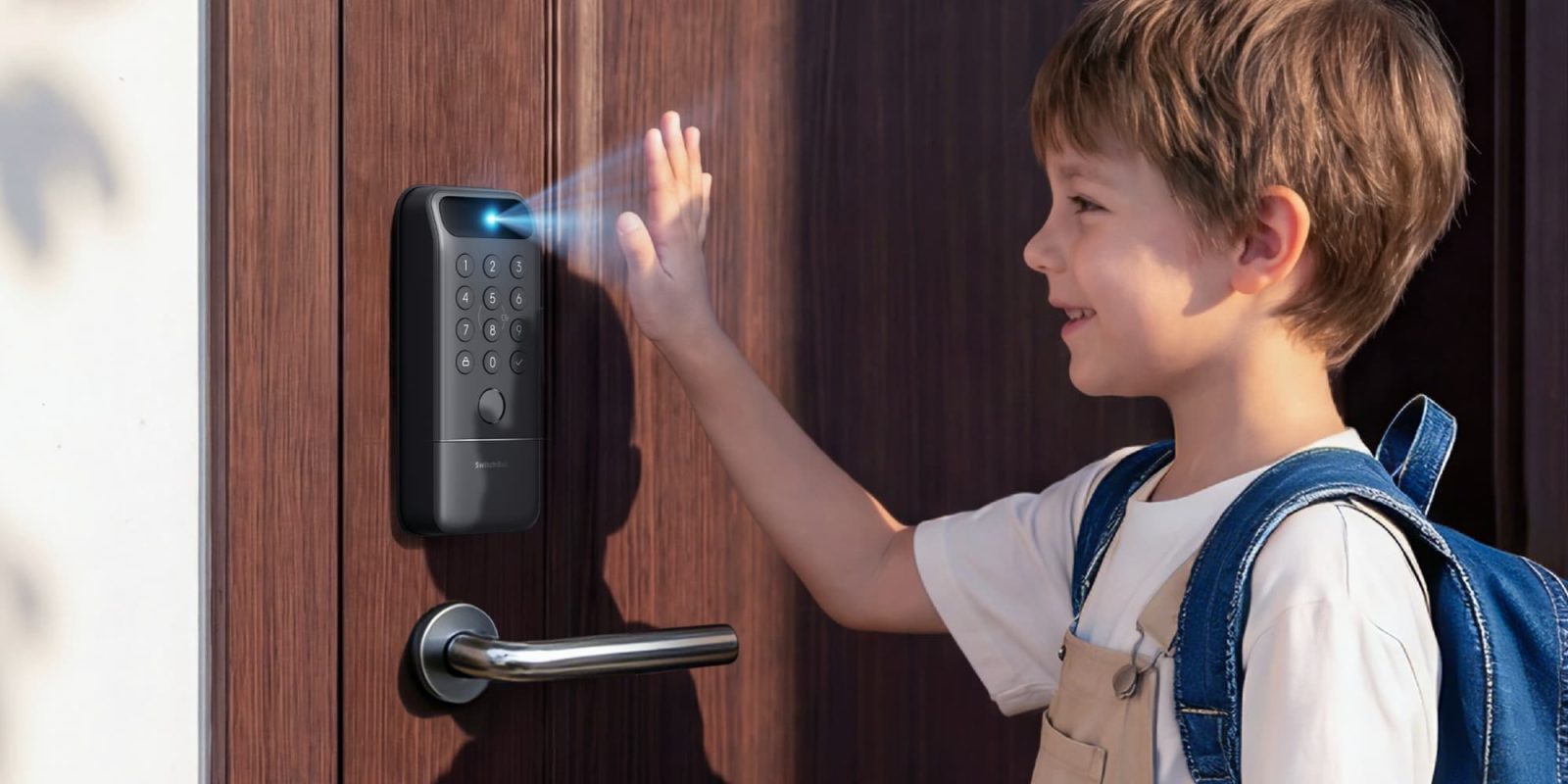
Privacy remains a paramount concern for consumers integrating cameras and biometric sensors into their homes. Addressing these concerns, SwitchBot has confirmed that all biometric data, including facial maps and fingerprint templates, is stored locally on the device itself. The data is encrypted using AES-128, and no biometric information is uploaded to the cloud, providing a layer of security that appeals to the privacy-conscious segment of the market.
For users who opt for the Lock Vision Pro, the biometric suite expands even further. In addition to the facial recognition found in the standard model, the Pro version introduces semiconductor fingerprint recognition and a contactless palm vein scanner. The palm vein technology is a standout feature in the consumer market; it uses near-infrared sensing to read the unique vascular patterns beneath the skin of a user’s hand. Because this method does not require physical contact and relies on internal biological structures, it is significantly more difficult to spoof than traditional fingerprints and offers a hygienic alternative for those who prefer not to touch the hardware.
Innovative Power Management and mmWave Radar
One of the persistent challenges with high-performance smart locks is power consumption. Features like continuous Wi-Fi connectivity and facial recognition sensors can drain batteries quickly, leading to frequent maintenance. SwitchBot has addressed this through a combination of high-capacity hardware and intelligent sensing.
The Lock Vision series features a dual-power, dual-pack system designed to eliminate the anxiety of being locked out due to a dead battery. The primary power source is a 10,000mAh rechargeable battery pack. Under typical usage conditions, SwitchBot estimates this pack can power the lock for up to 12 months on a single charge.
However, the innovation lies in the redundancy system. Tucked inside the chassis is a secondary CR123A battery. If the main rechargeable pack is depleted, the lock automatically switches to this backup, providing enough energy for up to 500 emergency unlocks. This gives the homeowner a substantial window of time to recharge the primary battery without losing access to the home. In the unlikely event that both power sources fail, the exterior of the lock features a USB-C port, allowing a user to provide temporary "jump-start" power using a portable power bank.
To further extend the lifespan of these batteries, SwitchBot has integrated mmWave radar technology into the Lock Vision series. Unlike traditional Passive Infrared (PIR) sensors, which can be triggered by heat signatures or moving objects like wind-blown branches, mmWave radar is highly precise. It can detect the specific distance and movement patterns of a human approaching the door. This ensures that the energy-intensive 3D facial recognition sensors are only activated when a person is physically standing in front of the lock, preventing unnecessary battery drain from sidewalk traffic or environmental movement.
Seamless Integration with Matter over Wi-Fi
For years, the smart home market has been fragmented by competing protocols, often requiring users to purchase multiple "hubs" or "bridges" to make different devices talk to one another. The SwitchBot Lock Vision series aims to bypass this complexity by supporting Matter over Wi-Fi natively.
Matter is the industry-unifying communication standard backed by Apple, Google, Amazon, and Samsung. By supporting Matter over Wi-Fi out of the box, the Lock Vision series allows Apple Home users to integrate the device into their ecosystems with unprecedented ease. There is no longer a requirement to purchase a dedicated SwitchBot Hub to bridge the lock to HomeKit. Instead, the lock can communicate directly with an existing Apple Home hub, such as an Apple TV or a HomePod.
This integration allows the Lock Vision to participate in complex home automations. For instance, unlocking the door could trigger a "Welcome Home" scene that adjusts the thermostat, turns on the entryway lights, and disarms the security system. Beyond the biometric and smart home controls, SwitchBot has included a wide array of alternative entry methods to ensure flexibility. The locks support NFC cards, customizable passcodes, and physical keys. Additionally, for those who prefer a completely automated experience, the system supports geo-fencing for auto-unlocking as the user’s smartphone approaches the perimeter of the home.
Comparing the Lock Vision and Lock Vision Pro
When evaluating the two models, potential buyers will find that the core technological foundation is identical across the lineup. Both the standard Lock Vision and the Lock Vision Pro utilize the same 10,000mAh battery system, the same mmWave radar for presence detection, and the same 3D facial recognition engine. Both models also share the same Matter over Wi-Fi compatibility, ensuring that neither model is "smarter" than the other in terms of ecosystem integration.

The distinction lies entirely in the hardware interface and the breadth of biometric options. The Pro model is designed for the power user who wants every possible way to enter their home. By adding the fingerprint sensor and the palm vein scanner, the Pro model provides redundancy even within its biometric suite. If a user is wearing gloves, they might use facial recognition; if they are wearing a mask and sunglasses, they might opt for the palm scanner or fingerprint.
While the feature set is comprehensive, some Apple power users may note the absence of Apple Home Key support. Home Key is a feature that allows users to tap their iPhone or Apple Watch against a lock to open it via NFC, much like using Apple Pay. While the Lock Vision supports NFC cards and facial recognition—which many argue is even more convenient than reaching for a watch or phone—the lack of native Home Key integration is one of the few omissions in an otherwise exhaustive list of specifications.
Market Positioning and Availability
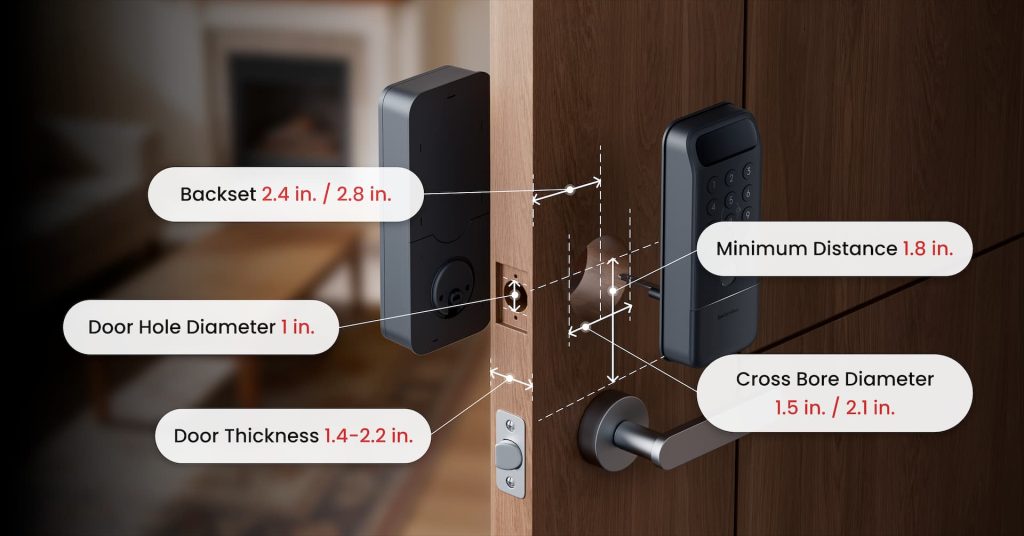
With the launch of the Lock Vision series, SwitchBot is signaling its intent to move up-market. While the company still offers its popular "bolt-on" smart locks for those who cannot replace their existing hardware, the Lock Vision is a full deadbolt replacement aimed at homeowners looking for a more permanent and aesthetically integrated solution.
The pricing strategy reflects this premium positioning while remaining competitive against other high-end biometric locks. The standard SwitchBot Lock Vision is priced at $169.99, offering a relatively accessible entry point for 3D facial recognition technology. The upgraded Lock Vision Pro, with its additional sensors, retails for $229.99.
Both models are available starting today through Amazon and SwitchBot’s official retail channels. To celebrate the launch, the company is offering various introductory deals, making it an opportune time for early adopters to upgrade their home security infrastructure. As the smart home continues to move toward the Matter standard, products like the Lock Vision series represent the new baseline for what consumers can expect: high-security biometrics, long-lasting power, and the end of the proprietary hub era.
 Smart Home & IoT Solutions
Apple Revolutionizes Smart Home Ecosystem with iOS 27: 4K HomeKit Secure Video and AI-Driven Notifications Lead the Charge
As Apple prepares for its highly anticipated "Welcome Home" special event on...
 Smart Home & IoT Solutions
The Frictionless Frontier: Why the Apple Home Collection Represents a Turning Point for Smart Home Adoption
In the rapidly evolving landscape of consumer technology, it is often difficult...
 Smart Home & IoT Solutions
Apple Home Ecosystem Evolves as iOS 26 Cycle Sets the Stage for Major Siri Overhaul
The smart home landscape is currently standing at a significant crossroads, positioned...







