
Reliability and Durability
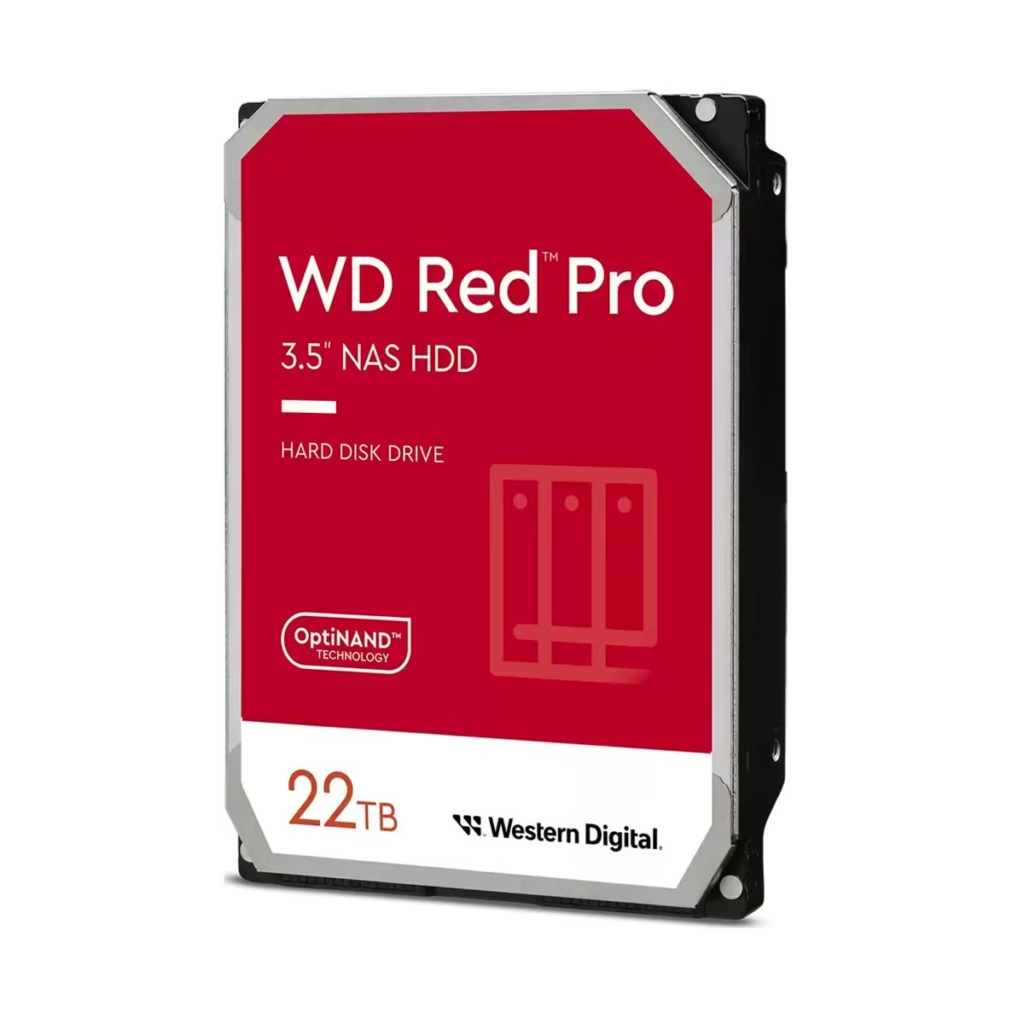
Every drive on the list is built to withstand the rigors of constant operation. Business environments cannot afford the downtime associated with drive failures, which is why these models feature higher MTBF rates and are subjected to more rigorous testing phases than standard consumer hardware.
Performance Optimization
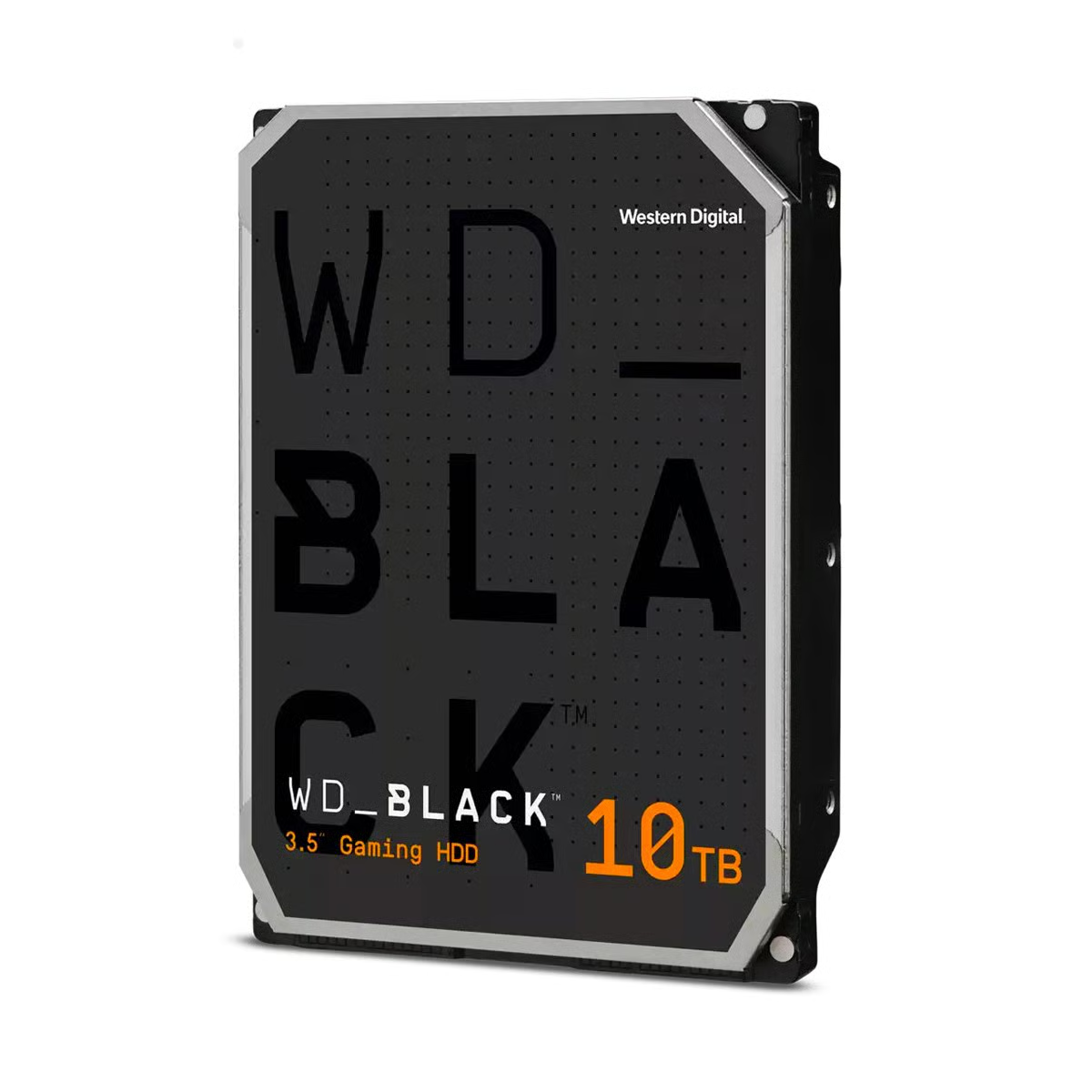
Enterprise drives are fine-tuned for high input/output (I/O) operations. This is achieved through faster data transfer rates, larger cache sizes, and improved seek times. Such optimizations allow the drives to maintain consistent performance even when the workload becomes heavy or unpredictable.
Error Recovery and Data Protection
Data integrity is a non-negotiable requirement for enterprise storage. Advanced error recovery mechanisms, such as Time-Limited Error Recovery (TLER), are common in these top-rated drives. TLER prevents a drive from becoming unresponsive while attempting to recover from a read or write error, which is crucial for maintaining the stability of Redundant Array of Independent Disk (RAID) configurations.
Power Efficiency
As data centers grow in scale, power consumption becomes a major operational cost. Many of the top enterprise drives are designed with energy efficiency in mind. By reducing power consumption and heat output, these drives help lower cooling requirements and overall operational expenses for the organization.
Methodology: How the Drives Were Scored
To provide a fair and comprehensive ranking, the evaluation utilized a weighted scoring system across six key categories:
- Core Features (25%): This included essential specs such as capacity options, spindle speeds (RPM), data transfer rates, and vibration resistance.
- Enterprise Features (20%): Analysts looked for advanced error recovery, hardware-based security mechanisms, and frequent firmware updates.
- Support (20%): The availability of live chat, phone, and email support, along with comprehensive documentation, was a major factor.
- Vendor Profile (15%): This measured the manufacturer’s reputation, length of time in the industry, and the breadth of their product line.
- Pricing (10%): While less critical than performance, the base price and the availability of bulk discounts or upgrade options were considered.
- Environments (10%): This assessed how well the drive performed across different installations, including cloud, hybrid, and on-premises data centers.
Selecting the Right Drive for the Business
The evaluation concludes that choosing the best enterprise hard drive requires a deep understanding of a company’s specific needs. For instance, a firm focusing on AI-driven security would find the Seagate Skyhawk or WD Purple most beneficial, while a company managing a massive cloud database would likely lean toward the Western Digital Gold or Seagate Exos.
Ultimately, the enterprise hard drive market remains dominated by a small group of high-reputation players, but the variety of drives available allows for highly specialized solutions. By prioritizing reliability, security, and scalability, organizations can ensure that their data infrastructure remains robust enough to handle the challenges of 2023 and beyond.
 Enterprise Tech & Infrastructure
Navigating the Hidden Financial Mechanics of Amazon S3: Strategies for Enterprise Cost Optimization
In the landscape of modern enterprise cloud architecture, Amazon S3 has long...
 Enterprise Tech & Infrastructure
Upscale AI Challenges Nvidia’s Dominance with SkyHammer Scale-Up Fabric and Unified AI Networking
The history of the semiconductor industry is littered with the remains of...
 Enterprise Tech & Infrastructure
Nvidia Unveils Silicon-Level Guardrails as Industry Grapples with Surging AI Agent Breaches
The artificial intelligence industry, once defined by a breakneck race toward ever-greater...







