
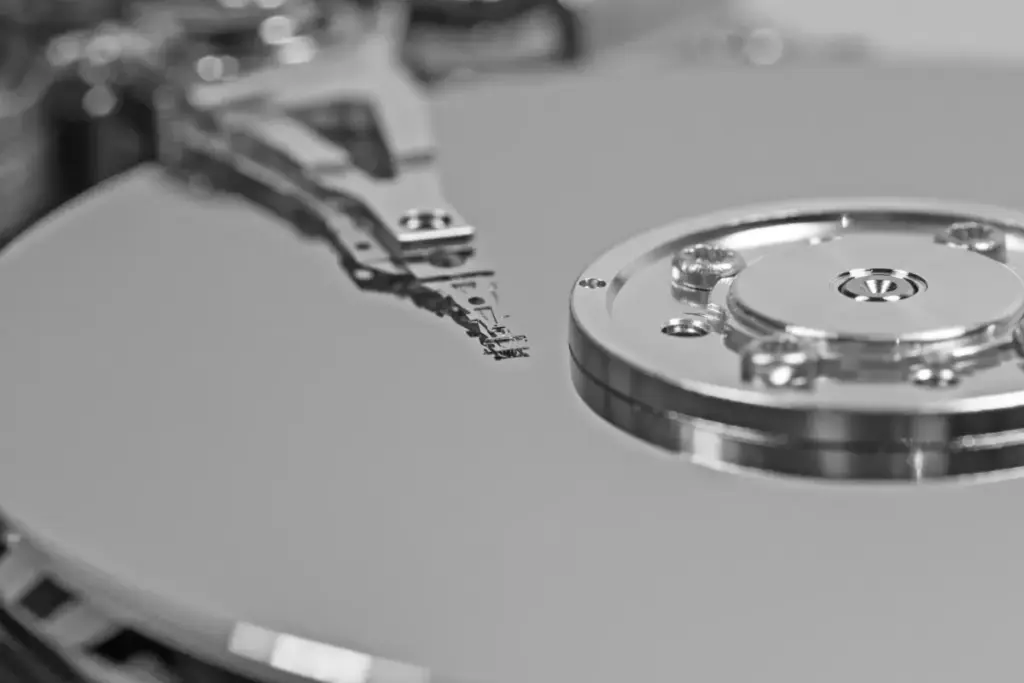
The global hard disk drive industry, once a crowded field of dozens of manufacturers, has spent the last decade consolidated into a delicate triopoly. Today, that three-way balance is facing its most significant disruption in years. Seagate Technology and Toshiba are currently engaged in a high-stakes bidding war for control of TDK’s magnetic head business, a move that could fundamentally alter the competitive landscape of the storage market. While these two titans move to secure their supply chains, Western Digital—the third major player—remains a watchful observer, confident in its own internal manufacturing capabilities but mindful of how a shift in the balance of power could affect the broader industry.
The current market dynamics, as tracked by researchers at TrendForce, illustrate a lopsided field. Seagate and Western Digital currently command a combined 90% of the hard disk drive (HDD) market, leaving Toshiba to operate within the remaining 10%. However, the importance of that 10% is magnified by the specific ways these companies source their components. Unlike its larger American rivals, Toshiba does not manufacture its own magnetic recording heads—the critical components responsible for reading and writing data on the spinning platters of a hard drive. Instead, Toshiba relies almost exclusively on TDK, a third-party specialist that serves as a vital link in the global storage supply chain.
This reliance has placed Toshiba in a precarious position. TDK does not only supply Toshiba; it also serves as an overflow manufacturer for Seagate and Western Digital. When the two market leaders experience surges in demand that exceed their internal production capacities, they turn to TDK to fill the gap. This makes TDK’s magnetic head unit the "kingmaker" of the industry, providing the essential technology that keeps all three manufacturers operational during peak cycles.
The catalyst for the current bidding war appears to be a strategic move by Toshiba to stabilize its future. Earlier this year, reports surfaced via Bloomberg indicating that Toshiba had made a formal bid to acquire TDK’s drive head business. For Toshiba, the acquisition would be a transformative step toward vertical integration. By owning the production of magnetic heads, Toshiba would eliminate its dependence on an external supplier, reduce its exposure to supply chain volatility, and potentially lower its long-term manufacturing costs. It would effectively transition from a "third-party assembler" to a fully integrated manufacturer, securing its place in the market for the next generation of storage technology.
However, the prospect of Toshiba gaining exclusive control over TDK’s assets appears to have triggered an immediate defensive reaction from Seagate. Fearing that a Toshiba-owned TDK might prioritize its own needs or cut off the "overflow" supply that Seagate relies on during periods of high demand, Seagate launched a counteroffer. According to industry insiders, Seagate’s move is not merely about securing more components; it is a strategic maneuver to maintain the status quo or, more aggressively, to prevent a competitor from gaining a significant foothold.
The timing of this corporate tug-of-war is not coincidental. The global technology sector is currently being reshaped by the explosive growth of artificial intelligence and the massive data centers required to support it. As AI models become more complex and the datasets used to train them grow exponentially, the demand for high-capacity, reliable, and cost-effective storage has reached a fever pitch. While solid-state drives (SSDs) have taken over much of the consumer PC market, the enterprise data center market still relies heavily on HDDs for "cold" and "warm" storage due to their superior price-per-terabyte ratio.
Seagate’s concern, as reported by Bloomberg, is that any disruption in the supply of magnetic heads could cripple its ability to meet the burgeoning demand from these AI-driven data centers. In an environment where every gigabyte of storage is spoken for, losing access to TDK’s supplemental capacity could mean losing billions in potential revenue and ceding market share to Western Digital.
For Toshiba, the stakes are even higher. Some analysts suggest that if Seagate were to successfully capture the TDK unit, it could effectively knock Toshiba out of the hard disk market altogether. Without TDK as a supplier, and without the billions of dollars in capital required to build its own magnetic head fabrication plants from scratch, Toshiba would find itself unable to produce the high-capacity drives that the modern market demands. This would leave the world with just two hard drive manufacturers, a level of consolidation that could draw the attention of international antitrust regulators, given the critical nature of storage technology in the global economy.
While Seagate and Toshiba battle over the TDK unit, Western Digital has remained on the sidelines of this specific bidding war. This is largely because Western Digital, like Seagate, already possesses robust internal manufacturing capabilities for its magnetic heads. However, Western Digital is far from idle. Rather than focusing on acquisition-led growth in the component space, the company has doubled down on internal technological innovation to maintain its competitive edge.
In February, Western Digital unveiled two significant technological advancements designed to push the boundaries of what traditional hard drives can achieve in terms of speed and efficiency. The company announced its high bandwidth drive technology (HBDT) and dual pivot technology (DPT). These innovations are aimed at addressing one of the long-standing bottlenecks of HDD technology: throughput.
According to Western Digital, HBDT is a breakthrough that allows for simultaneous reading and writing operations from multiple heads across multiple tracks. Historically, a hard drive head could only interact with one track at a time. By enabling a multi-stream approach, HBDT can theoretically deliver up to twice the bandwidth of conventional hard drives. This is particularly relevant for data center environments where the speed at which data can be ingested and retrieved is just as important as the total capacity of the drive.
While Western Digital focuses on throughput, Seagate has been leading the charge in raw capacity. In July, Seagate reached a major milestone by launching a 3.5-inch hard disk with a staggering 30TB of capacity. This feat was made possible through the use of Heat-Assisted Magnetic Recording (HAMR) technology. HAMR uses a small laser to briefly heat the surface of the disk platter before data is written, allowing for much smaller magnetic grains and, consequently, a much higher density of data.
Seagate’s roadmap for HAMR does not stop at 30TB. The company has already signaled its intentions to release 32TB and 36TB models in the near future, with a long-term goal of reaching 50TB and beyond. The success of this roadmap, however, is tethered to the precision and availability of high-quality magnetic heads—the very components at the center of the TDK dispute. If Seagate can secure TDK’s assets, it not only protects its current production but also gains additional research and development facilities to refine its HAMR technology.
TDK, for its part, has remained silent regarding the ongoing negotiations. As a major electronics conglomerate with interests spanning from batteries to passive components, TDK must weigh the short-term financial gain of a sale against the long-term strategic value of its drive head business. The unit is a niche but highly specialized asset with high barriers to entry, making it an incredibly valuable piece of intellectual property in a world increasingly defined by data storage needs.
The outcome of this bidding war will likely dictate the structure of the storage industry for the next decade. If Toshiba succeeds, it secures its independence and ensures that three players remain in the market to compete on price and innovation. If Seagate succeeds, it solidifies its dominance and potentially forces a market exit for Toshiba, leaving Western Digital as its only remaining rival.
As the boom in AI data centers continues to ignite demand, the struggle for control over the underlying hardware becomes more intense. The battle for TDK is more than just a corporate acquisition; it is a fight for the future of the hard drive itself. Whether the industry remains a three-player game or shrinks to a duopoly depends on who wins the right to manufacture the microscopic heads that write the world’s data. For now, the industry waits for TDK’s next move, while the two giants of storage prepare for the next round of a high-stakes competition.
 Small Business IT & Cloud Computing
Meta’s AI Vision Is the Best in the Industry—But Its History Makes It Impossible to Trust
We are currently standing on the precipice of a fundamental revolution in...
 Small Business IT & Cloud Computing
WordPress Issues Emergency Patch for Critical RCE Vulnerability as Attackers Strike Within Hours of Disclosure
The global cybersecurity community is on high alert following the release of...
 Small Business IT & Cloud Computing
Microsoft Unveils Unified Copilot ‘Super App’ to Streamline Enterprise AI Orchestration and Governance
Microsoft has officially launched its highly anticipated Copilot “super app,” marking a...







