
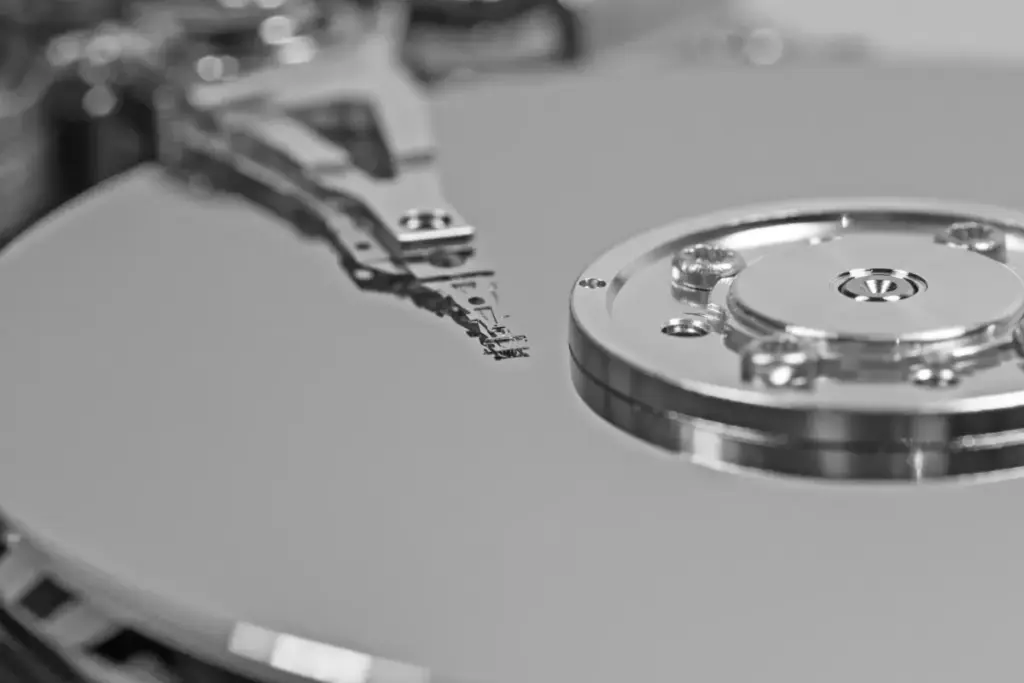
The global hard disk drive industry, once a crowded field of dozens of manufacturers, has spent the last decade consolidated into a delicate triopoly. Today, that three-way balance is facing its most significant disruption in years. Seagate Technology and Toshiba are currently engaged in a high-stakes bidding war for control of TDK’s magnetic head business, a move that could fundamentally alter the competitive landscape of the storage market. While these two titans move to secure their supply chains, Western Digital—the third major player—remains a watchful observer, confident in its own internal manufacturing capabilities but mindful of how a shift in the balance of power could affect the broader industry.
The current market dynamics, as tracked by researchers at TrendForce, illustrate a lopsided field. Seagate and Western Digital currently command a combined 90% of the hard disk drive (HDD) market, leaving Toshiba to operate within the remaining 10%. However, the importance of that 10% is magnified by the specific ways these companies source their components. Unlike its larger American rivals, Toshiba does not manufacture its own magnetic recording heads—the critical components responsible for reading and writing data on the spinning platters of a hard drive. Instead, Toshiba relies almost exclusively on TDK, a third-party specialist that serves as a vital link in the global storage supply chain.
This reliance has placed Toshiba in a precarious position. TDK does not only supply Toshiba; it also serves as an overflow manufacturer for Seagate and Western Digital. When the two market leaders experience surges in demand that exceed their internal production capacities, they turn to TDK to fill the gap. This makes TDK’s magnetic head unit the "kingmaker" of the industry, providing the essential technology that keeps all three manufacturers operational during peak cycles.
The catalyst for the current bidding war appears to be a strategic move by Toshiba to stabilize its future. Earlier this year, reports surfaced via Bloomberg indicating that Toshiba had made a formal bid to acquire TDK’s drive head business. For Toshiba, the acquisition would be a transformative step toward vertical integration. By owning the production of magnetic heads, Toshiba would eliminate its dependence on an external supplier, reduce its exposure to supply chain volatility, and potentially lower its long-term manufacturing costs. It would effectively transition from a "third-party assembler" to a fully integrated manufacturer, securing its place in the market for the next generation of storage technology.
However, the prospect of Toshiba gaining exclusive control over TDK’s assets appears to have triggered an immediate defensive reaction from Seagate. Fearing that a Toshiba-owned TDK might prioritize its own needs or cut off the "overflow" supply that Seagate relies on during periods of high demand, Seagate launched a counteroffer. According to industry insiders, Seagate’s move is not merely about securing more components; it is a strategic maneuver to maintain the status quo or, more aggressively, to prevent a competitor from gaining a significant foothold.
The timing of this corporate tug-of-war is not coincidental. The global technology sector is currently being reshaped by the explosive growth of artificial intelligence and the massive data centers required to support it. As AI models become more complex and the datasets used to train them grow exponentially, the demand for high-capacity, reliable, and cost-effective storage has reached a fever pitch. While solid-state drives (SSDs) have taken over much of the consumer PC market, the enterprise data center market still relies heavily on HDDs for "cold" and "warm" storage due to their superior price-per-terabyte ratio.
 Small Business IT & Cloud Computing
Google Positions Gemini as the Central Hub for Enterprise AI Orchestration with New Autonomous Agent Capabilities
At its high-profile Gemini at Work 2026 event this week, Google Cloud...
 Small Business IT & Cloud Computing
Bridging the AI Value Gap: Why Organizations Must Shift from Cost-Cutting to a ‘Return on Intelligence’
As the initial wave of artificial intelligence enthusiasm transitions into a period...
 Small Business IT & Cloud Computing
OpenAI Terminates Contractors for Utilizing Artificial Intelligence in Model Training Processes
In an industry defined by the rapid advancement of artificial intelligence, a...







