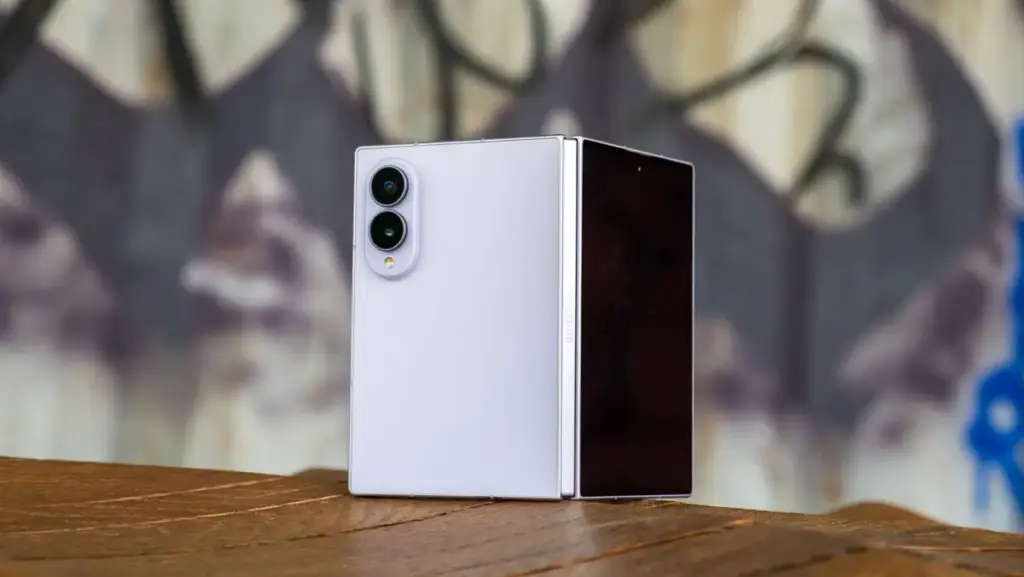
The landscape of the global smartphone market is undergoing a seismic shift as the "foldable craze," once a niche playground for Android manufacturers, enters a high-stakes era of intense competition and technological refinement. According to the latest data from Smart Analytics Global (SAG) for the third quarter of 2026, the industry is witnessing a dramatic realignment of power. While the broader mobile market struggles with historic lows, Samsung has leveraged a significant design pivot to solidify its leadership, even as the shadow of Apple’s entry into the category looms large over the coming year.
For years, the foldable segment was defined by experimental designs and early-adopter enthusiasm. However, the report highlights that the stakes were raised significantly with the introduction of the Apple iPhone Duo. This entry into the foldable space by the Cupertino-based tech giant has not only intensified the rivalry among manufacturers but has also set the stage for what analysts believe will be a massive market recovery in 2027.
Samsung’s Strategic Pivot and the Rise of the Wide Foldable
The headline of the Q3 2026 report is the staggering resurgence of Samsung. The South Korean tech giant, which pioneered the modern foldable with the original Galaxy Fold, has successfully defended its crown against a wave of aggressive competitors. According to SAG, Samsung now commands a dominant 69% of the global foldable market share.
This success is attributed almost entirely to the launch of the Galaxy Z Fold 8. In a departure from its previous design philosophy, Samsung introduced the Z Fold 8 as its first "wide-foldable." For several generations, critics and consumers alike had noted that Samsung’s foldable devices featured a narrow, somewhat cramped external display that felt less intuitive than a traditional "slab" smartphone. By adopting a wider, slightly shorter form factor, Samsung aligned itself with a design trend popularized by various Chinese original equipment manufacturers (OEMs).
The market response to this change was immediate and robust. Despite a general global decline in foldable shipments—which fell by 2% year-over-year to just over 7.5 million units—Samsung bucked the trend. The company saw a 13% year-over-year increase in shipments during the third quarter. This growth was particularly pronounced in key regions, with the report noting double-digit shipment increases in both South Korea and Europe.
The success of the Z Fold 8 suggests that the "wide" aspect ratio is no longer just a preference for power users but a requirement for mainstream appeal. By making the device feel more like a standard smartphone when closed, while still offering a tablet-like experience when unfolded, Samsung has addressed one of the most persistent complaints regarding its foldable lineup.
The Competitive Landscape: Huawei and the Turning Point

To understand the weight of Samsung’s current 69% market share, one must look back at the volatile history of the foldable segment. In early 2024, the industry reached what many considered a "turning point." During the first quarter of that year, Huawei managed to overtake Samsung in global foldable shipments, marking the first time the pioneer was knocked off its pedestal.
 Mobile Device Management (MDM) & Mobile OS
Xreal Aura Officially Launches: The Dawn of a New Era for Android XR and Spatial Computing
The long-anticipated arrival of Xreal’s latest hardware milestone has finally reached its...
 Mobile Device Management (MDM) & Mobile OS
OnePlus Accelerates Software Roadmap with Early Release of Stable ColorOS 17 for OnePlus 15 and OnePlus Pad 4
In a move that has surprised both industry analysts and the brand’s...
 Mobile Device Management (MDM) & Mobile OS
Vivo Unveils X500 Series in Shanghai Featuring 8,000mAh Battery and MediaTek’s 2nm Dimensity 9600 Pro
Vivo has officially pulled back the curtain on its latest flagship smartphone...