
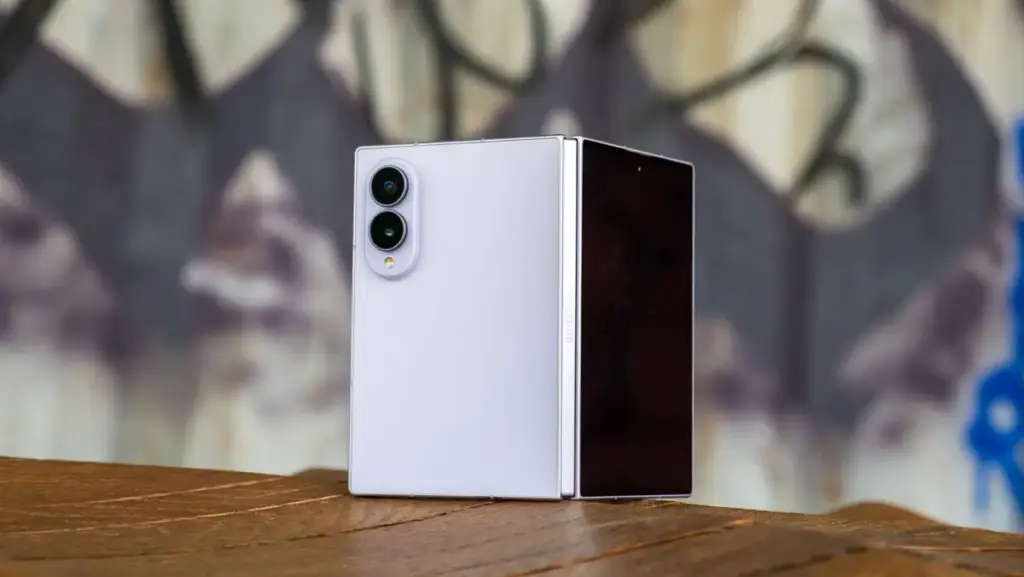
The landscape of the global smartphone market is undergoing a seismic shift as the "foldable craze," once a niche playground for Android manufacturers, enters a high-stakes era of intense competition and technological refinement. According to the latest data from Smart Analytics Global (SAG) for the third quarter of 2026, the industry is witnessing a dramatic realignment of power. While the broader mobile market struggles with historic lows, Samsung has leveraged a significant design pivot to solidify its leadership, even as the shadow of Apple’s entry into the category looms large over the coming year.
For years, the foldable segment was defined by experimental designs and early-adopter enthusiasm. However, the report highlights that the stakes were raised significantly with the introduction of the Apple iPhone Duo. This entry into the foldable space by the Cupertino-based tech giant has not only intensified the rivalry among manufacturers but has also set the stage for what analysts believe will be a massive market recovery in 2027.
Samsung’s Strategic Pivot and the Rise of the Wide Foldable
The headline of the Q3 2026 report is the staggering resurgence of Samsung. The South Korean tech giant, which pioneered the modern foldable with the original Galaxy Fold, has successfully defended its crown against a wave of aggressive competitors. According to SAG, Samsung now commands a dominant 69% of the global foldable market share.
This success is attributed almost entirely to the launch of the Galaxy Z Fold 8. In a departure from its previous design philosophy, Samsung introduced the Z Fold 8 as its first "wide-foldable." For several generations, critics and consumers alike had noted that Samsung’s foldable devices featured a narrow, somewhat cramped external display that felt less intuitive than a traditional "slab" smartphone. By adopting a wider, slightly shorter form factor, Samsung aligned itself with a design trend popularized by various Chinese original equipment manufacturers (OEMs).
The market response to this change was immediate and robust. Despite a general global decline in foldable shipments—which fell by 2% year-over-year to just over 7.5 million units—Samsung bucked the trend. The company saw a 13% year-over-year increase in shipments during the third quarter. This growth was particularly pronounced in key regions, with the report noting double-digit shipment increases in both South Korea and Europe.
The success of the Z Fold 8 suggests that the "wide" aspect ratio is no longer just a preference for power users but a requirement for mainstream appeal. By making the device feel more like a standard smartphone when closed, while still offering a tablet-like experience when unfolded, Samsung has addressed one of the most persistent complaints regarding its foldable lineup.
The Competitive Landscape: Huawei and the Turning Point

To understand the weight of Samsung’s current 69% market share, one must look back at the volatile history of the foldable segment. In early 2024, the industry reached what many considered a "turning point." During the first quarter of that year, Huawei managed to overtake Samsung in global foldable shipments, marking the first time the pioneer was knocked off its pedestal.
At that time, industry analysts suggested that Samsung had become complacent. While the Galaxy Z Fold and Z Flip series were reliable, they were seen as incremental updates that failed to push the boundaries of hardware design. In contrast, Huawei’s shipments surged by a massive 257% year-over-year in Q1 2024, while Samsung’s shipments plummeted by 42% in the same period.
In the current Q3 2026 climate, Huawei remains a formidable player, accounting for 14% of the foldable market share. The Huawei Pura X View, which holds the distinction of being the industry’s first wide-foldable, continues to be a significant contributor to the company’s portfolio. However, the SAG report notes a small year-over-year decline in Huawei’s shipments this past quarter. While the Pura X View proved that the wide-foldable concept was viable, Samsung’s global infrastructure and the refined execution of the Z Fold 8 appear to have reclaimed the momentum that Huawei once held.
A Market in Flux: The Broader Economic Context
The resilience of the foldable market is even more impressive when viewed against the backdrop of the wider smartphone industry. The SAG report paints a grim picture of the overall mobile market, noting that global smartphone shipments plummeted in the third quarter of 2026. Shipments reached their lowest level in 14 years, dropping 20% year-over-year.
Economic headwinds, extended device upgrade cycles, and a lack of perceived innovation in standard "slab" phones have all contributed to this downturn. Yet, foldables remain a rare bright spot. Even with a 2% dip in shipments, the segment is outperforming the general market. Samsung’s ability to claim the top spot in the broader market is largely credited to the premium performance of the Galaxy Z Fold 8 and its more expensive sibling, the Fold 8 Ultra.
These premium devices are serving as a buffer for manufacturers. While fewer people are buying phones overall, those who are buying are increasingly drawn to high-end, innovative form factors that offer a distinct experience from the devices they have owned for the past decade.
The 2027 Forecast: The "Apple Effect" and Market Recovery
While 2026 has been a year of stabilization and strategic maneuvering, Smart Analytics Global forecasts a massive shift on the horizon. The report predicts a "new growth cycle" beginning in 2027, with shipments potentially growing by 55% year-over-year.

The primary driver of this anticipated explosion is the Apple iPhone Duo. Historically, Apple’s entry into a product category—be it tablets, smartwatches, or wireless earbuds—has served as a catalyst for mass-market adoption. The "Apple Effect" often validates a technology for the general consumer, leading to increased competition, improved supply chain efficiencies, and a general expansion of the market.
Analysts believe that by 2027, wide foldables will account for the majority of premium phone shipments. This growth will be fueled not only by the iPhone Duo and Samsung’s continued iterations but also by a renewed push from Chinese manufacturers looking to regain ground. The transition from niche luxury to mainstream standard seems to be the trajectory for the foldable form factor as we move toward the end of the decade.
The Pricing Barrier: A Hurdle to Mass Adoption
Despite the optimism surrounding 2027, significant variables remain that could impede a total market turnaround. The most prominent of these is pricing. The foldable market remains prohibitively expensive for the average consumer, with many flagship devices hovering around or exceeding the $2,000 mark.
The pricing trend is not limited to foldables, either. The report points to Motorola’s Signature 27, a standard slab-style smartphone, which launched with a price tag of $1,599. When traditional phones reach such high price points, it sets a high floor for foldable technology. If manufacturers cannot find a way to bring these costs down, foldables may remain "cool" but unattainable for the mass market.
The success of the 2027 recovery depends heavily on whether buyers can afford the innovation being offered. While the wide-foldable design has solved the usability issue, the economic issue remains. As one industry observer noted, "Wide foldables are cool, but plenty of variables are getting in the way of a turnaround."
The Road Ahead
As 2026 draws to a close, the smartphone industry finds itself at a crossroads. Samsung has successfully navigated a period of stagnation to emerge as the clear leader once again, proving that listening to consumer feedback regarding design can yield massive dividends. Huawei continues to hold a significant stake, representing the innovative pressure that keeps the market moving forward.
However, the true test lies in the coming year. The projected 55% growth in 2027 represents a high-stakes gamble on consumer interest and economic stability. With Apple finally in the mix and Samsung operating at the top of its game, the foldable smartphone is no longer just a glimpse into the future—it is the central battlefield of the present. Whether the industry can overcome the "trying times" of the current economic climate through high-priced innovation remains to be seen, but for now, the foldable remains the most watched segment in tech.
 Mobile Device Management (MDM) & Mobile OS
Google Photos Users Report Crippling App Freezes on Pixel Devices Following Latest AI Update
The Google Pixel ecosystem has long been celebrated for its seamless integration...
 Mobile Device Management (MDM) & Mobile OS
Motorola Signals Potential Revival of Moto One Series Following Recent Regulatory Filings
Motorola appears to be reaching into its archives to breathe new life...
 Mobile Device Management (MDM) & Mobile OS
Google Expands Certified Refurbished Program to Include Pixel 9 Series with Significant Price Cuts
Google has officially expanded its hardware offerings in the United States by...







