
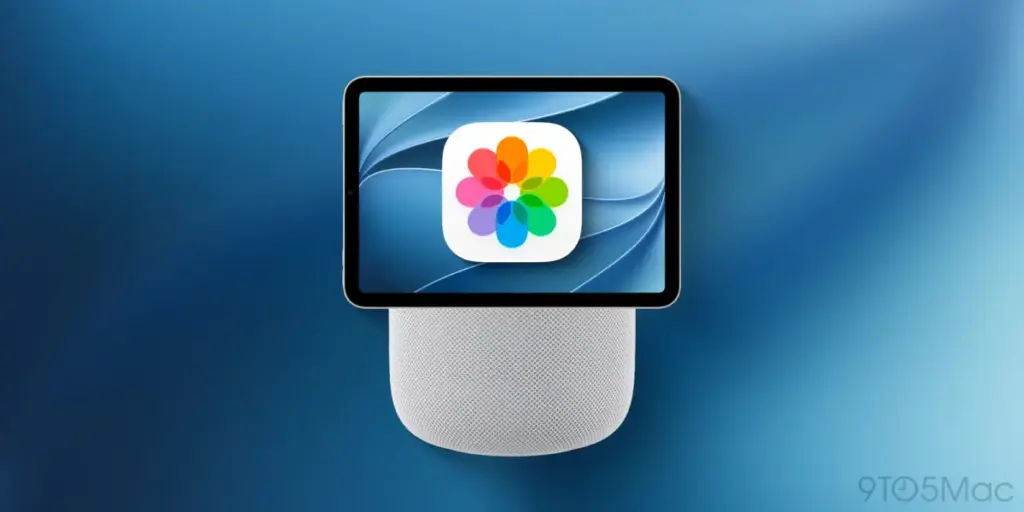
In terms of user interaction, the HomeView is being designed with a voice-first philosophy. Siri AI is expected to be the centerpiece of the user experience, acting as the primary interface for controlling the home and accessing information. Unlike an iPad, which is designed for close-up touch interaction, the HomeView is built for what Apple describes as "viewing" content from across a room. This implies a user interface with large, glanceable elements that can be easily read from a distance. Interestingly, the device will reportedly not feature a dedicated App Store. Instead, it will run a curated selection of Apple’s own core applications. To bridge the gap for third-party services, Apple is expected to allow users to project widgets from third-party apps directly from a nearby iPhone onto the HomeView screen. This approach keeps the device’s software environment streamlined and focused while still providing access to the broader ecosystem of iOS applications.

The "Welcome home" event is not limited to the HomeView alone; it represents a comprehensive overhaul of Apple’s smart home strategy. Alongside the new hub, Apple is expected to introduce hardware refreshes for the Apple TV set-top box and the HomePod mini. These updates are likely intended to ensure that the entire ecosystem is running on compatible hardware that can leverage the latest software features and connectivity standards. The goal appears to be a seamless integration where the HomeView acts as the visual brain of the house, the Apple TV serves as the entertainment core, and the HomePod mini provides distributed audio and voice access throughout different rooms.
Furthermore, Apple is moving to address one of the historical weaknesses of its home ecosystem: the limited range of compatible third-party accessories. To coincide with the launch of the HomeView, Apple has reportedly entered into strategic partnerships with major appliance and home accessory manufacturers, including LG. These collaborations are aimed at ensuring a wide range of smart home devices—such as thermostats, door locks, and doorbells—are ready to work natively with the HomeView and the Apple Home app from day one. By working closely with established brands like LG, Apple is attempting to create a "it just works" experience for the smart home, reducing the friction often found in setting up and managing a multi-brand domestic network.
This initiative comes at a time when the smart home market is increasingly competitive, with Amazon and Google having established long-running leads with their respective Echo Show and Nest Hub product lines. Apple’s entry with the HomeView suggests a belief that there is a market for a more premium, privacy-focused, and deeply integrated alternative. By focusing on high-end hardware like the A18 chip and a design that prioritizes both form and function, Apple is positioning the HomeView as a high-end command center for the modern household. The emphasis on "Apple Intelligence" and on-device processing will likely be a key marketing point, distinguishing the HomeView from competitors that rely more heavily on cloud-based processing for voice commands and data analysis.
 Smart Home & IoT Solutions
Controller for HomeKit Introduces Generative AI to Simplify Complex Smart Home Automations
The landscape of smart home management is undergoing a significant shift as...
 Smart Home & IoT Solutions
Apple Targets 2027 for Launch of Dedicated Home Security and Monitoring Service
For years, Apple’s presence in the smart home market has been characterized...
 Smart Home & IoT Solutions
Apple Signals Major Smart Home Pivot with Rumored 2027 Security Service and AI-Driven Hardware
For years, Apple’s presence in the smart home market has been characterized...







