

This brings the effective annual cost to $46,500, or roughly $93 per maintained scenario. When viewed through this lens, a "cheaper" platform that requires more manual intervention is actually more expensive, while a more modern platform that significantly reduces maintenance time can justify a higher license fee—or offer massive savings if its license is also more affordable.
Furthermore, teams must look at the fine print of their subscriptions, specifically regarding parallel capacity and execution limits. Many traditional models are based on parallelization or monthly usage hours. As CI usage grows and teams move toward more frequent deployments, these limits can become significant bottlenecks that drive up costs in ways that are not immediately apparent during the initial sales demo.
Benchmarking Against Modern Alternatives
To determine if a legacy tool still earns its place in the tech stack, organizations should move away from polished vendor demos and instead subject the platform to a series of "uncomfortable" workflows. These are scenarios that reveal whether a tool is a true testing platform or merely a sophisticated recorder.
One such benchmark involves a signup flow that requires email verification. This requires the tool to enter a unique address, retrieve a confirmation email from an external service, follow a link, and verify the resulting authenticated state. This tests the platform’s ability to handle data, external messaging, and complex state transitions.
Another critical test is the handling of multiple browser tabs and iframes. A common enterprise workflow might involve authenticating in one app, switching to a payment provider in a new tab, returning to the main application, and then interacting with an embedded support widget. Many tools struggle with these transitions, requiring custom code workarounds that add to the long-term maintenance burden.
Organizations should also test the platform’s ability to perform assertions on non-HTML content, such as generated PDFs. Verifying that an invoice contains the correct customer name and tax amount is a standard business requirement that many automation tools treat as an afterthought.
Perhaps most importantly, teams should measure the time it takes to go from a written requirement to a reviewed, repeatable test in the CI pipeline. By providing different vendors with the same natural-language requirement—such as a customer signing up, adding products to a cart, and applying a discount—managers can time the full process, including the manual corrections required to make the test stable.
The Case for Competitive Evaluation: Endtest
As the market matures, alternatives like Endtest have emerged, offering a different approach to both pricing and functionality. Unlike the opaque pricing of many enterprise competitors, Endtest provides transparent tiers, such as a Pro plan at $450 per month, which totals $5,400 annually. While enterprise needs may require custom configurations, starting with a clear baseline allows for a more honest cost-benefit analysis.
 Software Development & Scripting for IT
The Museum of Almost: Redefining Digital Narrative through Speculative Design and Technical Rigor
In the evolving landscape of digital art and web development, the boundary...
 Software Development & Scripting for IT
"Outside in 20" Redefines Digital Wellness with Local AI-Driven Outdoor Encouragement
In an era where digital connectivity often feels inescapable, a new open-source...
 Software Development & Scripting for IT
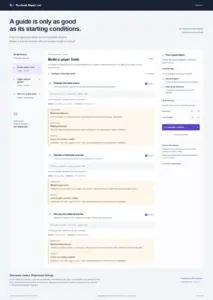
Bridging the Gap Between Logic and Instruction: An In-Depth Look at the Runbook Repair Lab
In the rapidly evolving landscape of software engineering, the "runbook"—a routine set...







