

The evolution of the Ruby on Rails framework has reached a significant milestone with the release of version 8, which introduces a native authentication generator. This development marks a departure from the long-standing industry reliance on third-party libraries, signaling a shift toward a more integrated, transparent, and "no-magic" approach to user security. In a recent technical demonstration using the "Study Flow" application, developers explored how this new feature simplifies the creation of robust security systems while providing full visibility into the underlying codebase.
For over a decade, the Rails community has largely turned to external gems, most notably Devise, to handle user authentication. While effective, these tools often functioned as "black boxes," wrapping complex logic in layers of abstractions that could be difficult for developers to customize or debug. Rails 8 addresses this by shipping an authentication generator that writes plain, readable Ruby code directly into the application. This allows engineering teams to maintain total control over their security architecture from day one.
The Architectural Shift Toward Native Authentication
The core philosophy behind the Rails 8 authentication system is the "coat check" model of state management. Because the Hypertext Transfer Protocol (HTTP) is inherently stateless, a web server cannot natively remember a user between two different requests. To solve this, Rails 8 utilizes a sophisticated cookie-based system. When a user provides valid credentials, the server issues a "ticket" in the form of a signed cookie. Every subsequent request includes this ticket, allowing the application to identify the user and retrieve their specific data.
To implement this, the new generator establishes a dual-table database structure. The primary table, "users," stores essential credentials, including email addresses and password digests. Notably, the system does not store raw passwords; instead, it utilizes the bcrypt library to create secure hashes. The secondary table, "sessions," represents a significant architectural refinement. By tracking individual sessions, the framework allows for more granular control, such as monitoring the IP address and user agent of every logged-in device. This structure facilitates features like remote logout and security auditing, which were previously more complex to implement manually.
Technical Implementation and Security Standards
The technical foundations of the Rails 8 system are built on three primary pillars: the User model, the Session model, and the Current attribute. The User model leverages the has_secure_password method, a classic Rails feature that handles password hashing and confirmation logic. However, Rails 8 introduces modern enhancements, such as built-in email normalization. By automatically stripping whitespace and downcasing email addresses, the framework prevents common entry errors and potential security oversights related to duplicate accounts.
One of the most notable additions is the use of ActiveSupport::CurrentAttributes. This feature provides a thread-safe, request-wide global storage for the current session and user. Historically, passing user data through various layers of an application—from controllers to models and views—could lead to "prop drilling" or messy code. The Current object solves this by making the user’s identity accessible anywhere within the context of a single request, while automatically resetting after the request concludes to prevent data leakage between different users.
Security is further bolstered by the inclusion of the Authentication concern. This modular piece of logic serves as the gatekeeper for the application. It includes a before_action filter that requires authentication by default for all controllers, effectively "locking" the application. Developers must then explicitly choose which areas to leave open, such as the login and registration pages, using the allow_unauthenticated_access method. This "secure by default" posture is a hallmark of modern software engineering best practices.
Managing the Lifecycle of a Session
The process of managing user sessions has been streamlined through the SessionsController. When a user attempts to log in, the system uses the authenticate_by method to verify the provided email and password against the database. If successful, a new record is created in the sessions table, and a signed, permanent cookie is placed in the user’s browser.
The Rails 8 generator also includes advanced security features out of the box, such as rate limiting. By restricting the number of login attempts within a specific timeframe—for example, ten attempts every three minutes—the framework provides native protection against brute-force attacks. This is a critical addition that previously required separate gems or complex configuration.
Furthermore, the system handles password resets with a high degree of security awareness. The generated PasswordsController and PasswordsMailer work in tandem to provide a secure reset flow via time-sensitive tokens. To prevent "account enumeration"—a technique where attackers try to discover valid email addresses by observing different server responses—the framework is designed to provide the same response whether or not a requested email address exists in the database.
Expanding the Framework: The Registration Gap
While the Rails 8 generator provides a comprehensive foundation for login and session management, it purposefully omits a default registration or "signup" flow. This design choice reflects the framework’s commitment to minimalism, allowing developers to define their own onboarding processes.
In the case of the Study Flow application, developers demonstrated how to bridge this gap by creating a RegistrationsController. This involves defining resourceful routes and building a registration form that captures email addresses and password confirmations. A key detail in this process is the enforcement of a 72-byte character limit on passwords, a constraint inherent to the bcrypt hashing algorithm. By integrating the registration flow with the existing authentication logic, developers can automatically sign in new users immediately after their accounts are created, providing a seamless user experience.
Testing and Validation in a Native Environment
The move to a native authentication system also simplifies the testing process. Because the generated code is part of the application’s own codebase, developers can write standard integration and unit tests to ensure the system behaves as expected.
In recent testing scenarios for the Study Flow project, developers utilized ActiveSupport::TestCase to verify email normalization and validation logic. Integration tests were used to simulate user journeys, such as signing in with valid credentials, rejecting incorrect passwords, and ensuring that logouts successfully destroy session records in the database. These tests confirm that the system remains robust even as the application grows in complexity.
A manual verification of the system’s security can also be performed through browser developer tools. By inspecting the session_id cookie, developers can confirm that it is both "signed" (making it unreadable to the user) and "HTTP-only" (preventing access via client-side scripts). These configurations are essential for mitigating risks such as session hijacking and cross-site scripting (XSS) attacks.
Conclusion and Future Outlook
The introduction of the authentication generator in Rails 8 represents a major step forward for the framework. By providing a transparent, customizable, and secure starting point for user management, Rails continues to uphold its reputation for developer productivity and "convention over configuration."
As developers move forward with building applications like Study Flow, the native authentication system provides a stable foundation for more advanced features. The next stages of development are expected to focus on "resourceful" CRUD (Create, Read, Update, Delete) operations, where the authentication system will be used to ensure that users can only access and modify their own data. This transition from basic security to complex authorization will further demonstrate the flexibility of the Rails 8 architecture.
Ultimately, the shift toward built-in authentication reduces the "tax" of starting a new project. By eliminating the need to evaluate, install, and maintain third-party authentication gems, Rails 8 allows engineering teams to focus their energy on the unique features that define their applications, all while maintaining a world-class security posture.
 Software Development & Scripting for IT
Bridging the Command Line and the Desktop: How Multimeter is Transforming macOS Productivity Through Script-Based Monitoring
In the modern digital workspace, the ability to monitor real-time data without...
 Software Development & Scripting for IT
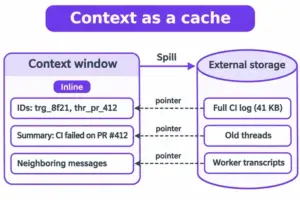
Chain of Recall: A New Architectural Blueprint for Long-Running AI Agent Memory
As artificial intelligence shifts from simple chat interfaces to "super-agents" capable of...
 Software Development & Scripting for IT
Critical "php2shell" Vulnerabilities Trigger Emergency PHP Security Updates to Prevent Remote Execution
The global PHP security team has issued an emergency set of updates...







