

The PHP development team has issued a formal warning regarding a newly discovered vulnerability that could potentially allow an attacker to execute arbitrary code on a web server. This disclosure, made on October 23, 2026, comes at a particularly sensitive time for the web development community, arriving just forty-eight hours after the project released a series of emergency patches to address two critical flaws collectively known as PHP2Shell. While the newly identified issue is currently deemed a lower risk than its predecessors, its discovery underscores the ongoing security challenges facing the most widely used server-side scripting language on the internet.
The latest vulnerability has been assigned the identifier CVE-2026-115560. Unlike the PHP2Shell flaws, which triggered an immediate emergency response, the PHP project is categorizing this new issue as a secondary concern that primarily affects web applications operating under specific and somewhat unconventional configurations. Because the risk is perceived as unlikely to manifest in standard deployments, the project has opted not to issue an immediate emergency software update. Instead, the security team is advising administrators to implement a manual configuration change to mitigate the risk until a formal fix can be integrated into the next scheduled routine maintenance release.
In an informational advisory published late Friday, the PHP project clarified that CVE-2026-115560 is a distinct issue from the vulnerabilities addressed on October 21. Those earlier flaws, tracked as CVE-2026-109618 and CVE-2026-109619, were of the highest severity, as they allowed unauthenticated attackers to achieve remote code execution on vulnerable servers. Those critical issues were patched in the emergency releases of PHP 8.5.12, 8.4.27, 8.3.36, and 8.2.35. The security team emphasized that while users should prioritize upgrading to those versions to protect against PHP2Shell, those specific updates do not contain a fix for the newly disclosed CVE-2026-115560.
The technical nature of CVE-2026-115560 involves the way PHP handles session data and serialization. For a server to be at risk, an application must meet a very narrow set of criteria in its operational environment. Specifically, the vulnerability can only be triggered if a web application is configured to use either the "php_binary" or "php_serialize" options for the session.serialize_handler setting within its main configuration files. Furthermore, the application must then dynamically change this setting to the standard "php" handler during execution by calling the ini_set() function. Critically, this change must occur before the session_start() function is invoked.

In addition to these specific configuration requirements, the "session upload progress" feature must remain active for the vulnerability to be exploitable. This feature, which is enabled by default in many PHP installations, is designed to allow developers to track the progress of file uploads in real-time. The PHP project noted that applications that do not dynamically switch their serialization handlers while running are not exposed to this specific threat, even if the upload progress feature remains active. The advisory suggests that the combination of these specific conditions is rare in professional production environments, leading to the decision to handle the fix through the standard release cycle.
To protect systems in the interim, the PHP project recommends a straightforward mitigation: disabling the session upload progress feature. This is achieved by setting the configuration directive session.upload_progress.enabled to 0. This recommendation is particularly notable because it is the exact same mitigation strategy that was proposed as a temporary workaround for CVE-2026-109619 during the PHP2Shell crisis earlier in the week. Security researchers point out that administrators who already applied this hardening measure as a response to the October 21 advisory are already protected against the new issue and do not need to take further action.
The disclosure of CVE-2026-115560 comes as the global cybersecurity community is still reeling from the fallout of the PHP2Shell vulnerabilities. Data from major infrastructure providers suggests that the threat landscape for PHP servers has become extremely volatile. Amazon’s security teams reported that their network of honeypots—decoy systems designed to lure attackers—recorded exploit attempts targeting the PHP2Shell flaws as early as October 17. This indicates that attackers may have had access to functional exploits or knowledge of the vulnerabilities four days before the PHP project made its public disclosure and released patches.
The scale of the attacks intensified dramatically once the vulnerabilities were officially announced. Cloudflare, which provides security and performance services for millions of websites, reported a massive spike in malicious traffic. Within just 45 minutes of the October 21 disclosure, the company’s systems detected tens of thousands of exploit attempts. By the morning of October 22, that number had surged into the millions, representing a coordinated effort by threat actors to identify and compromise unpatched servers across the globe.
Security firms including Sophos and Arctic Wolf have been monitoring the nature of these attacks and have observed attempts to use the PHP2Shell flaws to distribute malware. Specifically, researchers have identified efforts to install variants of the Mirai botnet. Mirai is a well-known family of malware that typically targets Linux-based systems and Internet of Things (IoT) devices, enslaving them into a massive network used to launch devastating Distributed Denial of Service (DDoS) attacks. The attempt to port this malware to web servers via PHP vulnerabilities highlights the high stakes of the current threat environment.

Despite the high volume of automated scanning and exploit attempts, there is some evidence that the vulnerabilities are not as easy to weaponize as initially feared. Security organizations such as Previdian and Wordfence have reported that while they have observed millions of probes and "exploit-like" payloads being sent to web servers, they have yet to see widespread evidence of successful remote code execution in the wild. Researchers believe that building a reliable exploit that works across different server architectures and PHP configurations is proving to be a significant technical challenge for many attackers.
The PHP project has not yet released a comprehensive severity score for CVE-2026-115560, nor has it specified exactly which versions are currently affected or which upcoming release will contain the permanent fix. The project intends to publish a full, detailed advisory once the routine updates are ready for public distribution. For now, the focus remains on ensuring that developers and system administrators understand the specific configuration risks and implement the recommended mitigations.
The situation serves as a reminder of the complexities inherent in maintaining a language that powers a significant portion of the web. The "session upload progress" feature, while useful for user experience, has now been linked to multiple security concerns within a single week. This has led some security practitioners to advocate for a "secure by default" approach, where such features are disabled unless explicitly required by the application logic.
As the industry waits for the next round of routine updates, the priority for IT departments remains the immediate patching of the PHP2Shell flaws. While CVE-2026-115560 is an important discovery, the millions of active exploit attempts currently being logged by security providers are focused on the flaws patched on October 21. Organizations are urged to verify their PHP versions and ensure that the session.upload_progress.enabled directive is set to 0 if they cannot immediately update their environments or if they utilize the unusual configuration patterns described in the latest advisory.
The PHP development team continues to monitor the situation and has indicated that it will provide further updates as more information becomes available. In the meantime, the surge in botnet activity and the rapid transition from disclosure to mass exploitation serve as a stark warning of the speed at which modern threat actors operate. The discovery of CVE-2026-115560, while less critical, ensures that the security of PHP sessions will remain a top priority for web administrators well into the coming months.
 Cybersecurity Basics & Security News
CISA Alerts Federal Agencies to Exploited VMware ESX Vulnerability Following Targeted Cyber Espionage Campaign
The United States Cybersecurity and Infrastructure Security Agency (CISA) has formally expanded...
 Cybersecurity Basics & Security News
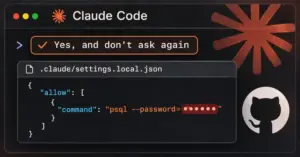
Security Flaw in Anthropic’s Claude Code Exposes Sensitive Developer Secrets on Public GitHub Repositories
The rapid integration of artificial intelligence into the software development lifecycle has...
 Cybersecurity Basics & Security News
Chinese Espionage Group Armory Castle Exploits Critical VMware vCenter Zero-Day in Sophisticated Data Theft Campaign
Cybersecurity researchers have uncovered a high-stakes espionage operation led by a suspected...







