
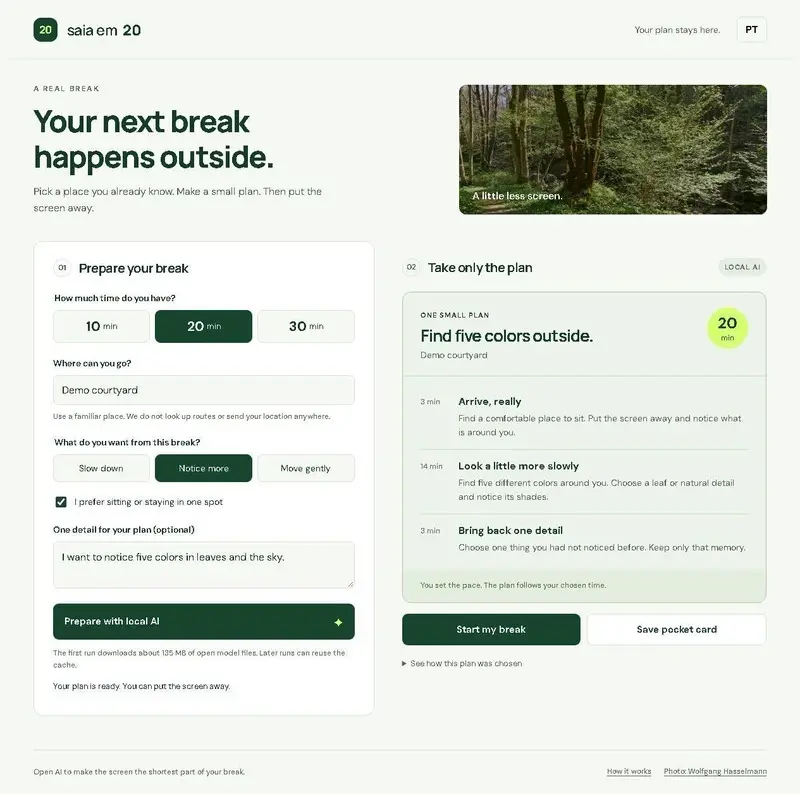
Performance metrics for this local inference are impressive. In a controlled test environment, the Portuguese color-matching check selected the correct activity with only 144 milliseconds of inference time, contributing to a total processing time of approximately 2,500 milliseconds when including overhead. The model and its associated tokenizer require roughly 135.4 MB of storage. While this is a significant download, the use of browser caching means that subsequent uses are nearly instantaneous, provided the browser storage is not cleared.
Why Does Open Innovation Matter?
The development of "Outside in 20" underscores the practical benefits of open innovation in the AI space. By using open-source models and libraries, the developer was able to move the decision-making process from a remote API to the user’s local device. This not only enhances privacy but also allows for a level of transparency and auditability that is rarely found in proprietary "black box" AI systems.
The open nature of the project was instrumental in its technical evolution. Because the model, the filters, and the activity catalogue are all independent and inspectable components, the developer could identify the failure of the original SmolLM2 generator and replace it with a more suitable embedding model without re-engineering the entire application. The repository also utilizes pinned model revisions, ensuring that the results are reproducible and stable over time.
This philosophy of openness is a perfect match for the "Touch Grass" challenge. It encourages a brief, intentional interaction with technology that serves as a bridge to the physical world, rather than a destination in itself. By preparing an activity and then carrying it out via a "pocket card," the user shifts from an ongoing conversation with an AI to a direct engagement with nature. While the developer notes that formal outdoor trials and user studies have yet to be conducted, the technical foundation is set for a new way of thinking about digital-physical transitions.
My Agent Session
The creation of "Outside in 20" was also a showcase for AI-assisted development. The developer utilized Codex for various stages of the project, including initial implementation, interface iteration, and the generation of documentation. This collaborative process is detailed in a comprehensive development log, which tracks the rationale behind the model change, the implementation of timer persistence, and the decisions regarding browser caching.
Prize Categories
The project has been submitted for consideration in two major categories of the Hacktoberfest challenge: the Overall prize and the Best Use of GitHub Copilot through GitHub Actions. The latter category is particularly relevant, as the developer utilized GitHub Actions to automate the verification and packaging of the application, ensuring that every contribution is vetted through a successful workflow before deployment. By integrating these advanced automation tools with a focus on local AI and user well-being, "Outside in 20" stands as a compelling example of how modern software can be used to help us step away from the screen and back into the world.
 Software Development & Scripting for IT
The Architecture of Thought: Why Modern Software Engineering Mentorship is Moving Beyond Syntax
In the modern landscape of software development, a stark divide has emerged...
 Software Development & Scripting for IT
Architecting Precision: Why Staged Retrieval and Explicit Contracts are Redefining AI Insurance Claims Intake
In the rapidly evolving landscape of insurance technology, the integration of Large...
 Software Development & Scripting for IT
Bridging the Context Gap: TokenCap Introduces Schema Intelligence to Eliminate AI Coding Errors
In the rapidly evolving landscape of software development, the integration of Artificial...






