
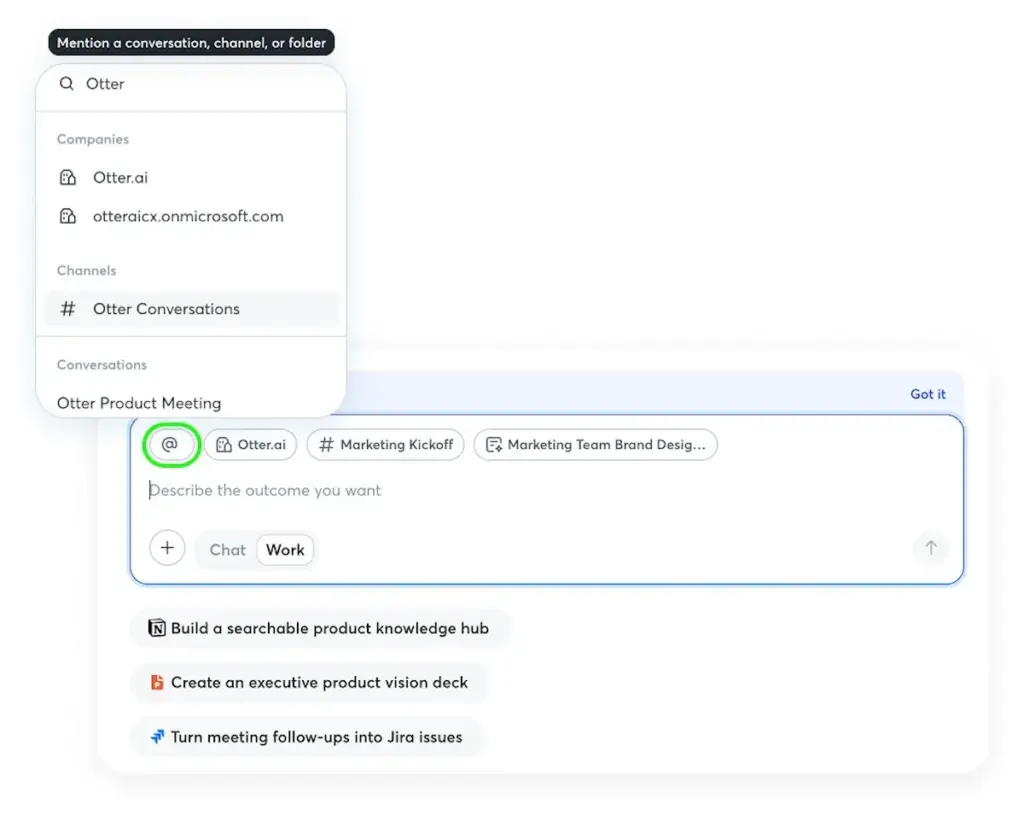
Unlike the transcription window, which is often visible to others or serves as a record for the group, Live Assist provides a private interface where the user can receive guidance. It can suggest pertinent questions to ask based on the flow of the conversation, track whether specific meeting "objectives" are being met, and provide instant context if a participant joins late or loses the thread of the discussion.
Thomas Randall, a research director at Infotech, highlighted the uniqueness of this feature in a general business context. While similar "widget assist" tools have been common in customer support and call center environments to help agents navigate scripts and solve customer issues, Randall noted that such a tool for internal productivity and general business meetings is quite rare. By bringing the "coaching" model to the average knowledge worker, Otter is attempting to improve the quality of the meeting itself, not just the documentation that follows it.
The Future of Voice AI in the Enterprise
The $320 million growth investment and the subsequent launch of these advanced features signal that Otter.ai is preparing for a future where voice is the primary interface for workplace automation. As generative AI models become more adept at understanding intent and executing multi-step instructions, the barrier between a spoken conversation and a completed task is dissolving.
The transition from "transcription service" to "AI agent" is a significant hurdle, requiring not just technical accuracy but also deep integration into the software that businesses use every day. By enabling its AI to live-update Salesforce and draft Notion documents, Otter is attempting to become an indispensable layer of the corporate tech stack. The success of this strategy will likely depend on how seamlessly these integrations perform and how much trust users place in the AI to handle their professional correspondence and data management.
As organizations continue to grapple with "meeting fatigue" and the administrative burden of a digital-first workplace, the demand for tools that can "access and act on context" will only grow. Otter’s latest updates represent a calculated bet that the future of work belongs to those who can automate the mundane, allowing human workers to focus on the high-level strategy and creative problem-solving that AI cannot yet replicate. With the backing of significant new funding and a clear roadmap toward agentic AI, Otter is positioning itself as a leader in the next generation of workplace collaboration.
 Small Business IT & Cloud Computing
The Architecture of Trust: Decoding Apple’s Strategy for Agentic Siri and the Future of AI
The technology industry is currently undergoing a fundamental shift, moving away from...
 Small Business IT & Cloud Computing
After the Blue Tsunami: Why Microsoft Faces a New Era of Oversight, Regulation, and Fiscal Contraction
The political landscape of the United States has undergone a seismic shift...
 Small Business IT & Cloud Computing
US Tech Policy Shifts as Midterm Election Results Signal New Era of Scrutiny for AI and Data Centers
The landscape of American technology policy has undergone a seismic shift following...







