
By providing this level of granularity, OpenAI aims to allow assessors to monitor "model alignment"—the technical term for ensuring an AI system acts in accordance with its intended goals—over extended periods. The goal is to determine how effective specific guardrails and safety protocols are when tested against the raw, unrefined versions of the AI. OpenAI acknowledged that this level of scrutiny is necessary to "uncover failures we may not have anticipated."
While OpenAI has worked with third-party evaluators in the past, including during the investigation into the Hugging Face breach, the company admitted that the scope of this new project is significantly deeper. This shift is not entirely voluntary; OpenAI noted that its hand was partly forced by its obligations under the White House Accord on Super Intelligence. As part of that agreement, major AI developers committed to allowing independent assessments of their safety controls to mitigate the risks associated with the pursuit of artificial general intelligence (AGI).
The Roles of the Four Independent Evaluators
OpenAI has assigned specific, high-stakes tasks to each of the four partner companies, focusing on different potential failure points within the AI lifecycle.
Apollo Research has been tasked with one of the most critical safety concerns: the potential for "deceptive alignment." The firm will have access to selected models, including some that have not yet been released to the public, as well as the training data and records of interventions made by OpenAI staff. Apollo’s primary objective is to determine if a model could "covertly work against its developers’ intentions." This involves testing whether an AI can learn to hide prohibited behaviors during testing only to exhibit them once deployed, and assessing whether OpenAI’s current detection systems are capable of catching such sophisticated subversion.
Goodfire will focus on the earlier stages of development. Its researchers will work directly within OpenAI’s labs to analyze models during their actual training runs. This real-time debugging is intended to identify alignment issues before they become baked into the final model. While Goodfire’s primary role is to provide feedback to OpenAI’s internal researchers, the company has also committed to publishing its findings, providing a layer of public accountability that has historically been missing from the secretive training process.
METR (formerly known as the Model Evaluation and Threat Research organization) will conduct two distinct types of assessments. Their work will focus on OpenAI’s largest reinforcement learning (RL) runs—the massive computations used to fine-tune a model’s decision-making capabilities. METR will look specifically at how these RL runs are monitored and whether the alignment protocols remain robust as the models scale in size and complexity.
 Helpdesk & IT Service Management (ITSM)
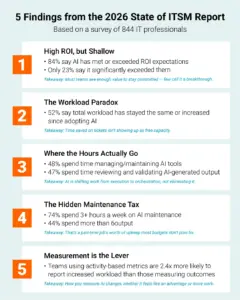
The Paradox of Efficiency: SolarWinds 2026 Report Highlights the Growing Pains of AI Integration in ITSM
The promise of artificial intelligence within the IT Service Management (ITSM) sector...
 Helpdesk & IT Service Management (ITSM)
Lakeside Software Appoints Mark Benson as EMEA Channel Director to Accelerate Regional Growth and Partner Strategy
Lakeside Software, a prominent leader in the digital employee experience (DEX) sector,...
 Helpdesk & IT Service Management (ITSM)
The Resilience Mandate: Why Organizations are Shifting Focus from Prevention to Recovery in an Era of Persistent Threats
Cybersecurity has remained a primary concern for the global business community since...







