
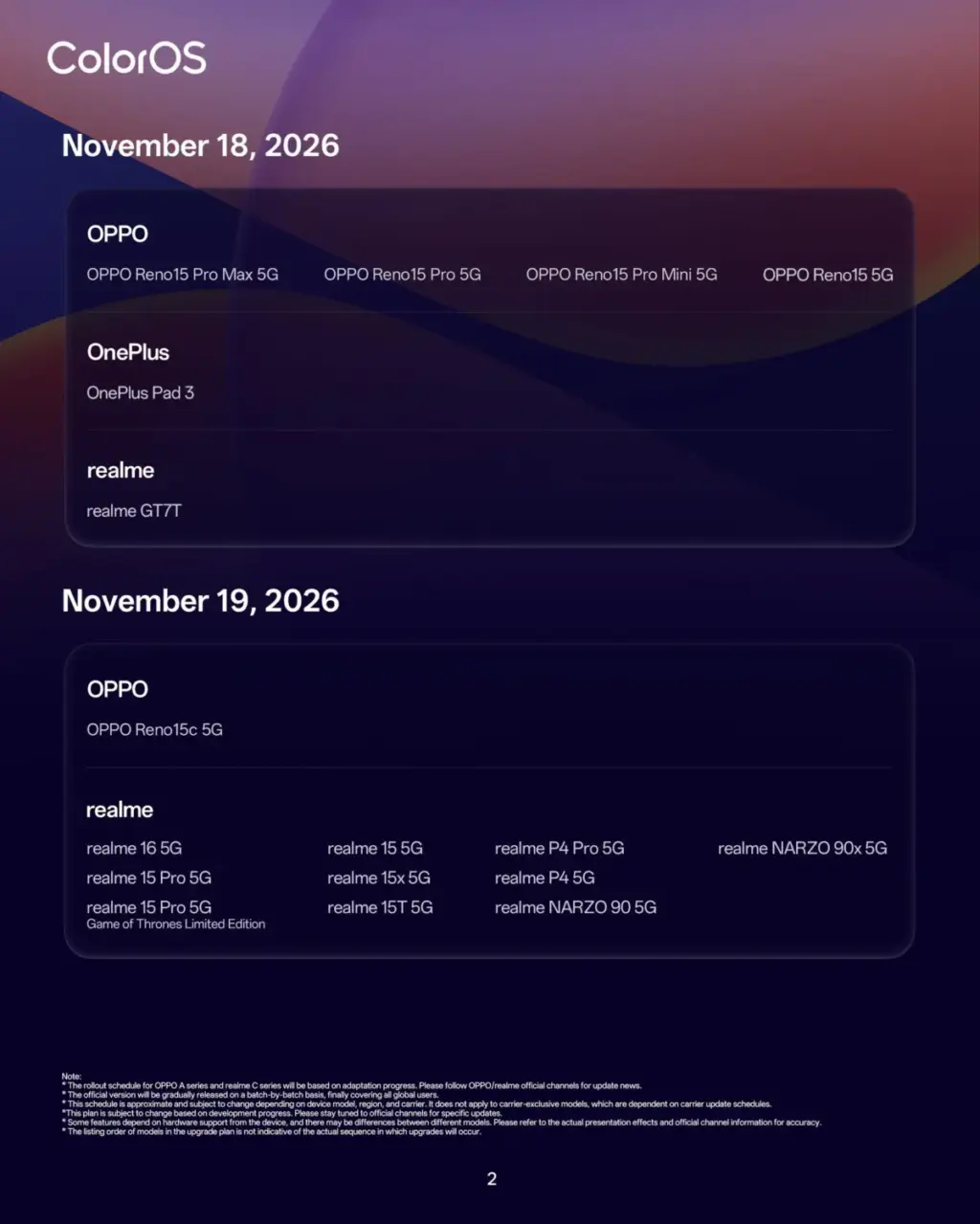
The landscape of the OnePlus software experience is undergoing its most significant transformation to date. In a move that clarifies the future of its device ecosystem, OnePlus has officially released a detailed rollout schedule for the Android 17 update, providing a roadmap for several generations of smartphones and tablets. While the arrival of a new operating system is usually a cause for celebration among tech enthusiasts, this particular update carries a heavier weight: it marks the official retirement of the OxygenOS branding in favor of OPPO’s ColorOS 17.
This strategic shift follows years of increasing integration between OnePlus and its parent company, OPPO. The latest rollout calendar, which was shared via the official ColorOS Global account on X (formerly Twitter), confirms that the transition will begin in earnest this November. For long-time OnePlus fans, the move represents the final step in a long-standing effort to unify the software development resources of the two brands, effectively streamlining the engineering process while bringing a new aesthetic and functional identity to OnePlus hardware.
The transition to ColorOS 17 is not merely a name change; it is a fundamental shift in how OnePlus devices will look, feel, and interact with the user. By moving to a unified codebase, the company aims to provide faster updates and a more consistent experience across its global portfolio, though the departure from the "clean and lean" reputation of early OxygenOS remains a point of intense discussion within the Android community.
The November Rollout: A Strategic Launch Sequence
The deployment of Android 17—rebranded under the ColorOS 17 banner—is scheduled to begin in the first week of November. Leading the charge is the OnePlus 13R, the latest iteration of the brand’s performance-focused "R" series. Owners of the 13R can expect the update process to commence on November 5. This early start suggests that OnePlus is prioritizing its newest hardware to showcase the capabilities of the new software, particularly the performance optimizations and AI-driven features that define the Android 17 era.
Following the initial launch on the 13R, the company will turn its attention to its primary flagship, the OnePlus 12. The update for the OnePlus 12 is slated to begin on November 17. As the device that has carried the brand’s premium ambitions throughout the past year, the OnePlus 12’s transition to ColorOS 17 will be a critical test of how well the new software handles high-end hardware and professional-grade camera systems.
The momentum continues into the middle of the month with the OnePlus Pad 3. Scheduled for November 18, the update for the tablet is expected to focus heavily on the "continuity" features that OPPO has been promoting. These features are designed to create a seamless bridge between smartphones and tablets, allowing for shared clipboards, easier file transfers, and mirrored notifications—a ecosystem-play that has become increasingly important in the modern mobile market.
One of the most anticipated updates in the November window concerns the OnePlus Open. As the brand’s first foray into the foldable market, the Open has been praised for its hardware design and multitasking capabilities. On November 24, the OnePlus Open is scheduled to receive its ColorOS 17 update. This version of the software is expected to include specific refinements for large-screen layouts and foldable displays, ensuring that the device’s unique form factor is fully leveraged by the new Android 17 architecture.
Rounding out the month, the mid-range Nord series will join the fold. The Nord 6 and the Nord CE 6 are both scheduled to begin their update cycles on November 26. The inclusion of these devices so early in the rollout highlights the importance of the Nord lineup to the brand’s market share, ensuring that users of more affordable handsets are not left behind as the flagship models move forward.
OxygenOS is Officially on Its Way Out
The retirement of OxygenOS is perhaps the most significant cultural shift for the OnePlus brand since its inception. For years, OxygenOS was the primary reason many enthusiasts chose OnePlus over competitors. It was celebrated for its near-stock Android appearance, its lack of bloatware, and its focus on speed and customization. However, the internal reality of software development has been shifting for some time.
OnePlus and OPPO officially announced the sharing of software development resources several years ago, a move intended to pool the expertise of both engineering teams. Initially, the companies maintained that the two operating systems would remain distinct, even if they shared a common codebase. However, as the versions progressed, the visual and functional differences between OxygenOS and ColorOS began to blur. With the arrival of Android 17, the pretense of separation is being dropped in favor of a singular, unified identity under the ColorOS banner.
ColorOS 17, built upon the foundation of Android 17, represents a vision of the smartphone experience that is deeply integrated and feature-rich. Users can expect a suite of interface refinements, including updated iconography, new system fonts, and a redesigned notification shade. Perhaps more importantly, the update focuses on "smoother animations," utilizing new physics-based engines to ensure that every swipe and gesture feels instantaneous and fluid.
Performance optimization is another pillar of the ColorOS 17 experience. The software includes advanced resource management tools designed to extend battery life and maintain system speed over long periods of use. Furthermore, AI-powered features are taking center stage. From smarter photo editing tools to predictive text and automated system maintenance, the new OS leverages machine learning to anticipate user needs. OPPO is also pitching the software around the concept of "smarter interactions," which includes improved voice assistants and more intuitive gesture controls.
More OnePlus Devices are Waiting for December
While the November schedule covers a significant portion of the modern OnePlus lineup, the rollout is a multi-month endeavor. The company has confirmed that several other popular models are waiting in the wings for their turn in December. The OnePlus 11, which served as the brand’s 2023 flagship, is among those scheduled for the final month of the year. It will be joined by the OnePlus 12R and the Nord 5, ensuring that the previous generation of hardware remains current with the latest security patches and software innovations.
The roadmap extends well into the future, with another group of 13 OnePlus devices scheduled for updates throughout December and into the first quarter of 2027. While specific dates for these older or more niche devices have not yet been confirmed, their inclusion in the official schedule provides reassurance to users concerned about the longevity of their hardware. This long-term support commitment is a key part of the brand’s strategy to compete with other major manufacturers who have recently extended their software update windows.
It is important for device owners to manage their expectations regarding these specific dates. OnePlus has clarified that the dates provided are "rollout start dates," not a guarantee that every user in every region will see a notification on that exact day. Software deployments of this scale typically occur in stages to prevent server overload and to allow the company to monitor for any unforeseen bugs that might emerge in a live environment. Regional carrier testing and local regulatory requirements can also influence exactly when the "Update Available" prompt appears on a specific handset.
As OnePlus moves into this new chapter, the transition from OxygenOS to ColorOS 17 marks the end of an era and the beginning of a new, more unified future. While the loss of the OxygenOS name may be a point of nostalgia for long-time fans, the focus now shifts to whether ColorOS 17 can deliver the speed, stability, and innovation that OnePlus users have come to expect. With a packed schedule and a wide range of devices set to be updated, the coming months will be a defining period for the brand’s identity in the global market.
 Mobile Device Management (MDM) & Mobile OS
South Korean Regulators Fine Samsung $15 Million Over Misleading Galaxy Gaming Performance Claims
South Korea’s Fair Trade Commission (FTC) has handed down a significant financial...
 Mobile Device Management (MDM) & Mobile OS
Google Expands New Noto 3D Emoji Design to Older Pixel Devices Following Android 17 Debut
The visual landscape of the Android operating system is undergoing one of...
 Mobile Device Management (MDM) & Mobile OS
Samsung Reportedly Shifting Strategy for Galaxy S27 Series with New ‘Pro’ Model and Premium-Heavy Production Goals
As the global smartphone market continues to gravitate toward high-end, feature-rich devices,...







