
As the Supercomputing 2026 conference continues, the industry will be looking for more details on the Rubin HPC’s power consumption, its integration into the wider Blackwell-to-Rubin transition, and the availability of software libraries optimized for its unique core configuration. The move to a four-die structure via NVLink-C2C represents a significant bet on modular silicon design, a path that requires not only hardware excellence but also a robust software ecosystem to ensure that developers can actually utilize the 50,000 cores effectively. Nvidia’s CUDA platform has long been its "moat," and the Rubin HPC launch is a clear indication that the company intends to extend that moat into the realm of multi-die, agentic computing.
In the larger context of the Rubin GPU family, the HPC variant serves as a high-water mark for what the architecture can achieve when pushed to its limits. While other members of the family may be optimized for different power envelopes or specific data center configurations, the Rubin HPC is the "unrestricted" version, designed for the crown jewels of global research—the national laboratories, the top-tier university research centers, and the R&D departments of the world’s largest aerospace and pharmaceutical companies. For these organizations, the ability to accelerate a simulation by even a small percentage can result in years of saved time and billions of dollars in saved costs.
Nvidia’s presence at Supercomputing 2026, punctuated by the Rubin HPC reveal, serves as a reminder of the company’s origins. Before it was a titan of the trillion-dollar AI industry, Nvidia built its reputation on the backs of scientists and researchers who used its gaming hardware to solve the world’s hardest problems. With Rubin HPC, the company appears to be returning to those roots with a renewed focus, providing a specialized tool that recognizes that the future of science is not just about faster math, but about more intelligent workflows. As the show progresses, the Rubin HPC will undoubtedly remain a central topic of discussion, representing both the technical pinnacle of the Rubin architecture and a strategic pivot toward the era of autonomous, agent-driven scientific discovery.
 Hardware Reviews & PC Building
Tom’s Hardware Expands Digital Reach with Launch of Official Mobile Application for Android and iOS
The landscape of technology journalism has undergone a profound transformation over the...
 Hardware Reviews & PC Building
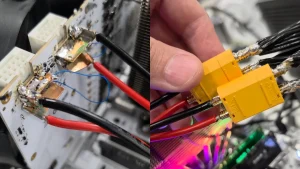
Custom Power Distribution Mod Surfaces to Tackle RTX 5090 Overheating Concerns
The launch of NVIDIA’s flagship GeForce RTX 5090 has been met with...
 Hardware Reviews & PC Building
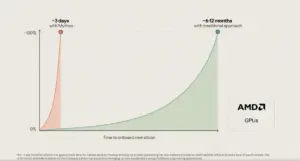
Anthropic’s Claude Mythos Model Achieves Rapid AI Portability to AMD Hardware, Challenging Nvidia’s Software Dominance
In a significant revelation that could signal a shift in the competitive...







