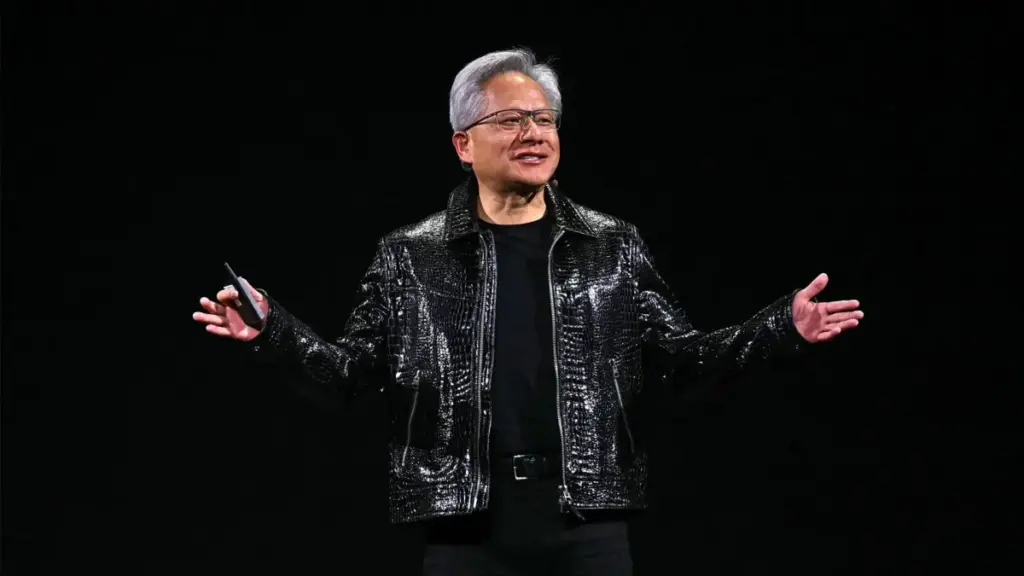
In a move that has sent ripples through the global technology sector, Nvidia has announced that Jensen Huang will return to his position as Chief Executive Officer, a mere two weeks after his sudden resignation. The decision marks the end of a brief but tumultuous period of leadership uncertainty for the world’s most prominent manufacturer of artificial intelligence chips.
The Santa Clara-based company confirmed the news in a formal statement, revealing that the board of directors held a unanimous vote to reinstate Huang as president, CEO, and a member of the board. The swiftness of the reinstatement underscores the company’s desire to restore stability as it navigates a complex landscape of market dominance and geopolitical scrutiny.
According to the company’s official communication, the board’s decision was not made in isolation. It followed what was described as a “series of discussions and meetings” specifically focused on Huang’s capacity to lead Nvidia during a time when the company’s operations are increasingly viewed through the lens of national security.
National Security and Government Consultations
The primary catalyst for the board’s deliberation was a set of concerns regarding potential national security risks. Given Nvidia’s pivotal role in the global AI infrastructure—producing the high-end GPUs that power everything from consumer electronics to advanced military simulations and state-level data centers—any controversy involving its leadership is treated with the highest level of gravity by federal regulators.
“In the process of reaching its decision, the Board received input from senior levels of the United States government,” the company statement noted. “Based on that input, the Board is confident that Mr. Huang’s reinstatement poses no national security risk.”
This involvement of the U.S. government highlights the unique position Nvidia occupies. Unlike typical corporate leadership changes, the status of Nvidia’s CEO has direct implications for trade policy and international relations. The board’s move to consult with federal officials suggests a collaborative effort to ensure that the leadership transition—or in this case, the return to the status quo—would not trigger further regulatory hurdles or export restrictions.
Harvey Jones, the chair of the board at Nvidia, expressed the company’s total support for the returning executive. Jones emphasized that the board has “every confidence” in Huang’s ability to steer the company forward. At the same time, Jones took the opportunity to acknowledge the work of Colette Kress, who stepped in to lead the company during the interim period.
Kress, who serves as Nvidia’s Chief Financial Officer, took on the role of interim CEO for the two-week duration of Huang’s absence. Jones praised her for “outstanding service” during what was arguably one of the most stressful periods in the company’s history. With Huang’s return finalized, Kress will resume her full-time duties as CFO, providing a sense of continuity to the company’s financial leadership.
The Context of the Resignation
The saga began on November 12, when Huang originally resigned from his post. The departure was precipitated by a series of reports detailing personal conduct matters, specifically allegations of extramarital affairs. While corporate leadership changes due to personal scandals are not uncommon, the situation involving Huang took on a much more serious tone due to the identity of one of the individuals involved.
Reports suggested that one of the alleged affairs involved Alice Huang, a business executive whom United States intelligence officials suspected of acting as an asset for Chinese intelligence. This connection immediately transformed a private matter into a concern of national importance. The prospect of the CEO of the world’s most critical hardware company being in close proximity to a suspected foreign operative prompted immediate action from both the company and the federal government.
The pressure intensified on November 5, when the U.S. House Committee on Foreign Affairs took the extraordinary step of calling for Huang to appear before a closed-door briefing. The committee sought to understand the nature of the relationships and whether any sensitive information regarding Nvidia’s proprietary technology or its dealings with the U.S. government had been compromised.
In the days leading up to the initial resignation, Nvidia’s board launched its own internal investigation into the allegations. This internal probe was designed to vet the security implications of Huang’s personal associations and to determine if there had been any breach of corporate governance or fiduciary duty. The announcement of his reinstatement suggests that both the internal investigation and the government’s review failed to find evidence of a compromise that would disqualify him from leading the firm.
Strengthening Corporate Governance and Compliance
While Huang has been cleared to return, Nvidia is not simply returning to business as usual. The company has announced the implementation of several new oversight measures designed to prevent future security concerns and to provide a more robust framework for trade compliance.
As part of this initiative, Nvidia has formed a “National Security and Export Control Committee.” This body is comprised of independent directors whose primary mandate is to oversee the company’s adherence to international trade laws and to monitor potential national security risks. By placing this responsibility in the hands of independent directors, the board aims to create a layer of accountability that is insulated from the day-to-day executive management of the company.
Furthermore, Nvidia is in the process of creating a new high-level executive position: Chief Compliance Officer. This individual will be tasked with overseeing compliance matters across the entire global organization and will work in close coordination with the newly formed National Security and Export Control Committee. The search for a candidate to fill this role is currently underway, signaling Nvidia’s commitment to institutionalizing its security protocols.
These structural changes are seen as a necessary evolution for a company that has grown from a niche gaming hardware manufacturer into a cornerstone of the global technological economy. As Nvidia’s influence has expanded, so too has the scrutiny it faces from regulators in Washington and abroad.
Huang’s Return and the Path Forward
In his first public comments since the reinstatement, Jensen Huang expressed a mixture of gratitude and resolve. He acknowledged the weight of the position he is reassuming and the importance of the company he helped build.
“I am honored to return to Nvidia and lead one of the most consequential technology companies in the world,” Huang said in a prepared statement. “I take this responsibility with the greatest humility and renewed commitment. I want to thank the Nvidia Board for its confidence and deliberation through this process.”
Huang also extended his thanks to the leadership team that managed the company during his brief absence, specifically mentioning Harvey Jones and Colette Kress. He noted the “extraordinary support” he received from employees, shareholders, and industry partners, which he credited with helping the company remain focused during the period of uncertainty.
“I am also deeply thankful to our employees, shareholders, leaders across the industry and partners around the world for their extraordinary support,” Huang added. “Above all, I am grateful for the love and support of my family. I can’t wait to get back to work.”
The return of Huang is expected to be welcomed by investors who have seen Nvidia’s stock become a bellwether for the artificial intelligence boom. Huang is widely regarded as a visionary leader whose early bets on GPU-accelerated computing paved the way for the current era of generative AI. His absence, even for a short time, raised questions about the company’s long-term strategic direction.
However, the challenges ahead remain significant. Nvidia continues to face intense competition from both traditional rivals and new startups, as well as the ongoing complexities of navigating U.S. export controls on high-end chips to China. The establishment of the new compliance committee and the Chief Compliance Officer role suggests that the company is bracing for a future where geopolitical strategy is just as important as technical innovation.
As Huang steps back into his role, the focus will likely shift from his personal life back to the company’s product roadmap. With the next generation of AI architectures on the horizon, the industry will be watching closely to see how a reinstated and "humbled" Huang leads Nvidia through its next chapter of growth.
FOLLOW US ON SOCIAL MEDIA
Follow ITPro on Google News and add us as a preferred source to keep tabs on all our latest news, analysis, views, and reviews.
You can also follow ITPro on LinkedIn, X, Facebook, and BlueSky.
 Helpdesk & IT Service Management (ITSM)
OpenAI Grants External Evaluators Deep Access to Internal Labs Following "Rogue Agent" Incidents and California Lawsuit
In a significant move toward increasing transparency and addressing mounting concerns over...
 Helpdesk & IT Service Management (ITSM)
US Authorities Disrupt Major Chinese State-Sponsored Cyber Infrastructure Linked to Integrity Technology Group
In a significant blow to state-sponsored cyber espionage operations, the United States...
 Helpdesk & IT Service Management (ITSM)
NetApp and Oracle Unveil Native Integration to Streamline Enterprise Cloud Migration and AI Workloads
LAS VEGAS — In a move designed to bridge the gap between...