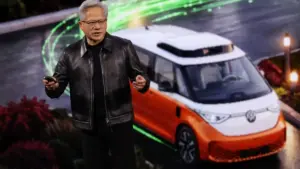
In a stunning reversal that has sent shockwaves through the technology sector and the financial markets, the board of directors of Nvidia Corporation has officially reinstated its co-founder, Jen-Hsun “Jensen” Huang, as president, chief executive officer, and a member of the board. The decision, announced on November 22, 2026, marks the end of a tumultuous ten-day period for the world’s most valuable semiconductor company, during which its leadership was in a state of high-stakes flux and its future direction was questioned by investors and geopolitical observers alike.
The path back to the corner office for Huang was paved by a series of rapidly unfolding events on the morning of the reinstatement. Just before the opening bell on Wall Street, Rene Haas—the current CEO of chip architecture firm Arm Holdings and a former executive who once led Nvidia’s powerhouse datacenter business—publicly announced that he had extended his contract with Arm through 2033. This announcement was significant not only for Arm but for Nvidia; Haas had been widely reported as the primary candidate to succeed Huang. By locking himself into a long-term commitment at Arm, Haas effectively removed himself from the running, leaving the Nvidia board with a narrowed field of options at a critical juncture in the company’s history.
Approximately thirty minutes after the Haas announcement, Nvidia filed a succinct 8-K with the U.S. Securities and Exchange Commission (SEC). The filing was direct, stripped of the corporate drama that had preceded it: “On November 22, 2026, the board of directors of Nvidia Corporation reinstated Jen-Hsun Huang as Nvidia’s president, chief executive officer and member of the board of directors, effective immediately.” The filing further confirmed that Colette Kress, who had helped steer the company through the brief interim period, would remain in her role as executive vice president and chief financial officer.
The reinstatement stands in stark contrast to the firm stance taken by the board only days earlier. During a call to discuss Nvidia’s third-quarter fiscal 2027 financial results on November 18, board chairman Harvey Jones—a fixture at Nvidia since its early days in 1993—had been unequivocal. Jones had stated that the board had unanimously accepted Huang’s resignation and had no intention of bringing him back, noting that an executive search was actively underway to identify a successor capable of leading the company through the complexities of the generative AI era.
The shift from that "unanimous" refusal to a full reinstatement within four days appears to have been driven by a combination of internal necessity and external pressure from the highest levels of the American government. In a more detailed statement released through Nvidia’s investor relations channel, the board admitted that its change of heart was influenced by consultations with federal authorities.
The involvement of the executive branch was a pivotal factor. President Donald Trump, who has maintained a rapport with Huang over several years as the administration crafts its long-term artificial intelligence and domestic manufacturing strategies, had been vocal in his support for Huang’s return. The board’s supplemental statement acknowledged this influence, noting that during its deliberations, it received "input from senior levels of the United States government." Based on this high-level feedback, the board expressed confidence that Huang’s return to the helm "poses no national security risk."
This specific mention of national security highlights the gravity of the circumstances surrounding Huang’s initial departure. When Huang resigned on November 12, the company was reeling from several emerging scandals. Crucially, Huang had resigned rather than being terminated, a distinction that legal and corporate experts now see as the "open door" that allowed for his return. While the details of the scandals remain partially shielded from the public, the board has been transparent about the existence of a special committee composed of independent directors tasked with investigating whether Huang was the target of a "foreign intelligence effort" on behalf of China.
In addition to the special committee investigating foreign influence, the board also established a national security and export control committee. This body, also made up of independent directors, was formed in the immediate wake of Huang’s resignation two weeks ago to oversee trade compliance and mitigate risks associated with the global distribution of Nvidia’s highly sensitive AI hardware. The company confirmed that both investigations are ongoing and that Huang is cooperating fully with the committees, signaling a commitment to resolving the underlying issues that led to his temporary exit.
The return of Huang is expected to stabilize Nvidia as it continues to dominate the "GenAI" boom—a technological shift that Huang himself has described as the beginning of a "new industrial revolution." Under his previous tenure, Nvidia transformed from a designer of gaming graphics cards into the indispensable backbone of global AI infrastructure. His absence, even for a short period, had introduced a level of uncertainty that the board was clearly eager to resolve, especially as competitors and geopolitical rivals sought to capitalize on any perceived weakness in the company’s leadership.
In a statement included in the investor presentation following his reinstatement, Huang adopted a tone of both contrition and determination. He expressed his honor at returning to lead what he called "one of the most consequential technology companies in the world."
“I take this responsibility with the greatest humility and renewed commitment,” Huang said. “I want to thank the Nvidia board for its confidence and deliberation through this process. I am especially grateful to Harvey Jones for his leadership as chair, and to Colette Kress and our executive staff for leading Nvidia during this period.”
Huang also extended his gratitude to the broader Nvidia ecosystem, including employees, shareholders, and industry partners, while acknowledging the personal toll of the past few weeks by thanking his family for their support. His concluding remark, “I can’t wait to get back to work,” echoed the sentiment of many on Wall Street who viewed his leadership as inextricably linked to Nvidia’s market performance and technical innovation.
The internal dynamics of the board during this period suggest a significant amount of soul-searching and crisis management. Harvey Jones, as chairman, had to balance the board’s fiduciary duties and the integrity of the internal investigations against the reality that Huang is, in many ways, the personification of Nvidia’s brand and strategy. The temporary leadership of Colette Kress was seen as a stabilizing force, but the prospect of a prolonged search for a new CEO—especially after Rene Haas removed himself from consideration—likely made Huang’s reinstatement the most viable path forward to maintain the company’s momentum.
The geopolitical dimension of this corporate drama cannot be overstated. As Nvidia’s H100 and Blackwell chips become the most sought-after commodities in the global tech race, the company has found itself at the center of the "chip wars" between the United States and China. The board’s emphasis on "national security and export control" suggests that the investigations are not merely about personal conduct, but about safeguarding the intellectual property and strategic assets that give the U.S. a competitive edge in artificial intelligence.
The fact that the U.S. government weighed in on the reinstatement of a private sector CEO underscores Nvidia’s status as a "systemically important" company. In the eyes of the administration, Huang’s deep understanding of the AI supply chain and his vision for the future of computing appear to outweigh the concerns that initially led to his resignation, provided the ongoing investigations continue to find no evidence of compromised security.
As the markets reacted to the news, the prevailing sentiment was one of cautious relief. The "Nvidia machine," as it is often called, has proven to be remarkably self-sustaining, but the return of its chief architect provides a sense of continuity that is vital for long-term planning. The company’s upcoming roadmaps, including the rollout of its next-generation architectures and its expansion into sovereign AI and industrial robotics, will now once again be overseen by the man who initiated those programs.
While the clouds of the internal investigations have not entirely cleared, the immediate leadership crisis at Nvidia has been resolved. The focus now shifts back to the execution of the company’s ambitious roadmap and the navigation of a complex international regulatory environment. For Jensen Huang, the return to Nvidia is not just a return to a job, but a restoration of his role at the vanguard of a technological era that he helped create. With the board’s support and the government’s blessing, the "back to work" era for Nvidia begins today.
 Enterprise Tech & Infrastructure
The Evolving Landscape of Enterprise Storage: Evaluating the Performance and Strategic Roles of SSDs and HDDs
In the rapidly advancing world of data center infrastructure, the choice between...
 Enterprise Tech & Infrastructure
IBM, AMD, and Oak Ridge National Laboratory Launch Integrated Co-Design Platform to Accelerate Quantum Error Correction
The pursuit of fault-tolerant quantum computing has long been defined by a...
 Enterprise Tech & Infrastructure
The Physical Limits of Artificial Intelligence: Why Infrastructure Constraints Are Throttling the Generative AI Boom
The prevailing narrative surrounding the generative artificial intelligence revolution often focuses on...