
Despite the technical advancements on display, NetApp is operating in a broader economic context that has proven difficult. The past year has seen growing anxiety among enterprise IT buyers regarding the escalating costs of hardware. The specialized components required to run AI at scale—including high-performance flash storage and networking equipment—have seen price increases driven by high demand and supply chain complexities.
For NetApp, this means the value proposition must extend beyond hardware specifications. The company is tasked with proving that its "smart storage" solutions can provide a return on investment by optimizing how data is managed, thereby reducing the overall footprint and energy consumption of the data center.
Adding to the complexity is the rapid emergence of agentic AI. Unlike standard generative AI, which responds to prompts, agentic AI is designed to act autonomously, pursuing goals and interacting with other systems to complete complex workflows. This shift toward autonomy has pulled safety and governance concerns into sharp focus. When AI moves from "suggesting" to "doing," the integrity of the data it relies on becomes a matter of critical security.
NetApp’s leadership addressed these concerns by highlighting the role of secure, intelligent storage in providing a safety net. If an AI agent has the power to modify or move data, the underlying storage architecture must have built-in protections, such as immutable snapshots and real-time monitoring, to prevent "hallucinations" from turning into data disasters. The message from Insight was clear: data readiness is not just about performance; it is about establishing a secure foundation where AI can operate within predefined guardrails.
Keystone and the Allure of Data Sovereignty
One of the most significant pillars of NetApp’s current strategy is Keystone, its Storage-as-a-Service (STaaS) offering. As organizations struggle with the capital expenditure (CAPEX) required for high-end hardware, the flexibility of a consumption-based model has become increasingly attractive. Keystone allows enterprises to scale their storage capacity up or down based on demand, effectively shifting the financial burden to an operational expenditure (OPEX) model.
The company appears highly confident that Keystone will serve as a key differentiator in a crowded market. The flexibility of the service is not just about cost, but about the agility required to survive in the AI era. As AI projects move from pilot programs to full-scale production, the ability to rapidly expand storage capacity without waiting for hardware procurement cycles is a significant competitive advantage.
A major update discussed at the event was the introduction of a "sovereign" add-on for the Keystone service. This is a strategic move designed to appeal to organizations in highly regulated industries—such as finance, healthcare, and government—as well as those operating in regions with strict data residency laws like the European Union.
 Helpdesk & IT Service Management (ITSM)
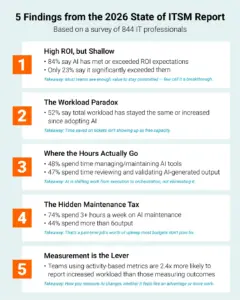
The Paradox of Efficiency: SolarWinds 2026 Report Highlights the Growing Pains of AI Integration in ITSM
The promise of artificial intelligence within the IT Service Management (ITSM) sector...
 Helpdesk & IT Service Management (ITSM)
SolarWinds Service Desk September Update Introduces Advanced Process Integrations and Microsoft Teams Automation
As IT environments become increasingly complex and distributed, the demand for more...
 Helpdesk & IT Service Management (ITSM)
Global Security Alert: North Korean Cybercriminals Target IT Freelancers in Multi-Million Dollar Fraud Campaign
International security agencies have issued a high-priority alert following the discovery of...







