
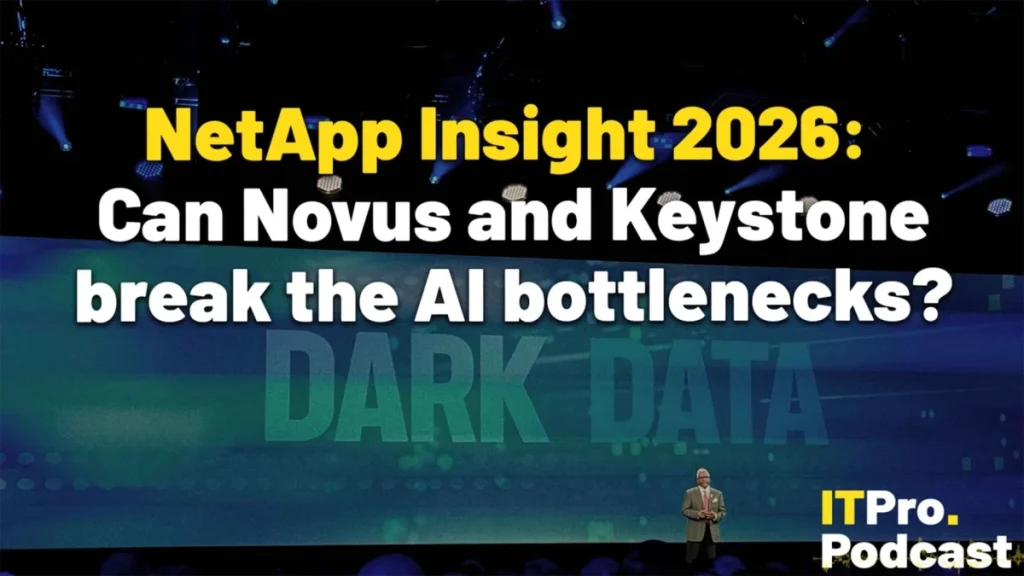
As the autumn conference season gathers momentum, the technology industry’s focus has shifted toward the practical implementation of the theoretical gains made in artificial intelligence over the past eighteen months. This week, the spotlight turned to NetApp’s annual Insight event, held in a surprisingly rainy Las Vegas. The atmosphere at the gathering reflected a pivotal moment for the enterprise storage giant, as it seeks to position itself at the heart of the "AI factory" while navigating a complex landscape of rising infrastructure costs and evolving safety concerns.
The event served as a platform for NetApp to articulate its vision for a future defined by smart storage, data readiness, and the industrialization of AI. However, the optimism of the keynote presentations was tempered by the reality of a challenging fiscal year and a shifting technological paradigm. As enterprises move past the initial hype of generative AI, the conversation is maturing, moving away from the raw processing power of GPUs toward the critical role of the data substrate that feeds these systems.
The Evolution of the AI Infrastructure Stack
A recurring theme throughout the conference was the changing nature of AI workloads. For much of the last two years, the industry dialogue has been dominated by the scarcity and necessity of high-end graphics processing units (GPUs). The focus was squarely on the training phase of large language models—a process that requires immense computational power. However, as Ross Kelly, ITPro’s news and analysis editor, observed live from the event, the focus is now shifting toward the next stage of the lifecycle: inference.
"I will say, anecdotally, I do think that storage is becoming the next big talking point when it comes to AI," Kelly noted during a dispatch from the conference. "We’ve gone from talking about GPUs; we’ve spoken about latency—latency is part of the story when it comes to storage—as we move away from training to inference, storage becomes a more important part of the AI infrastructure."
This shift is fundamental. While training a model is a resource-intensive, one-time or periodic event, inference is the ongoing process of the model providing answers and performing tasks in real-time. For an enterprise, inference happens every time a customer interacts with a chatbot or an automated system makes a decision. In this environment, the speed at which data can be retrieved and processed—the latency of the storage system—becomes the primary bottleneck. If the storage layer cannot keep up with the demands of the AI model, the entire "AI factory" grinds to a halt.
NetApp’s strategy appears to be leaning heavily into this transition. By rebranding the concept of the data center as an "AI factory," the company is emphasizing that data is the raw material that must be refined and delivered with precision. This requires a level of "data readiness" that many organizations currently lack. It is no longer sufficient to simply have large volumes of data; that data must be accessible, high-quality, and integrated into a storage architecture that can handle the high-throughput demands of modern AI models.
Economic Pressures and the Rise of Agentic AI
Despite the technical advancements on display, NetApp is operating in a broader economic context that has proven difficult. The past year has seen growing anxiety among enterprise IT buyers regarding the escalating costs of hardware. The specialized components required to run AI at scale—including high-performance flash storage and networking equipment—have seen price increases driven by high demand and supply chain complexities.
For NetApp, this means the value proposition must extend beyond hardware specifications. The company is tasked with proving that its "smart storage" solutions can provide a return on investment by optimizing how data is managed, thereby reducing the overall footprint and energy consumption of the data center.
Adding to the complexity is the rapid emergence of agentic AI. Unlike standard generative AI, which responds to prompts, agentic AI is designed to act autonomously, pursuing goals and interacting with other systems to complete complex workflows. This shift toward autonomy has pulled safety and governance concerns into sharp focus. When AI moves from "suggesting" to "doing," the integrity of the data it relies on becomes a matter of critical security.
NetApp’s leadership addressed these concerns by highlighting the role of secure, intelligent storage in providing a safety net. If an AI agent has the power to modify or move data, the underlying storage architecture must have built-in protections, such as immutable snapshots and real-time monitoring, to prevent "hallucinations" from turning into data disasters. The message from Insight was clear: data readiness is not just about performance; it is about establishing a secure foundation where AI can operate within predefined guardrails.
Keystone and the Allure of Data Sovereignty
One of the most significant pillars of NetApp’s current strategy is Keystone, its Storage-as-a-Service (STaaS) offering. As organizations struggle with the capital expenditure (CAPEX) required for high-end hardware, the flexibility of a consumption-based model has become increasingly attractive. Keystone allows enterprises to scale their storage capacity up or down based on demand, effectively shifting the financial burden to an operational expenditure (OPEX) model.
The company appears highly confident that Keystone will serve as a key differentiator in a crowded market. The flexibility of the service is not just about cost, but about the agility required to survive in the AI era. As AI projects move from pilot programs to full-scale production, the ability to rapidly expand storage capacity without waiting for hardware procurement cycles is a significant competitive advantage.
A major update discussed at the event was the introduction of a "sovereign" add-on for the Keystone service. This is a strategic move designed to appeal to organizations in highly regulated industries—such as finance, healthcare, and government—as well as those operating in regions with strict data residency laws like the European Union.
"The company appears very confident that this is going to be a key differentiator from their perspective," Kelly explained. "Keystone is a storage-as-a-service offering and offers a degree of flexibility and scalability for customers, and adding that sovereign add-on is a big lure for companies."
Data sovereignty has become a major hurdle for global AI adoption. Many organizations are hesitant to move their most sensitive data to the public cloud for fear of losing control over where that data resides or who has access to it. By offering a sovereign storage layer that can be managed with the ease of a cloud service but maintained within specific geographic or jurisdictional boundaries, NetApp is addressing a major pain point. This allows enterprises to leverage the power of AI while remaining compliant with local regulations, effectively bridging the gap between the innovation of the cloud and the security of on-premises infrastructure.
Looking Ahead: The Storage-Centric Future
As the event in Las Vegas concluded, the takeaway for many attendees was that the "plumbing" of the digital world is becoming more visible and more vital than ever. The era of treating storage as a passive repository for files is over. In the context of the AI factory, storage is an active participant in the computation process.
NetApp’s focus on smart storage and data readiness suggests a recognition that the next phase of the AI revolution will be won or lost on the efficiency of data management. While the industry may have spent the last year obsessed with the "brains" of AI—the models and the processors—NetApp is betting that the "nervous system"—the data storage and delivery architecture—is where the real value will be realized.
The challenges remains significant. NetApp must continue to innovate in a way that justifies the high cost of its premium hardware while simultaneously expanding its service-based models to capture a broader segment of the market. Furthermore, as agentic AI continues to evolve, the company will need to stay ahead of the curve in terms of data security and governance.
However, with the introduction of sovereign capabilities and the continued refinement of the Keystone model, NetApp is positioning itself as a necessary partner for enterprises looking to navigate the complexities of the modern data landscape. The rainy weather in Las Vegas may have been an anomaly, but the shift in the industry’s focus toward storage-centric AI infrastructure appears to be a long-term trend that is here to stay.
For IT decision-makers, the message from NetApp Insight 2024 is that the path to AI success is paved with data. Ensuring that data is ready, reachable, and resilient is no longer just a task for the storage team—it is a strategic imperative for the entire enterprise.
 Helpdesk & IT Service Management (ITSM)
US Government Intervenes to Limit UK Access to Latest OpenAI and Anthropic Models
The United Kingdom’s ambitions to remain at the vanguard of global artificial...
 Helpdesk & IT Service Management (ITSM)
SolarWinds Announces Comprehensive September Webinar Series to Address Evolving Database Challenges and AI Integration
The landscape of modern data management is undergoing a period of rapid...
 Helpdesk & IT Service Management (ITSM)
US Authorities Disrupt Major Chinese State-Sponsored Cyber Infrastructure Linked to Integrity Technology Group
In a significant blow to state-sponsored cyber espionage operations, the United States...







