

There is also a functional trade-off regarding data availability. While Glacier Flexible Retrieval and Deep Archive offer significant cost reductions, the data is not available in real time. Users must restore a temporary copy before the data can be accessed. Furthermore, transition paths are often one-way; for example, data can move from Flexible Retrieval to Deep Archive, but it cannot be converted back to a warmer tier via a Lifecycle rule. Selecting the wrong class can effectively lock data behind a multi-hour restore process with no automated path for reversal.
In contrast, S3 Intelligent-Tiering is often the preferred choice when access patterns are genuinely unpredictable. It automatically moves data between three low-latency tiers without retrieval charges or fees for internal movement. It also offers optional Archive and Deep Archive tiers for data that can tolerate access delays of minutes to hours.
Comparing Automation: Lifecycle Rules vs. Intelligent-Tiering
It is a common misconception that Lifecycle rules and Intelligent-Tiering are competing alternatives. In reality, Lifecycle is a scheduling mechanism, while Intelligent-Tiering is a storage class. A Lifecycle rule can be used to target Intelligent-Tiering as a destination, allowing objects to age into an automated environment.
One nuance of Lifecycle billing is that charges apply the moment a rule is satisfied, regardless of whether the physical movement of the data has finished. There are, however, two exceptions: transitions into Intelligent-Tiering do not change the billing rate until the move is physically complete, and transitions into Glacier tiers start the 40 KB per-object overhead and the minimum-duration clock at the moment of rule satisfaction.
While Intelligent-Tiering removes the need for manual scheduling, it introduces a monthly per-object monitoring and automation fee. For portfolios consisting of millions of small objects, this "small" fee can accumulate into a significant expense. Furthermore, administrators should be aware that tag-based Lifecycle evaluations run daily and can take up to 15 minutes to propagate, meaning that removing a tag does not immediately stop a transition that has already been queued.
Modeling Archive Retrieval and Early-Exit Exposure
The financial risk of "early exits" is one of the most frequently overlooked aspects of S3 management. If an object is deleted, overwritten, or transitioned before it reaches the minimum duration of its storage class (such as 30, 90, or 180 days), AWS charges a prorated fee for the remainder of that period. Whether a single early restore operation negates the savings of a lower storage rate depends entirely on the object size and the volume of the retrieval.
Additionally, every transition to a Glacier tier adds 40 KB of per-object overhead. This consists of 8 KB billed at Standard rates and 32 KB billed at the destination Glacier rate. For organizations managing vast quantities of small files, this overhead can be devastating to the budget. In such cases, the recommended course of action is to aggregate small objects into fewer, larger archives before applying Lifecycle rules.
Enterprise Blind Spots: Beyond the Storage Class
Several cost drivers exist entirely outside the choice of storage class. Data transfer is often the largest line item that native cost calculators under-emphasize. This includes outbound transfer to the internet and cross-region replication, which are billed separately from base storage. For architectures involving Multi-Region Access Points, data routing and regional group transfers can also add unexpected layers of cost.
Workloads that are request-heavy or metadata-heavy—such as those found in data lakes or IoT ingestion engines—must account for S3 Batch Operations, Inventory listings, and metadata update fees. Furthermore, while SSE-KMS encryption provides essential security, every KMS request carries its own cost outside of the S3 billing structure. High-churn workloads may find that these secondary costs outweigh any savings achieved by moving to a cheaper storage class.
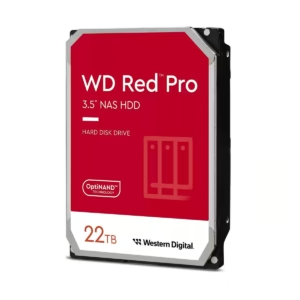 Enterprise Tech & Infrastructure
The Critical Role of Enterprise Hard Drives in Modern Data Infrastructure: A Comprehensive Review of the Top 2023 Solutions
In the rapidly evolving landscape of digital infrastructure, enterprise hard drives remain...
 Enterprise Tech & Infrastructure
The Unprecedented Ascent of the Global Server Market: A Vertical Climb into the AI Era
There is a specific, visceral sensation associated with watching an F-18A Hornet...
 Enterprise Tech & Infrastructure
Fibre Channel over Ethernet: Navigating the Intersection of Performance and Network Convergence
In the rapidly evolving landscape of enterprise data storage, the demand for...







