
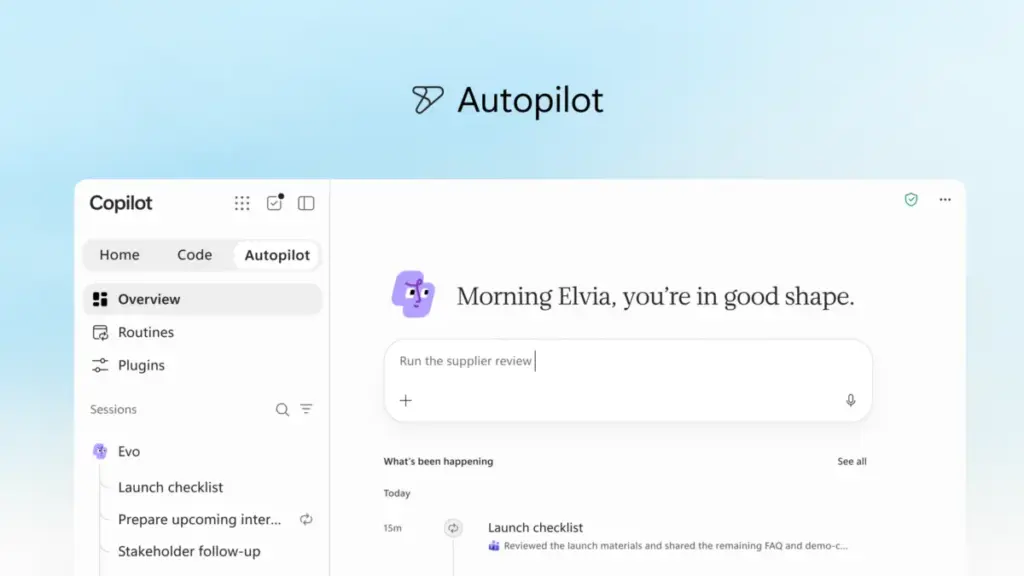
For "everyday AI" tasks like drafting emails or summarizing meetings, Microsoft utilizes a User Subscription License (USL). At the heart of this model is a feature called "Auto," which evaluates each request based on accuracy, speed, and cost, routing the task to the most appropriate AI model. This ensures that organizations receive high-quality outputs without overpaying for excessive computational power on simple tasks.
However, more advanced "agentic" work—such as the long-running processes handled by Cowork, Code, and Autopilot—will operate on usage-based billing (UBB). This model allows organizations to use the most advanced frontier models, such as Astra and Fable, while maintaining full control over their expenditures.
To help organizations navigate these costs, Microsoft is introducing new administrative tools within "Agent 365." These features allow IT admins to manage spending policies, route credit requests from users through automated approval workflows, and restrict certain model families to specific groups of users. For business leaders, new insights will provide a clear picture of which AI-driven tasks are generating the most value, allowing for data-driven decisions on where to expand or optimize AI usage. Even end-users will have visibility into their own credit usage and history, encouraging responsible AI consumption within the company’s guardrails.

A Sneak Peek at What’s Next
The announcements made today are positioned as the foundation for a series of upcoming innovations. Microsoft provided a glimpse into "Today," a personalized command center coming to the Home experience. "Today" is designed to act as a proactive assistant that scans mail, calendars, and Teams threads to surface what needs immediate attention. It doesn’t just list tasks; it prepares the work, such as having a draft ready for edit or a schedule change already proposed, allowing users to jump directly into high-value activities.
Additionally, the company is preparing to launch "@Copilot in Teams," which will allow the AI to participate in group chats and channels with full access to the shared context of the conversation. By understanding the history of product decisions and cross-functional dependencies, Copilot can prepare reviews and identify open questions, ensuring that teams remain aligned as projects move across different departments.
These new features are currently rolling out through Microsoft’s Frontier program, with broader availability expected in the coming months. The company invited its partners and customers to the upcoming Microsoft Ignite conference in November to explore these innovations further. As Jared Spataro, Microsoft’s lead for AI at Work, noted, the goal remains helping every organization leverage agents and AI to solve unique business problems and drive new value creation in an increasingly complex digital landscape.
 Productivity Software & Office Suites
Microsoft Unveils Microsoft 365 G7: A New Frontier for AI-Driven Governance in the Public Sector
In a move designed to redefine how the public sector interacts with...
 Productivity Software & Office Suites
Microsoft Unveils Advanced AI ‘Skills’ and Data Connectors to Transform Excel for Finance Professionals
The evolution of modern computing has historically followed a predictable trajectory, moving...
 Productivity Software & Office Suites
Microsoft Reimagines Copilot as a Central Hub for Autonomous AI and Agentic Work
Microsoft has announced a significant evolution of its AI strategy, unveiling what...






