At the Microsoft Ignite 2026 conference this morning, the tech giant signaled a paradigm shift in the evolution of artificial intelligence, moving beyond simple assistants to a comprehensive "agentic" ecosystem. The company unveiled a suite of major updates to Microsoft Copilot, detailing a vision where AI is no longer just a sidecar for tasks but a central, autonomous foundation for the modern enterprise. With the general availability of several core components—including a new unified "Home" interface, deep industry-specific integrations, and the rollout of autonomous "Autopilot" agents—Microsoft is betting that the future of productivity lies in the seamless orchestration of human and machine intelligence.
The announcements underscore a strategic pivot toward what Microsoft calls "raw intelligence to do real work." Recognizing that the AI landscape is becoming increasingly crowded, the company emphasized that Copilot is designed to be model-agnostic and deeply integrated into the fabric of the existing Microsoft 365 data estate. This approach aims to solve the "fragmentation crisis" of modern knowledge work, where information is scattered across thousands of emails, chat threads, and documents.
The New Foundation of Work
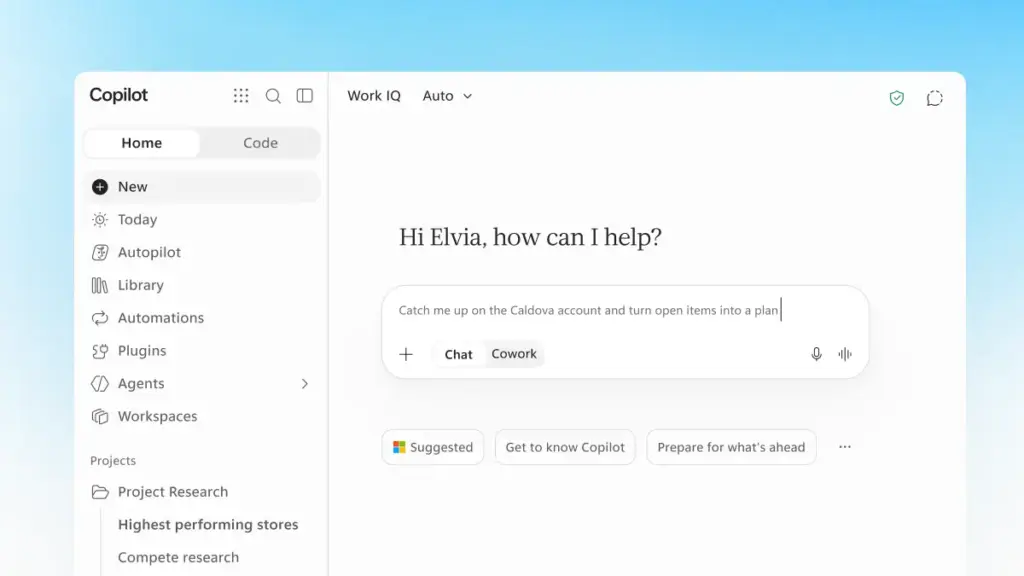
Central to this morning’s keynote was the launch of "Home," now generally available to all customers. Home serves as the new primary entry point for Copilot, merging the previously distinct "Chat" and "Cowork" functions into a single, cohesive interface. The goal is to provide users with a grounded starting point as they navigate a workday that spans meetings, emails, and complex projects.
In this new environment, work is designed to move fluidly between different modes of engagement. A user might start with a simple query in Chat and, as the complexity of the task grows, transition seamlessly into Cowork, where the AI takes a more active role in managing a multi-step workflow. This transition is managed by "Auto," an intelligent routing engine that dynamically selects the most appropriate AI models and levels of computational effort based on the task at hand. Under the hood, Auto balances quality, speed, and cost, ensuring that high-power models are reserved for complex reasoning while simpler tasks are handled efficiently to save energy and subscription costs.
Within the Home interface, Microsoft also introduced a private preview of "Today," a command center designed to act as a proactive digital chief of staff. Today synthesizes information from across Outlook, Teams, and Tasks to surface what requires immediate attention and what can wait. Rather than just listing notifications, Today prepares the work for the user—drafting replies to urgent emails, proposing schedule changes for conflicting meetings, and providing context for follow-ups that may have been overlooked.
Furthermore, Microsoft is bringing the full power of its core Office suite directly into the Copilot app. For years, Copilot has lived inside Word, Excel, and PowerPoint; now, those apps effectively live inside Copilot. Users can move from an initial brainstorm to a finished document or a complex spreadsheet without ever leaving the Copilot interface. This integration ensures that all work remains protected by the enterprise-grade security, sensitivity labels, and compliance controls inherent to Microsoft 365. Notably, Microsoft confirmed that creating PowerPoint decks or Excel spreadsheets within the Copilot app does not incur additional consumption costs, as the value is bundled into the existing subscription license.
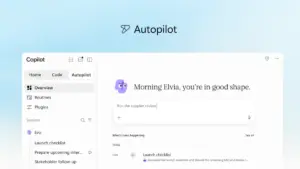
Perhaps the most forward-looking announcement was the rollout of "Autopilot" to Frontier customers. Described as a "trusted autonomous agent," Autopilot represents a step beyond reactive AI. It is a personal, always-on agent that lives within a company’s tenant and possesses its own identity, memory, and toolset. Unlike traditional AI that waits for a prompt, Autopilot can proactively monitor Teams channels, follow up on emails, and manage recurring projects. For instance, it can independently set up a supplier review process, building a workback plan and reaching out to stakeholders for updates without human intervention.
To address the inherent security concerns of autonomous agents, Microsoft has built Autopilot on the foundation of Microsoft Entra. Each agent is assigned a unique Agent ID and must have a named human manager. IT departments can scope access, monitor sign-ins, and block agents at any time, ensuring a clear audit trail for every action taken by the AI.
Redesigning How the Business Works
The second major pillar of Microsoft’s Ignite announcements focused on vertical industry solutions and the extensibility of the Copilot platform. The company introduced "Work IQ," a reasoning engine designed to navigate the 19.5 exabytes of data currently held within Microsoft 365. With 90 billion emails and 10 billion new files added every week, Microsoft argues that simply giving a model access to data is insufficient. Work IQ is designed to understand the specific context of a user’s request, identifying relevant information while filtering out the "noise" that traditional APIs often struggle to process.

This intelligence is being applied to specific business functions through an expanded catalog of plugins and skills. Microsoft announced "Dynamics 365 in Copilot," which integrates more than 100 prebuilt skills for sales, service, and finance teams.
In the sales domain, Copilot now works with CRM platforms to prioritize pipelines, build competitive strategies, and prepare sellers for meetings. New autonomous skills allow agents to qualify leads and research prospects independently, freeing human sellers to focus on relationship building. In a significant move for cross-platform interoperability, Microsoft announced "Salesforce in Copilot," a new plugin featuring 38 prebuilt sales skills that bring Salesforce data directly into the Microsoft ecosystem.
Customer service teams are seeing similar advancements, with 13 new skills designed to triage cases, research knowledge bases, and draft customer replies. For finance professionals, Copilot now supports complex workflows such as month-end closes and acquisition evaluations, combining Excel models with narrative reporting. Legal teams are also being equipped with 20 purpose-built skills to draft agreements, manage deadlines, and turn legal research into actionable guidance, all while remaining within the secure boundaries of their existing governance controls.
The practical impact of these tools is already being felt at scale. Microsoft noted that nearly 80% of Fortune 500 companies are now utilizing Cowork. At Eli Lilly, for example, more than 5,000 employees use Copilot monthly. Scientists at the pharmaceutical giant are leveraging the AI for multi-step research tasks, identifying promising paths for drug discovery before lab work even begins. Similarly, BNY (formerly Bank of New York Mellon) reported that the ability to surface real-time account insights and client developments within a single interface has allowed their teams to stay aligned and act without the "context switching" that typically degrades productivity.
Scale with Confidence
As AI adoption moves from experimental pilots to core business infrastructure, the focus for many leaders has shifted to management and return on investment (ROI). Microsoft addressed these concerns by expanding "Agent 365," its management and governance platform.
The expansion of Agent 365 provides IT leaders with broader visibility across multiple AI platforms, including Anthropic, Databricks, and OpenAI. New identity and access governance tools, powered by Entra, allow organizations to manage agent permissions with the same rigor they apply to human employees. Security is further bolstered through integration with Microsoft Intune and Defender, using "Microsoft Execution Containers" (MXC) to contain local agents running on devices.
Recognizing the rising costs associated with generative AI, Microsoft introduced "Agent 365 Business Analytics." This tool is designed to move the conversation beyond "token usage" and toward "work completed." The analytics engine evaluates the tasks performed by Copilot, estimates how long those tasks would take a human to complete, and calculates the share of work performed by the AI. This provides business leaders with a concrete view of the hours saved and the overall value generated by their AI investment.
To further manage costs, "Agent 365 Cost Management" now allows IT departments to set proactive alerts, spending limits, and policies regarding which models are available to which users. This level of granularity is intended to prevent "runaway spend" as departments increasingly integrate AI into their daily operations.
Microsoft also took the opportunity to highlight the economic competitiveness of its model. Citing a recent GigaOm report, the company claimed that Copilot is significantly more cost-effective than its primary competitors. For an everyday user, Copilot is reportedly 84% cheaper than Claude and 63% cheaper than ChatGPT. For advanced users, the savings remain substantial, with Copilot being 68% cheaper than Claude and 35% cheaper than ChatGPT. This cost advantage is attributed to the combination of a predictable per-user subscription model and the efficiency of the "Auto" routing and "Work IQ" systems.
The Ignite 2026 announcements paint a picture of a workplace where the boundary between human effort and machine assistance is increasingly blurred. By unifying the interface, automating the "messy" parts of knowledge work, and providing the governance tools necessary for enterprise scale, Microsoft is attempting to define the next era of corporate computing. As these tools move from preview to general availability, the focus will likely shift from what the technology can do to how effectively organizations can transform their cultures to embrace a future defined by agentic collaboration.
 Productivity Software & Office Suites
Microsoft Reports 30 Million Paid Copilot Seats as Enterprise AI Shifts from Assistance to Autonomy
In a recent earnings call that signaled a pivotal moment for the...
 Productivity Software & Office Suites
Microsoft Reimagines Copilot as a Central Hub for AI-Driven Work and Autonomous Agents
In a significant shift for the future of digital productivity, Microsoft has...
 Productivity Software & Office Suites
Microsoft Outlines Strategic Roadmap for Enterprise AI Integration, Prioritizing Platform Flexibility and New Economic Models
In a landscape characterized by rapid technological breakthroughs and a constant stream...