

Partnership
Despite the focus on technical specs and pricing tiers, Spataro asserts that the most difficult aspect of the AI transition is not the technology itself. Instead, the greatest hurdle is the human element: the "rewiring" of how work is actually done and the cultivation of trust among the workforce. It is at this stage—the implementation and cultural integration—where many enterprise AI initiatives currently stall.
Microsoft’s response to this challenge is a pivot toward a more hands-on partnership model. Recognizing that digital transformation cannot be "bought off a shelf," the company is investing in long-term relationships that involve placing "Forward Deployed Engineers" directly alongside customer teams. These specialists are tasked with helping organizations navigate the complexities of AI integration, from technical troubleshooting to workflow redesign.
This "skin in the game" approach is intended to distinguish Microsoft from competitors who may offer powerful tools but lack the infrastructure to support deep organizational change. Spataro emphasizes that Microsoft is drawing on its own internal transformation, as well as its extensive research and cross-industry experience, to help customers craft and execute their AI strategies.
In a market often dominated by "flashy" marketing and hype-driven demonstrations, Microsoft is consciously adopting an "understated" tone. The company’s philosophy is rooted in the belief that the systems running a global corporation are not meant to be mere demos; they are required to show up every day and perform reliably. This pragmatic outlook is coupled with a specific ethical stance on the role of AI: that it should expand human agency rather than narrow it.
The ultimate goal, as outlined by Spataro, is to provide employees with better tools to tackle increasingly difficult problems, thereby moving the business forward. By aligning platform capabilities, economic models, and deep-level partnerships, Microsoft is positioning itself as a stabilizing force for enterprises looking to make AI "matter where it matters most"—in the daily work and the people who drive the economy.
As the "sound and fury" of the AI race continues, Microsoft’s roadmap suggests a shift toward a more mature, disciplined era of implementation. For the modern enterprise, the path forward is no longer about chasing the latest headline, but about building the systems and culture necessary to turn artificial intelligence into a permanent and profitable reality.
 Productivity Software & Office Suites
Microsoft Unveils Specialized AI Capabilities for Finance Professionals in Excel to Address Sector-Specific Complexity
The trajectory of transformative technology has followed a consistent, predictable rhythm for...
 Productivity Software & Office Suites
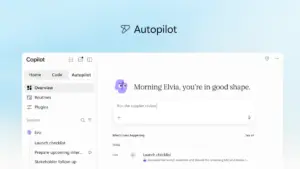
Microsoft Reimagines Copilot: New "Autopilot" and "Code" Features Lead a Major Shift Toward Agentic Work
In a significant pivot toward the next era of enterprise productivity, Microsoft...
 Productivity Software & Office Suites
Microsoft Unveils Natural Language App Creation in Copilot Studio, Bridging the Gap Between AI Innovation and Enterprise Governance
The landscape of software development is undergoing a fundamental transformation, driven by...







