
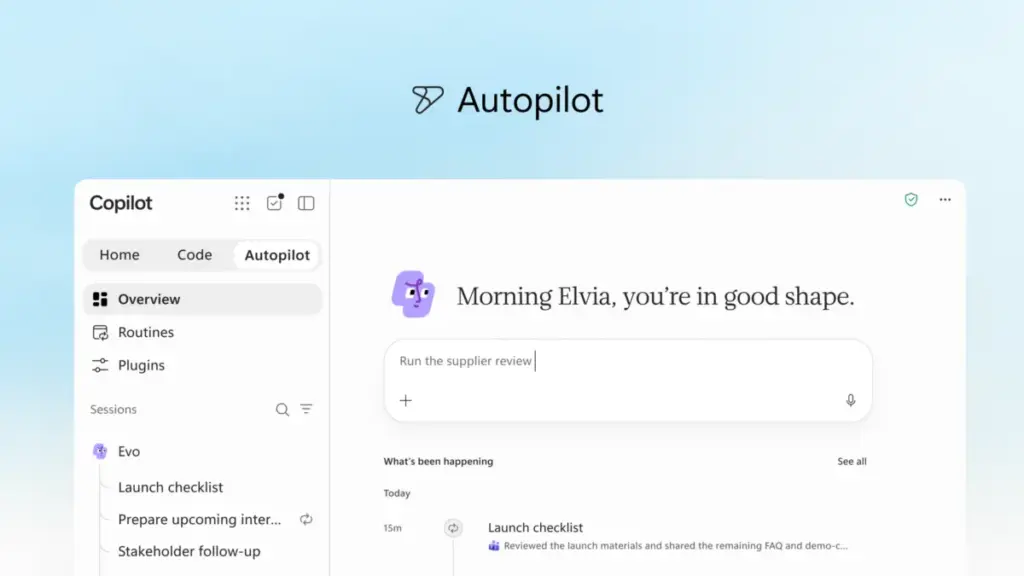
For "everyday AI" tasks—such as drafting summaries, analysis, and quick answers—Microsoft utilizes a User Subscription License (USL). This provides a fixed-cost model for standard Copilot features in Word, Excel, Teams, and other apps. At the center of this is "Auto," a routing system that weighs accuracy, speed, and cost for each request to select the most efficient model for the job.

For more complex "agentic" work, such as the long-running tasks performed by Cowork, Code, and Autopilot, Microsoft is moving toward Usage-Based Billing (UBB). This model allows organizations to match their spending to the value generated by advanced frontier models.
To help organizations navigate these costs, Microsoft is introducing "FinOps for AI." This suite of capabilities within Agent 365 and Microsoft Copilot provides administrators with tools to manage spending policies at scale. Admins can route credit requests through automated approval workflows and set which model families are available to different user groups. Business leaders can also access analytics to understand which AI-driven tasks are generating the strongest returns on investment. On the individual level, users will be able to view their own credit usage and history directly within the Copilot app, helping them stay within organizational guardrails.
The Roadmap Ahead: ‘Today’ and Teams Integration
The announcements also included a preview of upcoming features intended to make Copilot even more personalized. Scheduled for private preview in October is "Today," a proactive command center that aggregates information from mail, calendars, Teams threads, and tasks. Rather than just listing what a user has missed, Today is designed to prepare the work in advance—drafting replies, proposing schedule changes, and providing the necessary context for forgotten follow-ups.
Additionally, Microsoft is enhancing collective intelligence through "@Copilot in Teams." When invoked within a channel or group chat, Copilot gains the shared context and permissions of that specific group. It can explain the history of a product decision by pulling from past conversations or prepare cross-functional reviews that identify dependencies and open questions across different departments.
The "new Copilot" experience is currently rolling out through Microsoft’s Frontier program, with continuous updates expected in the coming weeks. The company invited users to explore these innovations further at the upcoming Microsoft Ignite conference, which will take place from November 17–20 in San Francisco and online.
Jared Spataro, who leads Microsoft’s AI at Work efforts, emphasized that these developments are part of a broader commitment to helping organizations leverage AI and agents to solve unique business problems and drive new value creation. As the role of AI evolves from a simple tool to a proactive participant, Microsoft’s latest updates signal a future where the boundary between human effort and machine assistance becomes increasingly seamless.
 Productivity Software & Office Suites
Microsoft Reimagines Copilot: New "Autopilot" and "Code" Features Lead a Major Shift Toward Agentic Work
In a significant pivot toward the next era of enterprise productivity, Microsoft...
 Productivity Software & Office Suites
Microsoft Expands Copilot Ecosystem with Natural Language App Building to Democratize Enterprise Software Development
The landscape of software development is undergoing a fundamental transformation, driven by...
 Productivity Software & Office Suites
Microsoft Unveils Microsoft 365 G7: A New Frontier for AI-Driven Governance in the Public Sector
In a move designed to redefine how the public sector interacts with...







