

"Microsoft Teams ships with external access (federation) turned on by default, meaning any Teams user in another Microsoft 365 tenant can find, chat with, and call an organization’s employees, provided both tenants allow external access," Arctic Wolf noted in a recent analysis.
The researchers pointed out that this activity does not necessarily exploit a software bug or a "vulnerability" in the traditional sense. Instead, it abuses a legitimate collaboration feature designed to facilitate business-to-business interaction. For many companies, disabling this feature is not an option, as they rely on it to communicate with partners, clients, and vendors. This creates a permanent doorway for potential attackers—a doorway that Microsoft now hopes to guard with AI.
The Arctic Wolf report detailed how impersonation scams and the distribution of malicious files are the most frequent methods of abuse. By studying hundreds of incidents, researchers found that the "initial access" phase of an attack often begins with a simple, seemingly innocuous message from an external account that has been compromised or created specifically for the attack.
Rollout and Implementation
The new AI-powered detection capabilities are scheduled to begin their rollout in November, with a wider distribution expected to continue through December. For most organizations, the feature will be enabled automatically, reflecting Microsoft’s desire to provide a baseline of protection across its entire user base without requiring complex manual configuration by overstretched IT departments.
While the primary focus is on external first-contact chats, Microsoft has indicated that "additional protection may apply in certain regions or scenarios," suggesting that the AI model may eventually be expanded to cover other high-risk interaction types as the technology matures.
As the workplace continues to evolve into a more interconnected and platform-centric environment, the definition of a "secure perimeter" has shifted. It is no longer enough to guard the gateway of the corporate email server. Security must now exist within the very tools where work is performed. By integrating AI into the conversational flow of Teams, Microsoft is attempting to stay one step ahead of a threat landscape that is becoming increasingly personal, immediate, and sophisticated.
For the end-user, the experience will largely remain unchanged, save for the appearance of a warning banner when the AI flags a suspicious interaction. However, for the enterprise, this represents a significant addition to the defensive arsenal, providing an automated layer of scrutiny to the hundreds of thousands of external interactions that occur across the platform every day. As the November rollout approaches, the industry will be watching closely to see how effectively these AI models can distinguish between a legitimate business inquiry and a calculated attempt at corporate espionage.
 Helpdesk & IT Service Management (ITSM)
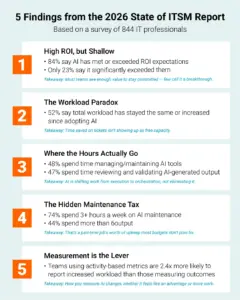
The Paradox of Efficiency: SolarWinds 2026 Report Highlights the Growing Pains of AI Integration in ITSM
The promise of artificial intelligence within the IT Service Management (ITSM) sector...
 Helpdesk & IT Service Management (ITSM)
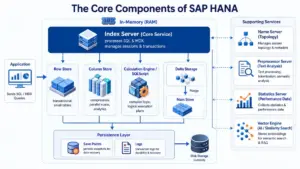
Decoding the Architecture of SAP HANA: A Deep Dive Into the Engine of Modern Enterprise Data
In the rapidly evolving landscape of enterprise resource planning and data management,...
 Helpdesk & IT Service Management (ITSM)
The Resilience Mandate: Why Organizations are Shifting Focus from Prevention to Recovery in an Era of Persistent Threats
Cybersecurity has remained a primary concern for the global business community since...







