

A central component of this platform strategy is the rise of the "agent." Unlike traditional chatbots that respond to prompts, agents are designed to execute complex, multi-step workflows. Spataro emphasizes that an agent is not a finished product upon its initial deployment. Instead, the most successful organizations are those that treat AI deployment as an iterative process. By establishing benchmarks for what "good work" looks like, companies can measure an agent’s performance and implement continuous improvement loops. Over time, these incremental gains compound, allowing the AI to outperform the static specifications that were established at the start of the project. This "agentic" capability is supported by centralized tools for monitoring, securing, and governing these digital workers across an entire organization.
Business Model
One of the most significant challenges in the AI era is the management of costs. For two decades, the standard for enterprise software has been the User Subscription License (USL)—a predictable, flat monthly fee per employee. This model provided budget certainty for IT departments, as costs remained static regardless of how much an individual used a specific software tool.
While Microsoft initially applied this model to its AI offerings, Spataro argues that the emergence of AI agents necessitates a more nuanced approach. The industry is currently seeing a split between two distinct types of costs. The first is the traditional subscription, which provides broad access to productivity tools like Copilot Chat and integration across Microsoft 365 apps. In this scenario, the underlying intelligence continues to improve through updates, but the price remains fixed per person.
The second cost, however, is driven by usage-based billing (UBB). This is tied to the specific volume of work performed rather than the number of people on the payroll. Because long-running agentic tasks can vary significantly in their compute requirements, a flat fee is often insufficient to cover the underlying operational costs. Spataro suggests that businesses should view this usage-based cost not as traditional overhead, but as capital investment—a way to build capability that is conceptually similar to hiring headcount.
To simplify this transition, Microsoft has introduced "Copilot Credits." This acts as a shared currency that aggregates AI operations across the platform. Whether an organization is using Copilot Cowork or other specialized agentic capabilities, the usage draws from a single "meter." To address the concerns of CFOs regarding runaway costs, Microsoft is also providing tools for complete visibility into spending, allowing administrators to set limits and manage budgets proactively before an invoice is generated. This hybrid approach seeks to balance the need for predictable per-user costs with the reality of high-intensity AI workloads.
Partnership
Despite the technical complexity of LLMs and agentic workflows, Spataro asserts that the hardest part of the AI transition is not the technology itself. Instead, the primary obstacle is the human element: the "rewiring" of how work gets done and the cultivation of trust in automated systems. This is the stage where many corporate AI initiatives stall, as employees struggle to integrate new tools into their established routines.
 Productivity Software & Office Suites
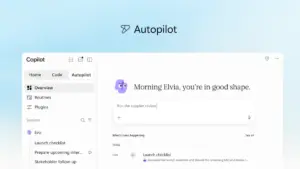
Microsoft Reimagines Copilot as a Centralized Hub for Agentic Work and Enterprise Automation
In a significant evolution of its artificial intelligence strategy, Microsoft has unveiled...
 Productivity Software & Office Suites
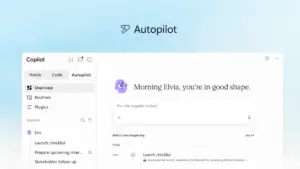
Microsoft Reimagines Copilot: New "Autopilot" and "Code" Features Lead a Major Shift Toward Agentic Work
In a significant pivot toward the next era of enterprise productivity, Microsoft...
 Productivity Software & Office Suites
Microsoft Unveils Specialized AI Capabilities for Finance Professionals in Excel to Address Sector-Specific Complexity
The trajectory of transformative technology has followed a consistent, predictable rhythm for...







