
One of the most critical revelations in Lamanna’s report was the failure of standard load testing to detect the flaw before it reached production. Microsoft’s internal testing procedures typically utilize a variety of hardware configurations, but the "lock contention" issue proved to be highly sensitive to the specific hardware on which it ran. Lamanna noted that the problem was significantly worsened on machines with higher core counts and newer hardware architectures. Conversely, Microsoft’s pre-deployment load testing had historically focused on "weaker hardware SKUs" with fewer cores. Because the testing environment did not perfectly mirror the high-performance, modern hardware being utilized in the most demanding segments of the production fleet, the bug remained invisible to engineers until the November 12 disaster.
Networking struggles
While the latent defect was the underlying vulnerability, it required a significant "surge in load" to trigger the failure. This surge was provided by the second factor identified in the post-mortem: a shift in internal traffic patterns. Microsoft 365 utilizes a highly resilient architecture consisting of two "independent and heterogeneous" gateway systems. These systems are designed to be isolated from one another to ensure high availability; if one system experiences a fault, the other can take over the traffic, a process known as "failing over."
Approximately 15 hours before the peak of the outage, Microsoft Teams—one of the platform’s most traffic-heavy applications—underwent a failover event. Traffic was moved from its alternative gateway system to the primary gateway that also supports Exchange Online. While this type of failover is considered a routine part of Microsoft’s resiliency efforts and usually happens without any user impact, it fundamentally altered the load profile of the primary networking gateway.
This increased volume of traffic, combined with a change in the patterns of how that data was flowing through the gateways, began to stress the systems in ways they had not experienced during the previous three months of the update’s deployment. The primary gateway, now burdened with the combined weight of Exchange and Teams traffic during a busy operational window, reached the threshold necessary to activate the latent "lock contention" bug.
The final nail in the coffin
The third and final factor that sealed the fate of the service on November 12 involved a reduction in available server capacity. Microsoft revealed that approximately 14% of its server capacity for these specific networking gateways was already out of service when the traffic surge occurred. This reduction in capacity was due to an "unrelated issue" that had occurred the previous day.
Under normal circumstances, a 14% reduction in capacity would not have caused a service interruption. Lamanna explained that the Microsoft 365 infrastructure maintains sufficient "headroom"—or excess capacity—to handle such fluctuations. The offline servers were already in the process of being returned to active service through routine maintenance and automated health processes. However, the timing proved catastrophic.
 Helpdesk & IT Service Management (ITSM)
Uber Data Breach Exposes Personal Information of Thousands of Drivers Following Third-Party Vendor Compromise
A significant security breach has compromised the personal information of thousands of...
 Helpdesk & IT Service Management (ITSM)
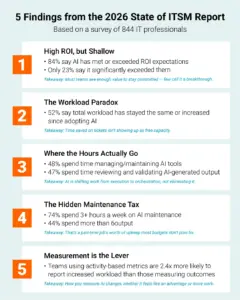
The Paradox of Efficiency: SolarWinds 2026 Report Highlights the Growing Pains of AI Integration in ITSM
The promise of artificial intelligence within the IT Service Management (ITSM) sector...
 Helpdesk & IT Service Management (ITSM)
The Trillion-Dollar ROI Challenge: Why AI Infrastructure Spending Must Spark a Global Innovation Revolution
As the global technology sector pivots toward an era defined by generative...







