These solutions range from persistent desktop widgets for tracking metrics to cloud-hosted internal apps that can be shared across a team. To ensure these creations remain grounded in reality, Microsoft IQ provides the necessary business context, ensuring that any app built within the "Code" environment is relevant to the user’s specific organizational data.
Autopilot: The Persistent Digital Teammate
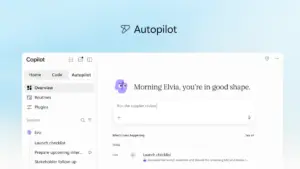
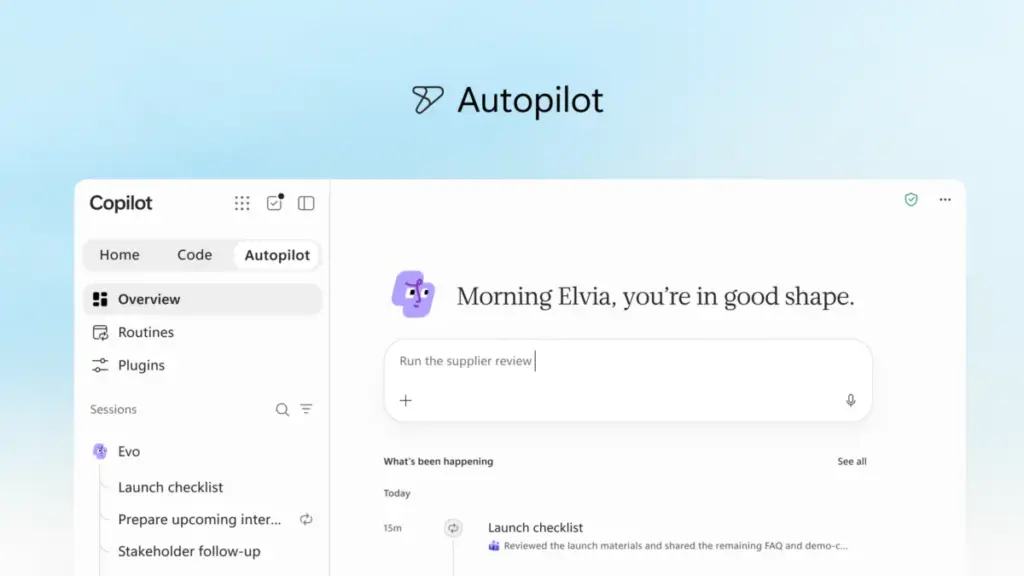
Perhaps the most ambitious addition is "Autopilot," a feature previously known as Scout. Unlike traditional AI that requires a prompt to act, Autopilot is a proactive, persistent agent. Users can assign Autopilot a name, a role, and a specific goal—such as managing a supplier review process. The agent then works independently, watching communication channels, following up on threads, and scheduling meetings without human intervention.
Because Autopilot is cloud-hosted and possesses its own identity and memory within a company’s tenant, it continues to function even when the user is offline. It operates within strict organizational guardrails, ensuring that while it has the autonomy to reach out to stakeholders for updates, it remains fully auditable and governed by IT protocols.

Expanding Your Business Context
For an AI to be truly effective, it must understand the specific language and data of the business it serves. Microsoft is addressing this through Microsoft IQ, a unified intelligence platform that connects an organization’s operational data with its collective knowledge.
A key development in this area is the integration of Fabric IQ. This brings over 20 million semantic models from Power BI directly into the Copilot grounding layer. This means that when a user interacts with Chat or Cowork, the AI has a real-time view of the company’s most trusted data. Additionally, Copilot is now grounded in workflows from Dynamics 365 and the Power Platform. For sales teams, this translates to the ability to pull deal histories or customer support tickets directly into a proposal without ever switching applications.
To further extend these capabilities, Microsoft has launched a new unified plugin registry. This catalog brings together first-party, partner, and custom-built plugins, allowing IT departments to centrally approve and manage how AI interacts with external data sources. This registry ensures that as organizations scale their AI usage, they maintain a consistent and secure way to introduce new capabilities.
Managing AI Spend
As AI moves from experimental use to a core business expense, managing costs has become a primary concern for executives. Microsoft is introducing a dual-model approach to AI spending: User Subscription Licenses (USL) and Usage-Based Billing (UBB).
The USL model is designed for "everyday AI," covering standard tasks like drafting, summarizing, and basic analysis in Microsoft 365 apps at a fixed cost. A new "Auto" routing feature within the USL weighs the accuracy, speed, and cost of each request to select the most efficient model for the task.
 Productivity Software & Office Suites
Microsoft Reimagines Copilot: A New Era of Autonomous Agents, Integrated Office Tools, and Democratized Development
REDMOND, Wash. — Microsoft has announced a comprehensive reimagining of its Copilot...
 Productivity Software & Office Suites
Microsoft Advances AI for Finance with Specialized Copilot Skills and Enhanced Traceability in Excel
The history of computing has long followed a predictable trajectory: new technology...
 Productivity Software & Office Suites
Microsoft Expands Copilot Ecosystem with Natural Language App Building to Democratize Enterprise Software Development
The landscape of software development is undergoing a fundamental transformation as artificial...