
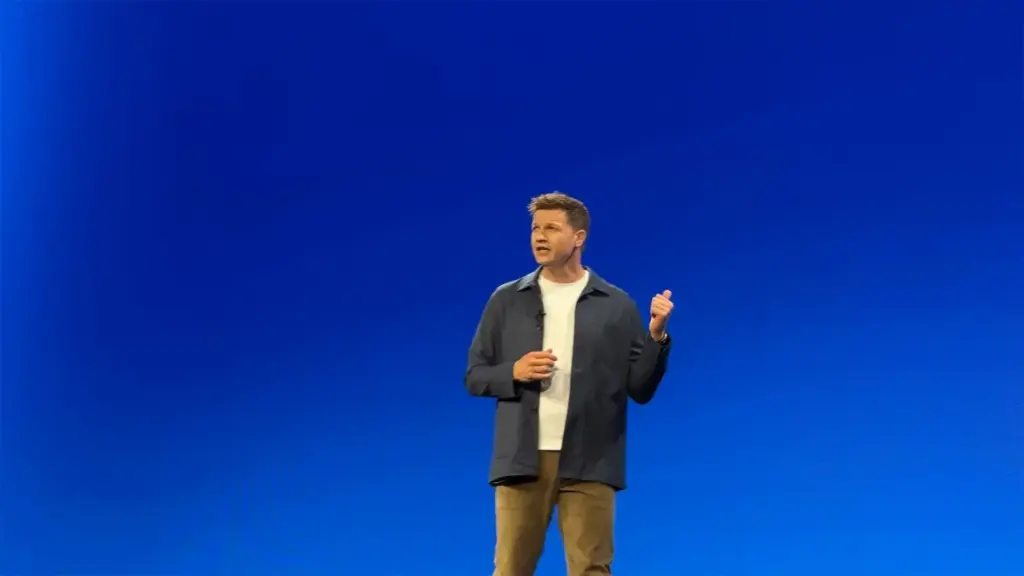
The evolution of artificial intelligence has moved with a velocity rarely seen in the history of computing. For the past eighteen months, the conversation across boardrooms and IT departments has been dominated by the themes of discovery and adoption—the initial "wow" factor of generative models and the scramble to integrate basic tools into daily workflows. However, according to Microsoft, that era of tentative exploration has officially ended. In a symbolic and strategic shift, the company has rebranded its global "Microsoft AI Tour" to the "Microsoft Frontier Tour," signaling a transition from the adoption phase to a more rigorous, implementation-heavy era of putting AI to work in the real world.
The name change, unveiled during a high-profile event in London, is more than a mere marketing adjustment. It reflects a new reality where the "frontier" is no longer the technology itself, but the challenge of applying it safely, effectively, and at scale. Yet, as Microsoft executives took to the stage to outline this new phase, they acknowledged a significant hurdle standing in the way of progress. This new frontier is fraught with a deeply human problem: a pervasive and multifaceted crisis of confidence that threatens to stall the very revolution the technology promises.
According to Microsoft’s leadership and its latest research, this confidence gap is manifesting at every level of the corporate hierarchy. It is a crisis that encompasses the technical, the economic, and the deeply personal, ranging from the fear of job displacement to skepticism regarding whether AI can truly deliver a meaningful return on investment.
The Great Divide: Leadership Optimism vs. Employee Anxiety
The backdrop for the Frontier Tour was the release of Microsoft’s AI Diffusion Report, a comprehensive study that highlights a growing "workforce rupture" within British businesses. The data paints a picture of two very different versions of the future. On one hand, business leaders are overwhelmingly bullish. The report revealed that eight-in-ten UK leaders are confident that the country can establish itself as a global leader in AI technology. These executives see the potential for massive productivity gains, streamlined operations, and a competitive edge on the world stage.
However, this optimism is not shared by the people tasked with using the tools. Only half as many employees—roughly 40%—share the confidence of their bosses regarding the UK’s AI future. This stark divide suggests that while those at the top are looking at the macro-economic potential, those on the front lines are grappling with the micro-consequences of the technology.
The reasons for this low employee confidence are varied but consistently rooted in personal and professional security. Many workers expressed concerns that the rapid deployment of AI has already begun to erode their sense of job security. There is a lingering fear that as AI models become more capable of handling complex cognitive tasks, the human role will be marginalized or eliminated entirely. Furthermore, the report highlighted a specific concern regarding the next generation of the workforce. Employees expressed worry that AI will limit opportunities for younger workers by automating the entry-level roles that have traditionally served as the primary training grounds for new talent.
The Human Element in the Age of Autonomy
Microsoft CEO Satya Nadella addressed these concerns directly during his keynote, emphasizing that the success of AI is inextricably linked to the "human element." For Nadella, the technical capabilities of a model are secondary to the way humans interact with and control it.
“How do you put the human in the loop?” Nadella asked the audience. “How do you really ensure that, ultimately, that sense of empowerment is not lost?”
Nadella’s comments point to a central tension in the current AI landscape. As models become more autonomous, there is a risk that workers will feel like "ghosts in the machine," merely supervising a process they no longer understand or influence. Microsoft’s strategy, as outlined by Nadella, is to frame AI not as a replacement for human agency, but as a tool for empowerment. The goal is to design systems where the human remains the ultimate decision-maker, ensuring that technology serves the person rather than the person serving the technology.
This philosophy is particularly relevant as the industry moves toward "AI agents"—software entities capable of performing multi-step tasks with a degree of independence. While these agents offer the promise of unprecedented efficiency, they also exacerbate fears of losing control. Nadella’s "human-in-the-loop" framework is intended to serve as a safeguard against this sense of displacement, though the challenge remains in convincing a skeptical workforce that this balance can be maintained in practice.
Building Trust Through Infrastructure and Partnership
The Frontier Tour also served as a platform for Microsoft to reiterate its commitment to the UK as a primary hub for AI development. The company has made substantial financial and structural commitments to the region, including massive investments in local data centers to ensure data residency and low-latency performance for British enterprises.
Beyond hardware, Microsoft has leaned heavily into public sector partnerships, most notably with the NHS. By integrating AI into the nation’s healthcare system, Microsoft is attempting to demonstrate the "pro-social" potential of the technology. The logic is that if AI can be shown to improve the delivery of critical public services, it will help build the broader social trust necessary for widespread adoption in the private sector.
Darren Hardman, CEO of Microsoft UK and Ireland, used his segment of the keynote to bridge the gap between technological potential and tangible human benefit. He acknowledged that the current challenge is turning the abstract "potential" of AI into improvements that people can actually feel—whether that is in the quality of their daily work or the efficiency of the services they consume.
“Our role at Microsoft is to bring intelligence and trust together,” Hardman told the delegates. “AI that puts your organization’s knowledge to work, helping people achieve more, while providing the safeguards and visibility to stay in control.”
Governance, Observability, and the Path to Control
A recurring theme throughout the event was the concept of "observability." In the context of AI, observability refers to the ability of a user or a leader to see, understand, and audit exactly what an AI system is doing and why. This has become a critical point of contention as businesses move away from simple chatbots toward complex AI agents that can access sensitive data and take actions across different software platforms.
Hardman argued that confidence cannot exist without control, and control cannot exist without visibility. For a business leader, the question of AI adoption often boils down to a simple concern: “Do I understand and remain in control of what this system is doing?”
To answer this, Microsoft is pledging to provide more robust safeguards. Hardman explained that organizations must be able to set clear boundaries on the data AI can access and the specific actions it is permitted to take. Crucially, he emphasized that human approval must remain a requirement for significant actions.
“You can give your people a say in how AI changes their work,” Hardman said, addressing the management tier. “You can set clear boundaries on the data AI can access. And the actions it can take. With human approval where it matters.”
This approach is designed to mitigate the "black box" problem that has plagued AI development. By offering tools that allow for better governance and visibility, Microsoft hopes to reassure leaders that they aren’t handing the keys of their business over to an unpredictable algorithm. At the same time, by giving employees a "say" in the implementation process, the company hopes to reduce the feeling of helplessness that contributes to the current crisis of confidence.
A Call to Action for Skills and Opportunity
As the Frontier Tour moves forward, the message from Microsoft is clear: the technology is ready, but the people and the culture are still catching up. Hardman concluded his keynote with a call to action directed at both the government and the private sector. He argued that the UK must focus on building more than just data centers; it must build confidence, skills, and opportunities.
The concern regarding younger workers and regional inequality was a focal point of this closing argument. Hardman noted that talent is distributed evenly across the UK, but opportunity is not. If AI is to be a success, it must "open doors for people, whatever their background, wherever they live."
This necessitates a massive upskilling effort. Microsoft’s research suggests that the "confidence crisis" is often a "skills crisis" in disguise. Workers who feel competent with a tool are far less likely to fear it. Therefore, the transition to the "frontier" will require businesses to invest as much in human training as they do in software licenses.
The rebranding of the Microsoft AI Tour to the Frontier Tour marks a pivotal moment in the narrative of artificial intelligence. It is an admission that the easy part—the introduction of the technology—is over. The hard part—integrating it into the delicate fabric of human labor, trust, and governance—is just beginning. For Microsoft, the path forward is defined by a paradox: to move faster into the future of machine intelligence, they must first slow down and solve the very human problem of confidence. Without the trust of the workforce, the frontier may remain an inhospitable place for even the most advanced technology.
 Helpdesk & IT Service Management (ITSM)
SolarWinds Service Desk September Update Introduces Advanced Process Integrations and Microsoft Teams Automation
As IT environments become increasingly complex and distributed, the demand for more...
 Helpdesk & IT Service Management (ITSM)
Global Security Alert: North Korean Cybercriminals Target IT Freelancers in Multi-Million Dollar Fraud Campaign
International security agencies have issued a high-priority alert following the discovery of...
 Helpdesk & IT Service Management (ITSM)
Anthropic and Akamai Ink Landmark $11.6 Billion Compute Partnership to Fuel Long-Term AI Infrastructure Growth
In a move that underscores the staggering capital requirements of the generative...







