

Furthermore, Spataro introduced the concept of the "continuous improvement loop." He noted that an AI agent is not a finished product upon deployment; rather, deployment is merely the starting point. The organizations currently gaining a competitive edge are those that define clear metrics for "good work," measure their agents against those standards, and iteratively refine them. By building these feedback loops directly into the platform, Microsoft intends to help businesses compound small, incremental improvements into a significant and defensible competitive advantage. This approach shifts the perception of AI from a static tool to a dynamic employee-like entity that evolves over time.
Business model
One of the most significant challenges facing modern executives is the management of AI-related costs. For two decades, the enterprise software industry has operated under the predictable "User Subscription License" (USL) model—a flat monthly fee per employee that grants unlimited access to a software suite. While this model provided budget certainty, the advent of AI and agentic workflows has introduced a level of computational variability that the traditional USL model was not designed to handle.
Spataro identified a common pitfall in current corporate strategy: attempting to judge the new costs of AI through the lens of old subscription logic. To address this, Microsoft is advocating for a dual-structured business model. The first component remains the traditional subscription, which provides broad access to AI productivity tools at a predictable price. Under this model, the underlying intelligence continues to improve through model updates, but the cost to the customer remains stable.
The second component is "Usage-Based Billing" (UBB), which is tied specifically to the volume of work performed rather than the number of people involved. Spataro argued that because long-running, complex agentic jobs vary so significantly in their computational demands, a flat fee is no longer sustainable or equitable. Crucially, he framed these usage-based costs not as traditional IT overhead, but as capital investment. In this view, spending on AI "work" is akin to investing in headcount or capability; it is a direct driver of business output.
To simplify this transition, Microsoft has introduced "Copilot Credits." This serves as a shared currency that aggregates various AI operations across the platform. Whether an organization is using Copilot for basic chat functions or employing "Copilot Cowork" for more advanced agentic tasks, the expenses draw from a single meter. This system is designed to provide transparency and control, allowing businesses to see exactly where their spend is going and to set hard limits before an invoice is generated. By providing these tools, Microsoft aims to demystify the economics of AI, making it as manageable as any other core business utility.
 Productivity Software & Office Suites
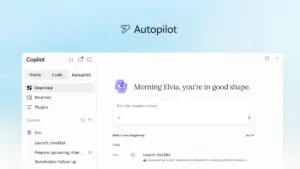
Microsoft Reimagines Copilot as a Centralized Engine for the Future of AI-Driven Work
In a major strategic shift aimed at redefining the intersection of human...
 Productivity Software & Office Suites
Microsoft Confirmed as Headline Sponsor for ESPC 2026 in Amsterdam as AI Transformation Takes Center Stage
The European Microsoft community is preparing for one of its most significant...
 Productivity Software & Office Suites
Microsoft Reimagines Copilot as a Central Hub for AI-Driven Enterprise Productivity
In a significant move to redefine the landscape of modern work, Microsoft...







