

The history of the commercial information technology sector spans more than six decades, defined by era-shifting innovations ranging from the first integrated circuits to the rise of the internet. However, a new contender has emerged that may arguably be the most profitable product the industry has ever seen: High Bandwidth Memory (HBM) stacked DRAM. While the massive mainframe engines of the 1970s, such as IBM’s System/370, once defined the pinnacle of revenue generation and profit margins, the current trajectory of HBM packaging suggests a fundamental shift in the economics of computing. Depending on how one allocates research and development costs against record-breaking revenues, the HBM stacked DRAM packaging of today appears to have surpassed the monolithic systems technology of the 1970s and the sophisticated thermal conduction module packaging of the IBM System/3081 in the 1980s.
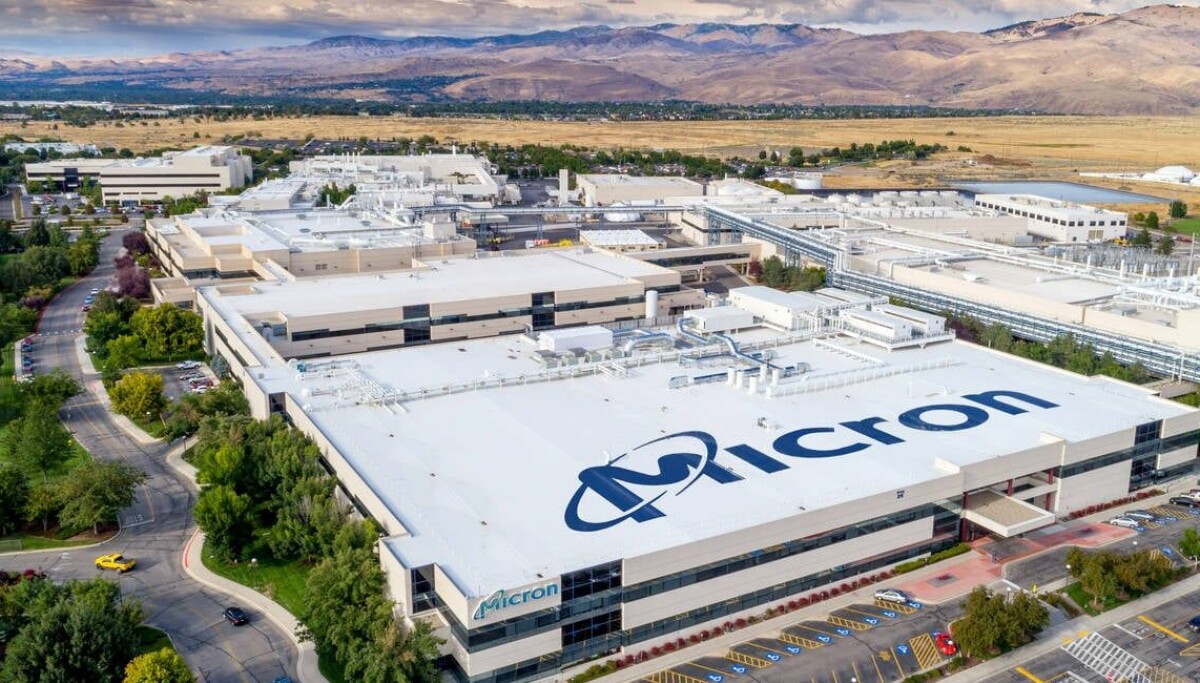
This evolution highlights a persistent truth in the hardware world: advanced packaging has always been a primary driver of value, and its importance is only magnifying as we move deeper into the era of artificial intelligence. The growth of the HBM market is moving at a velocity that dwarfs the expansion of the mainframe era. For the primary titans of this space—Micron Technology, Samsung, and SK Hynix—revenues are not merely growing; they are skyrocketing in a fashion that underpins the entire valuation of the GenAI revolution. Without the high bandwidth afforded by these stacked DRAM components, the massive advancements seen in Nvidia’s GPUs and AMD’s accelerators would simply be impossible. The GenAI movement is, at its core, a memory-bound revolution, and the financial results from the industry’s leaders reflect this reality with startling clarity.
The most recent financial performance from Micron Technology, specifically for its fiscal year 2026 ending September 3, offers a window into this unprecedented "golden hour" of the IT industry. The figures are, by any traditional accounting standard, staggering. During the fourth quarter, Micron’s revenues surged to $54.23 billion, representing a 4.8-fold increase compared to the same period in the previous year. This growth was not limited to the top line. Operating income saw an even more dramatic rise, climbing nearly 12-fold to reach $43.75 billion. Net income followed a similar trajectory, also increasing 12-fold to hit $37.7 billion. To put these numbers into perspective, Micron is currently bringing 69.5 percent of its total revenue directly to the bottom line. Despite this massive influx of capital, the company remains disciplined, showing no inclination to accelerate the construction of its memory and flash foundries beyond its already ambitious, multi-year strategic plans.
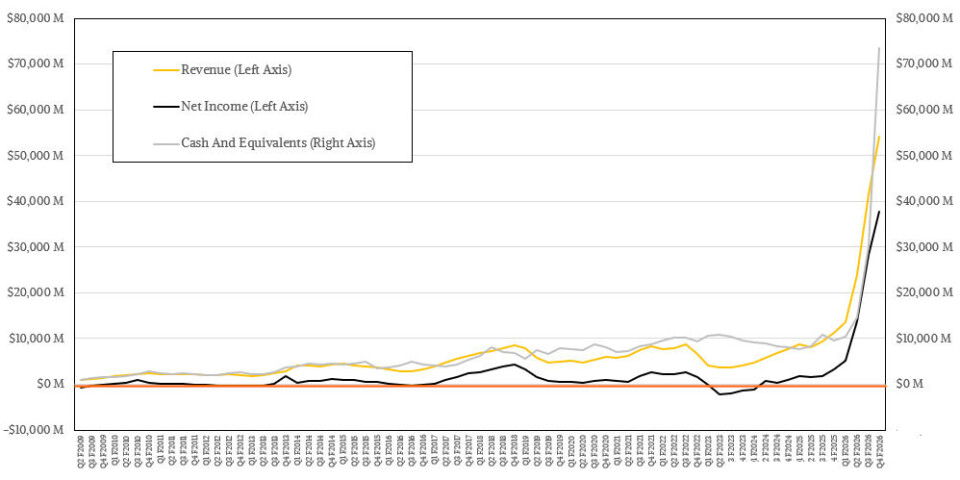
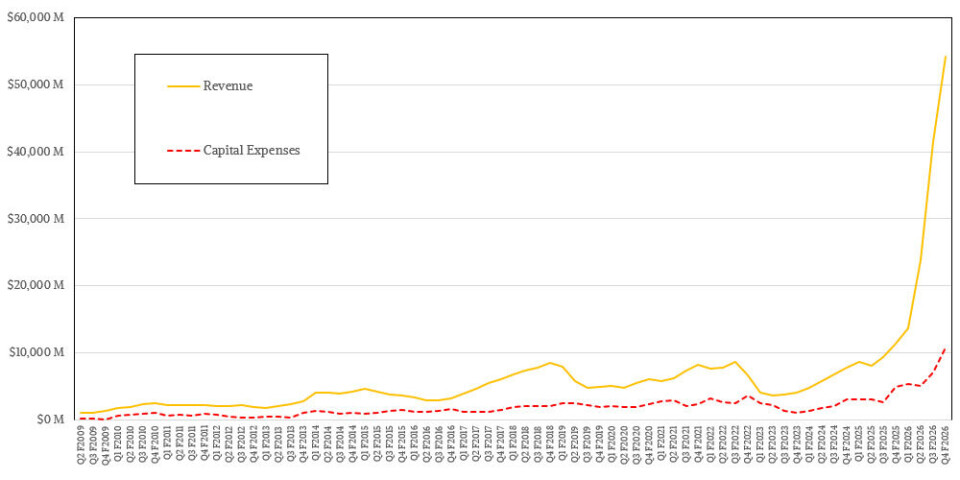
This restraint is a calculated move. Micron currently holds a cash reserve of approximately $73.45 billion—enough to fund the construction of nearly four state-of-the-art semiconductor fabrication plants (fabs). This cash pile has grown by 7.6 times over the last year. However, the company’s capital expenditures for the quarter remained at a relatively modest $10.77 billion. The leadership at Micron views the construction of these foundries through a lens of biological reality: much like a human pregnancy, the process is serial rather than parallel. You cannot simply double the number of workers to cut the gestation period in half; the path from conception to a working clean room must follow a strict chronological sequence. Furthermore, there is a strategic consensus among memory makers that the current AI demand cycle will remain robust through at least 2028, and likely into 2030. Consequently, none of the major players are in a hurry to flood the market with supply, which would risk triggering the kind of "bust" cycle that has historically plagued the memory industry.
The memory business has long been notorious for its volatile boom-bust cycles, where periods of intense demand lead to over-investment, followed by a glut of supply that crashes prices. Today’s market leaders—Micron, Samsung, and SK Hynix—appear to be adopting a strategy reminiscent of OPEC nations managing oil production. By resisting the urge to overbuild, they are maintaining a state of supply shortage that keeps prices and profits at historic highs. Even if it were possible to bring a new foundry online within a single year, these companies might decline to do so, as the price per unit of memory capacity continues to climb. They are currently achieving the ultimate corporate goal: maximizing revenue and profit while minimizing the necessary output and associated costs.
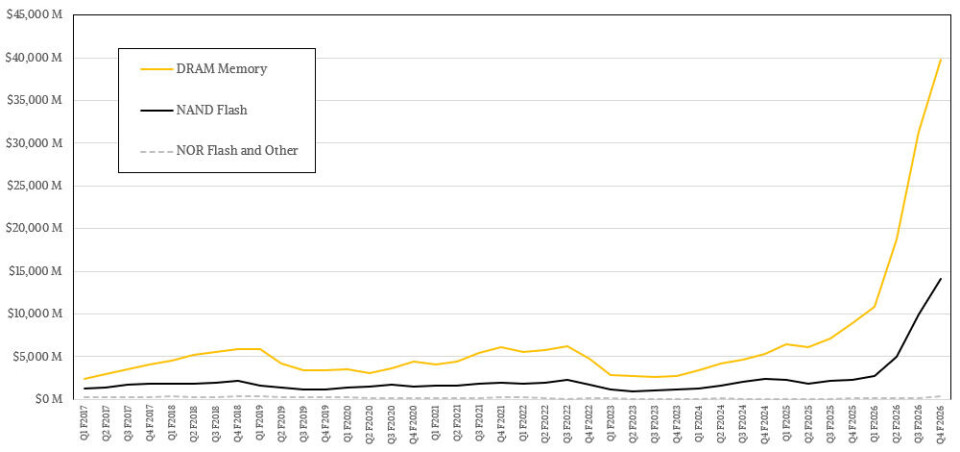
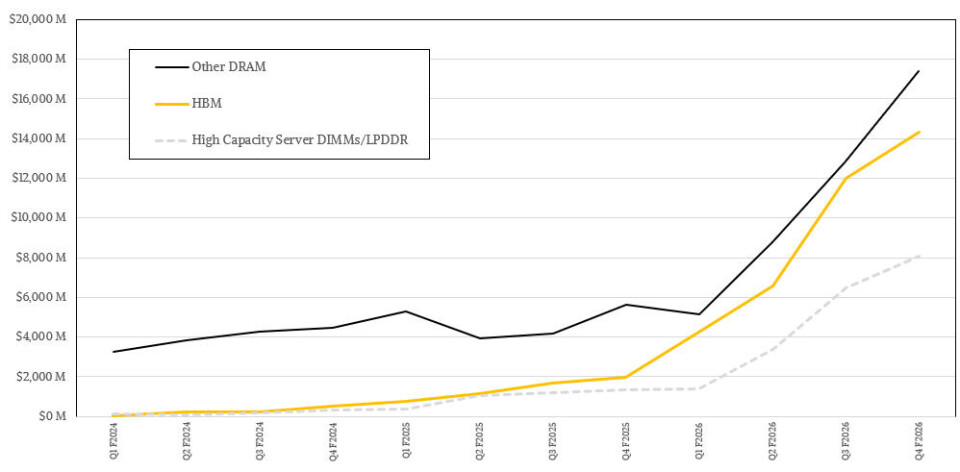
While HBM is the star of the show, Micron’s broader DRAM business remains a massive engine of growth. This segment includes low-power LPDDR memory, which is seeing increased adoption in AI server environments, as well as high-capacity server memory and standard DRAM for consumer electronics like PCs and smartphones. In the most recent quarter, the DRAM business rose 4.4-fold to $39.77 billion. Interestingly, despite the high profile of HBM, it was not the fastest-growing product line for Micron. That honor went to flash non-volatile storage, which saw sales jump 6.2-fold to $14.1 billion.
The dynamics of expanding these two technologies differ significantly. NAND flash foundries are generally cheaper and less complex to build than DRAM foundries. Given the current market appetite, Micron is expected to expand its flash business as quickly as is practically possible. Conversely, the difficulty and expense of bringing new DRAM foundries online—particularly those capable of producing the high-spec memory required for AI—means that bit shipments in the DRAM category will likely grow at a more measured pace.
On the competitive front, Micron continues to keep a close eye on China’s emerging indigenous memory industry. Scott DeBoer, Micron’s Chief Technology Officer, has indicated to Wall Street analysts that the company remains approximately two generations ahead of ChangXin Memory Technologies (CXMT), China’s leading domestic memory manufacturer. CXMT recently made waves by going public on the Shanghai Stock Exchange in July, raising $8.6 billion. While that sum is significant, it is dwarfed by the massive profits currently being enjoyed by Micron and its peers. Nevertheless, China’s commitment to self-sufficiency in the semiconductor space is a long-term factor that Micron must navigate by maintaining its technological lead to prevent customers from shifting to Chinese-made alternatives.
Internally, Micron’s operations are divided into several key units. The Cloud Memory business unit is the primary home for HBM, while the Core Datacenter business unit handles regular DRAM and flash storage. While the Cloud Memory unit is currently smaller than the Core Datacenter unit, both are experiencing explosive growth. In fiscal Q4, Cloud Memory sales reached $16.28 billion, a 3.6-fold year-on-year increase and an 18.3 percent jump from the previous quarter. The profitability of this unit is nearly unparalleled, with gross income at 83 percent of sales ($13.52 billion) and operating income at 76 percent of sales ($12.38 billion).
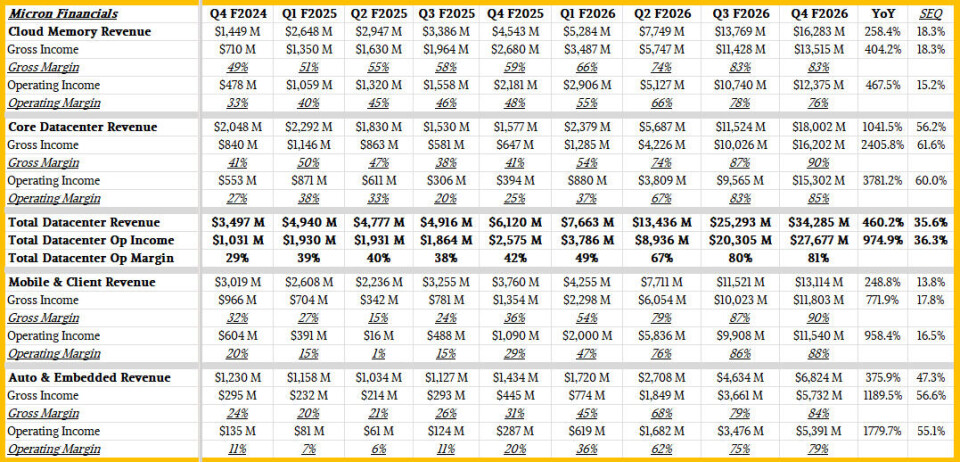
The Core Datacenter business performed even more impressively in terms of raw growth, surging 11-fold year-on-year to just over $18 billion. This highlights the fact that DRAM and flash are not just peripheral components but are core infrastructure for the massive AI clusters used for training and inference. When combined, Micron’s total datacenter revenue rose 5.6-fold to $34.29 billion, representing more than 35 percent sequential growth. The operating income for these products reached $27.68 billion, accounting for 81 percent of the total revenue for the datacenter segment.
This pricing power is a direct result of the supply-demand imbalance. According to Micron’s Chief Financial Officer, Mark Murphy, DRAM bit shipments in the fourth quarter rose by only a single-digit percentage, yet prices increased in the "high teens" percentage range. For flash, bit shipments rose 10 percent, while prices jumped 30 percent. While these are averages across all products, it is widely understood that the price increases for high-end components like HBM and LPDDR were significantly higher, driving the bulk of the profit expansion.
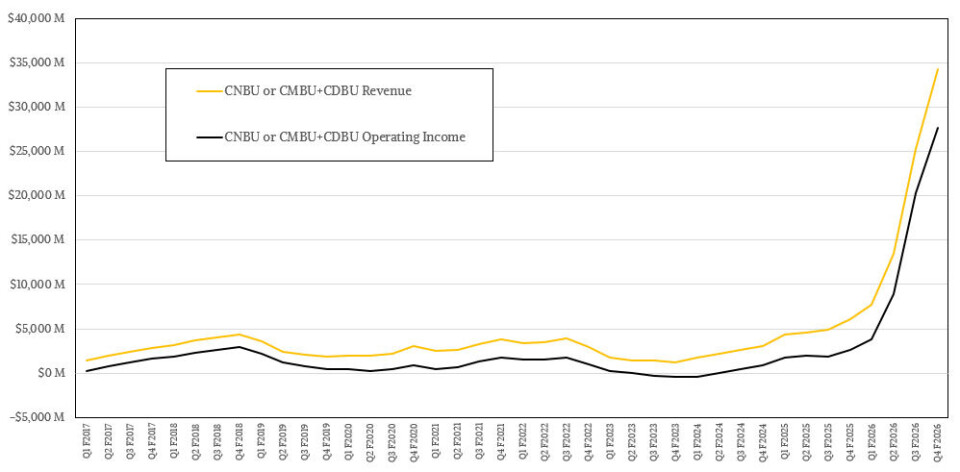
Looking toward the future, Micron is already preparing for the next phase of the AI boom. The company has completed agreements for the majority of its HBM supply through calendar year 2027, with significant year-over-year price increases baked into those deals. This strategy is designed to bring the profit profile of HBM even closer to that of conventional DRAM. The roadmap includes the transition to HBM4 and HBM4E, with Micron specifically highlighting its collaboration with Nvidia on custom HBM4E implementations—branded as NVHBM—which will be integrated into the next generation of GPUs and NVLink Fusion platforms.
However, the path forward is not without technical challenges. As HBM stacks become taller and run at higher speeds, the manufacturing process becomes increasingly difficult. Higher stacks and higher speeds naturally lead to lower yields, as the likelihood of a "dud" stack increases. This manufacturing complexity is one reason why Micron expects memory and flash supply to remain even tighter in 2027 and 2028 than it was in 2026. The company plans to increase its capital expenditures in fiscal 2027 to address these DRAM output constraints, but the physical limits of semiconductor fabrication mean that bit growth will likely remain in the low 20s percentage range.
The sheer financial value of these components has reached a level that borders on the surreal. To secure their future needs, customers have already provided Micron with $32 billion in prepayments. The company’s total revenue backlog—fixed-price contracts with committed volumes—now stands at $150 billion, a figure that represents only a portion of its total future sales.
To illustrate the current value of this technology, one can compare HBM to gold. A twelve-high HBM stack weighs approximately a quarter of a gram and carries a market price of $500 to $600. At this rate, a troy ounce of HBM4 would be worth between $62,500 and $75,000. With gold currently trading at roughly $4,176 per troy ounce, a single HBM4 stack is now worth between 15 and 18 times its weight in gold. As the industry looks toward Q1 of fiscal 2027, with projected sales of $61.5 billion, it is clear that Micron and its rivals are operating in a market environment unlike any seen in the history of computing.
 Enterprise Tech & Infrastructure
Navigating the Complexity of Amazon S3: A Strategic Approach to Enterprise Storage Cost Management
The most significant driver of overspending within Amazon S3 environments is a...
 Enterprise Tech & Infrastructure
The Unprecedented Ascent of the Global Server Market: A Vertical Climb into the AI Era
There is a specific, visceral sensation associated with watching an F-18A Hornet...
 Enterprise Tech & Infrastructure
Unmasking the Hidden Costs of Amazon S3: A Strategic Framework for Enterprise Storage Optimization
In the landscape of modern enterprise infrastructure, Amazon Simple Storage Service (S3)...







