

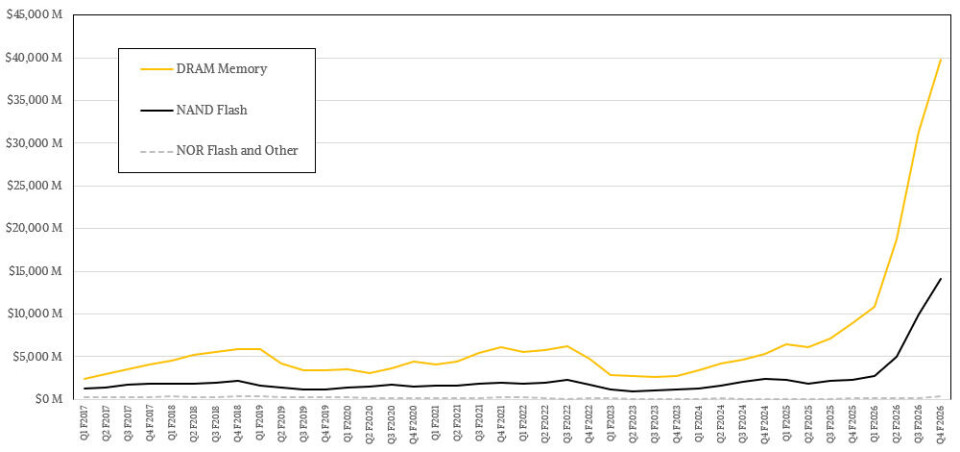
While HBM is the star of the show, Micron’s broader DRAM business remains a massive engine of growth. This segment includes low-power LPDDR memory, which is seeing increased adoption in AI server environments, as well as high-capacity server memory and standard DRAM for consumer electronics like PCs and smartphones. In the most recent quarter, the DRAM business rose 4.4-fold to $39.77 billion. Interestingly, despite the high profile of HBM, it was not the fastest-growing product line for Micron. That honor went to flash non-volatile storage, which saw sales jump 6.2-fold to $14.1 billion.
The dynamics of expanding these two technologies differ significantly. NAND flash foundries are generally cheaper and less complex to build than DRAM foundries. Given the current market appetite, Micron is expected to expand its flash business as quickly as is practically possible. Conversely, the difficulty and expense of bringing new DRAM foundries online—particularly those capable of producing the high-spec memory required for AI—means that bit shipments in the DRAM category will likely grow at a more measured pace.
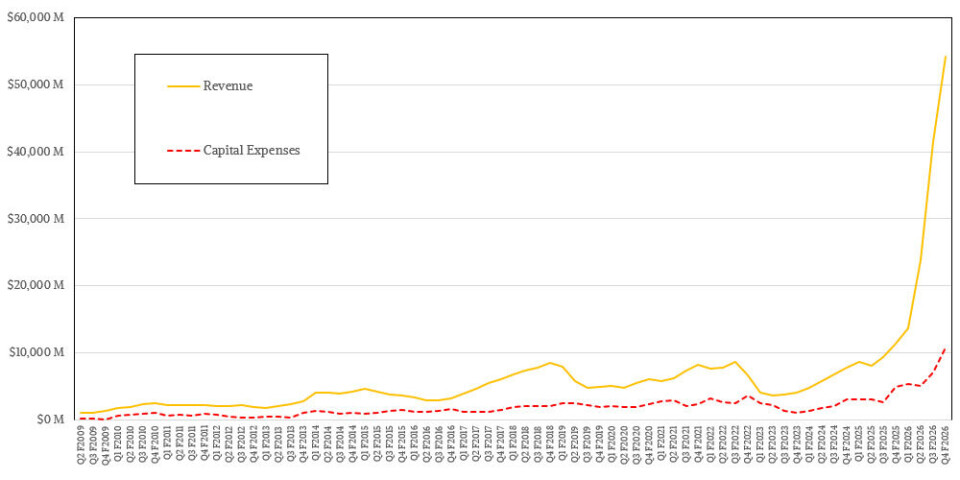
On the competitive front, Micron continues to keep a close eye on China’s emerging indigenous memory industry. Scott DeBoer, Micron’s Chief Technology Officer, has indicated to Wall Street analysts that the company remains approximately two generations ahead of ChangXin Memory Technologies (CXMT), China’s leading domestic memory manufacturer. CXMT recently made waves by going public on the Shanghai Stock Exchange in July, raising $8.6 billion. While that sum is significant, it is dwarfed by the massive profits currently being enjoyed by Micron and its peers. Nevertheless, China’s commitment to self-sufficiency in the semiconductor space is a long-term factor that Micron must navigate by maintaining its technological lead to prevent customers from shifting to Chinese-made alternatives.
Internally, Micron’s operations are divided into several key units. The Cloud Memory business unit is the primary home for HBM, while the Core Datacenter business unit handles regular DRAM and flash storage. While the Cloud Memory unit is currently smaller than the Core Datacenter unit, both are experiencing explosive growth. In fiscal Q4, Cloud Memory sales reached $16.28 billion, a 3.6-fold year-on-year increase and an 18.3 percent jump from the previous quarter. The profitability of this unit is nearly unparalleled, with gross income at 83 percent of sales ($13.52 billion) and operating income at 76 percent of sales ($12.38 billion).
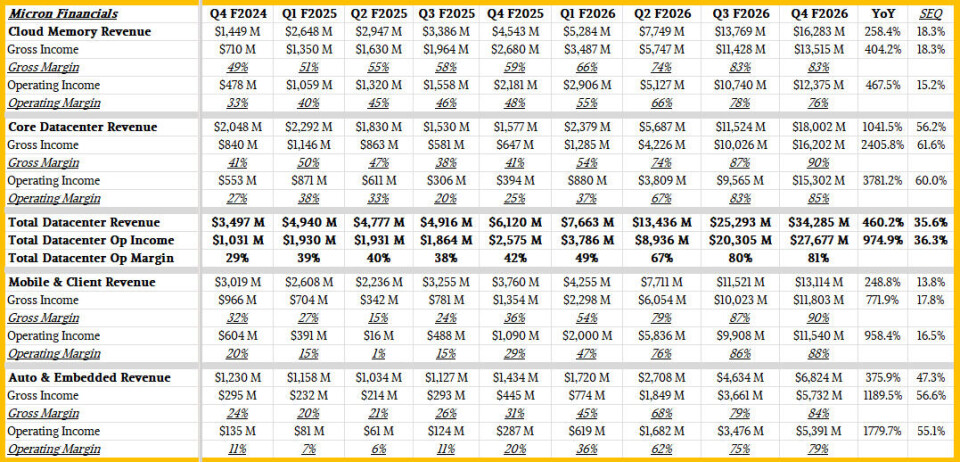
The Core Datacenter business performed even more impressively in terms of raw growth, surging 11-fold year-on-year to just over $18 billion. This highlights the fact that DRAM and flash are not just peripheral components but are core infrastructure for the massive AI clusters used for training and inference. When combined, Micron’s total datacenter revenue rose 5.6-fold to $34.29 billion, representing more than 35 percent sequential growth. The operating income for these products reached $27.68 billion, accounting for 81 percent of the total revenue for the datacenter segment.
 Enterprise Tech & Infrastructure
Understanding the Architecture of Modern Storage: Why the Choice Between Flash and SSD Is a Matter of Components, Not Categories
In the rapidly evolving landscape of enterprise data management, the terminology used...
 Enterprise Tech & Infrastructure
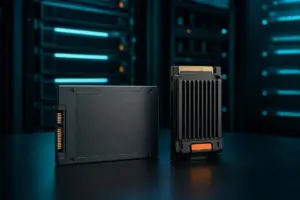
Understanding the Architecture of Modern Storage: Decoding the Relationship Between Flash Technology and Solid-State Drives
In the rapidly evolving landscape of data storage, the terminology used to...
 Enterprise Tech & Infrastructure
Nvidia Unveils Silicon-Level Guardrails as Industry Grapples with Surging AI Agent Breaches
The artificial intelligence industry, once defined by a breakneck race toward ever-greater...







