
The dispute was initiated by Rikshiram Aghria, an Indian national who sought to gain control of the domain name sattamatkajico.com through the Uniform Domain-Name Dispute-Resolution Policy (UDRP). In his filing, Aghria relied on his ownership of Indian trademark registrations for the marks "SATTA" and "SATTA MATKA." Notably, these trademarks were registered in a stylized form rather than as standard character marks. Aghria’s central argument rested on the assertion that these terms were coined identifiers for his business and that he had built significant goodwill around them over several years. He contended that the respondent’s registration of the domain was a bad-faith attempt to capitalize on his established brand.
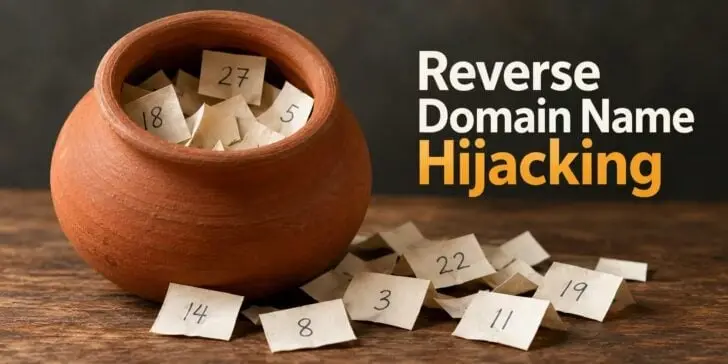
However, the case quickly encountered hurdles as the panelist, Shwetasree Majumder, began to scrutinize the foundational claims of the complaint. The primary issue was the nature of the terms themselves. In the context of Indian culture and the gambling industry, "Satta Matka" is far from a unique or coined brand. Instead, it is the name of a widely known, numbers-based gambling and lottery game that has been a part of the Indian social fabric for decades. The term has clear linguistic roots: "satta" translates to wagering or betting, while "matka" refers to an earthen pot. Historically, the game involved drawing numbers from such a pot to determine winners, a practice that originated in the 1960s and evolved into a massive, albeit often unregulated, industry.
Because the term is generic and describes the very activity—betting on numbers—associated with the domain, the panelist found that the complainant’s attempt to claim exclusive rights over it for the purpose of a domain dispute was fundamentally flawed. Under the UDRP, for a complainant to succeed, they must prove three specific elements: that the domain name is identical or confusingly similar to a trademark in which they have rights; that the respondent has no rights or legitimate interests in the domain; and that the domain was registered and is being used in bad faith.
In this instance, the panelist found that the complainant failed to move past the most basic requirements of the policy in a convincing manner. One of the most damaging aspects of the complainant’s case was the timeline of events. Majumder noted that Aghria had filed his trademark applications only weeks before the disputed domain name was registered. This timing suggested to the panel that the complainant may have been attempting to create a legal "paper trail" to support a future claim rather than protecting a long-standing, well-known brand. Furthermore, despite asserting that he had built goodwill over many years, Aghria failed to provide any substantive evidence of actual use of the marks in commerce.
The panelist’s decision was particularly critical of the complainant’s lack of transparency regarding the generic nature of the term "Satta Matka." By claiming the term was "coined," the complainant essentially asked the panel to ignore the common knowledge that the phrase is a colloquialism for a popular gambling game in India. This lack of candor is often a deciding factor when a panel considers a finding of Reverse Domain Name Hijacking. RDNH is defined under the UDRP rules as "using the Policy in a bad faith attempt to deprive a registered domain-name holder of a domain name." It is a designation reserved for cases where the complainant knew, or should have known, that their claim was baseless or that they could not possibly prove the necessary elements of bad faith on the part of the respondent.
In her written decision, Majumder summarized the failures of the case with striking clarity. She pointed out that the complainant brought the dispute based on trademark applications filed mere weeks before the domain’s registration, for a term that the complainant himself used to describe a betting game. The contradiction was stark: the complainant was simultaneously using the term as a generic descriptor for a game while telling the WIPO panel that it was a unique, coined mark. The panelist concluded that the complainant knew, or at the very least ought to have known, that he could not demonstrate that the respondent had specifically targeted him or his business.
The fact that both parties represented themselves—acting "pro se" without the assistance of legal counsel—did not shield the complainant from the panel’s scrutiny. While panels sometimes grant a degree of leeway to unrepresented parties regarding procedural technicalities, the substantive requirement to act in good faith and provide a non-frivolous argument remains absolute. In this case, the fundamental weakness of claiming a monopoly over a generic gambling term was too significant to overlook.
The respondent, for their part, was able to maintain ownership of the domain because the complainant could not establish that the registration was an act of bad faith. In domain name law, when a domain consists of generic or descriptive terms, the registrant often has a legitimate interest in using those terms for their common meaning. If a domain name like sattamatkajico.com is used to provide information about the game of Satta Matka, or to host a platform related to that generic activity, it is generally considered a legitimate use of the domain, provided it does not specifically target a third party’s trademark. Since the complainant’s "brand" was essentially indistinguishable from the game itself, and since his trademark rights were both recent and stylized, the respondent’s registration appeared to be a standard pursuit of a descriptive domain rather than a targeted attack.
This ruling adds to a long line of UDRP jurisprudence that protects the "first-come, first-served" principle of domain registration when it involves generic words. Trademark owners often mistakenly believe that a trademark registration gives them an absolute right to any corresponding domain name. However, the UDRP is designed specifically to combat "cybersquatting"—the practice of registering domains to profit from the reputation of another’s trademark. It is not intended to be a tool for trademark owners to "upgrade" their digital presence by seizing generic domains that happen to match their business category.
The finding of Reverse Domain Name Hijacking serves as a form of professional and legal sanction. While it does not carry a financial penalty under the UDRP—which is an administrative rather than a judicial process—it is a public "black mark" that is recorded in the WIPO database. It signals to future panels and the broader internet community that the complainant acted in bad faith. For individuals like Aghria, such a finding can complicate future attempts to enforce intellectual property rights, as it calls into question their credibility and their understanding of the boundaries of trademark law.
The case of sattamatkajico.com also highlights the specific challenges of the Indian market in the domain name space. As more Indian businesses move online, there has been a surge in disputes involving Hindi terms or terms related to popular local pastimes. "Satta Matka," being a term with such deep historical roots in the subcontinent, is a prime example of a phrase that belongs to the public domain in a functional sense, even if individuals attempt to register stylized versions of it as trademarks. The WIPO panel’s refusal to allow such a term to be privatized through the UDRP process ensures that the platform remains a fair venue for resolving clear cases of abuse rather than a mechanism for trademark overreach.
Ultimately, the dispute over sattamatkajico.com underscores a vital lesson for both trademark seekers and domain investors. For trademark owners, it demonstrates that a registration for a stylized logo or a generic term does not grant an automatic path to seizing a domain name, especially when the term is a common descriptor for an industry or activity. For domain registrants, the ruling provides a sense of security that the UDRP process contains checks and balances, such as the RDNH finding, to prevent the "hijacking" of domains that were registered for their generic or descriptive value. The decision by Shwetasree Majumder stands as a clear application of these principles, maintaining the integrity of the domain name system against meritless claims.
 Web Hosting & Domain Management
University of South Carolina Moves to Secure .usc Top-Level Domain in Strategic Branding Maneuver
In a significant move that highlights the growing importance of digital real...
 Web Hosting & Domain Management
Major Domain Registrars Challenge auDA Over Policy Shifts Threatening Millions of .au Registrations
A coalition of ten prominent domain name registrars has formally petitioned the...
 Web Hosting & Domain Management
The Expired Domain Gold Mine: How iGaming Operators are Resurrecting Old Brands for SEO Profit
The landscape of the domain name secondary market has undergone a radical...







