
Panther Lake, the mobile-focused successor to Lunar Lake, was initially expected to be the primary driver of Intel’s 18A volume in the mobile space. However, the CFO explained that this capacity is being redirected to bolster the production of Granite Rapids data center CPUs. Granite Rapids, built on the Intel 3 node, is a cornerstone of Intel’s strategy to recapture market share in the lucrative server and enterprise AI sectors.
The decision to pivot capacity away from a next-generation client part toward a data center product underscores the immense demand currently seen in the enterprise market. With the ongoing boom in artificial intelligence and high-performance computing (HPC), the margins on server-grade Xeon processors like Granite Rapids often far exceed those of consumer-grade mobile chips. By prioritizing Granite Rapids, Intel is signaling to investors that it is focused on maximizing profitability and securing its footing in the data center, even if it means tightening the supply or delaying the volume ramp of certain client products.
This shift does not necessarily mean Panther Lake is being canceled, but it suggests a more measured rollout or a narrower focus for the initial launch. It also highlights the flexibility of Intel’s foundry footprint, allowing the company to reallocate resources based on real-time market demand and the specific performance needs of its various business units.
Looking Toward CES and the Road Ahead
The upcoming CES in January is now set to be one of the most important events in Intel’s recent history. Traditionally, Intel uses the Las Vegas stage to announce mobile processor refreshes, but the explicit mention of Nova Lake by CEO Lip-Bu Tan suggests a much more substantial presentation is in the works.
Industry observers expect Intel to provide deep technical dives into the Nova Lake compute tile, potentially detailing the IPC (instructions per clock) gains of the new P-cores and E-cores. There is also significant interest in how Intel will integrate its next-generation NPU (Neural Processing Unit) into the desktop platform. While "AI PCs" have largely been a mobile-first marketing push, Nova Lake is expected to bring those specialized AI acceleration capabilities to the desktop in a much more robust way, catering to content creators and developers who require local AI processing power.
Furthermore, the reveal at CES will likely touch upon the platform requirements for Nova Lake. With every major architectural shift, questions arise regarding socket compatibility and support for emerging standards like faster DDR5 memory and PCIe 6.0. Given that Nova Lake will be a "clean sheet" design in many respects, it may herald a new era of motherboard chipsets designed to take full advantage of the 18A-P node’s efficiency and bandwidth.
 Hardware Reviews & PC Building
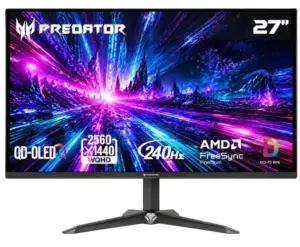
Acer Predator 27-Inch QD-OLED Gaming Monitor Sees Significant Price Drop at Best Buy
The landscape of PC gaming peripherals is undergoing a fundamental shift as...
 Hardware Reviews & PC Building
Used Hardware Purchase Leads to Unexpected Valorant Ban for German Gamer as Riot’s Vanguard Flags Secondhand CPU
The secondary market for PC components has long been a haven for...
 Hardware Reviews & PC Building
Rising Component Costs and AI Demand Create Unprecedented Crisis for Consumer PC Market
The landscape of the consumer PC market is currently navigating a period...







