
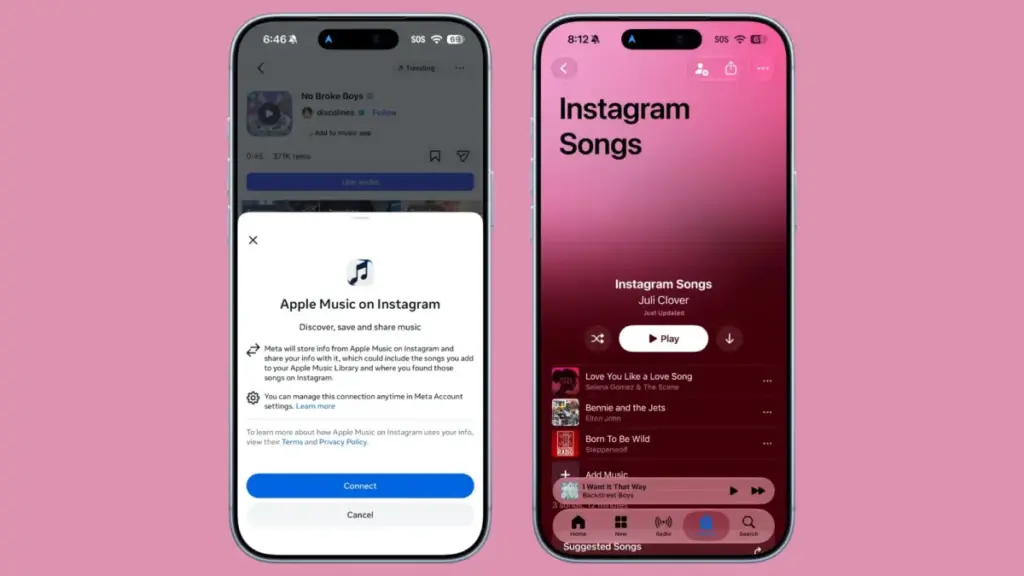
Instagram has officially expanded its audio integration capabilities by allowing users to link their Apple Music accounts directly to the social network, enabling them to save songs discovered across posts and Stories straight to their streaming library. The functionality, which began rolling out to users following discovery across online community forums, streamlines the process of capturing music encountered while browsing social content without requiring listeners to leave the Instagram application or manually search for track titles.
Under the new setup, when a user taps on a music track link attached to an Instagram post or Story, they are presented with a prompt inviting them to connect their Instagram profile to their Apple Music account. Once the two services are authenticated and linked, tapping the song title on any relevant post reveals a dedicated "Add to Apple Music" button. Selecting this option automatically saves the track directly to a newly generated "Instagram Songs" playlist, which resides within the Library section of the user’s Apple Music app.
The addition fills a major functional gap in the cross-platform relationship between Meta’s social network and Apple’s music streaming service. While Instagram previously offered support for sharing Apple Music tracks directly into Stories and direct messages, the interaction was strictly a one-way path. Users who discovered an appealing song while scrolling through feed posts or user stories had no direct mechanism to save that content into Apple Music. Instead, listeners were forced to manually note down track titles and artist names, open the Music app separately, and conduct a search to add the music to their personal collections.
By introducing native account linking, Instagram eliminates these friction points and provides an automated, organized destination for saved tracks. The platform’s creation of a designated "Instagram Songs" playlist in the user’s Apple Music Library ensures that saved items are organized automatically rather than being scattered across general library files or mixed into existing custom playlists.
This updated capability also brings Apple Music into closer functional alignment with rival streaming services on Instagram. Spotify has long provided a comparable feature on the platform, allowing users to tap on tagged tracks within posts or Stories to instantly save them to the "Liked Songs" section of their Spotify library. With Apple Music now offering a matching integration, subscribers to Apple’s service gain access to the same seamless bridge between social music discovery and personal audio libraries.
The move highlights the increasingly central role social media platforms play in modern music discovery. Short audio clips attached to social media posts and viral video content have become primary drivers for track popularity, often helping emerging artists gain traction or bringing older catalog songs back into mainstream listening charts. By establishing a direct pipeline between Instagram engagement and Apple Music collection management, the feature simplifies how listeners build their personal music catalogs out of everyday social interactions.
The launch of the Instagram playlist integration coincides with a significant period of design evolution and platform refinement for Apple Music. Just weeks before the social network feature surfaced, Apple officially announced a major brand identity overhaul for its music streaming platform, introducing one of the most comprehensive visual updates to the service since its launch.
Central to that brand overhaul was the retirement of the familiar red color scheme that had long defined Apple Music’s logo, app iconography, and promotional materials. In its place, Apple introduced a minimalist, high-contrast black-and-white brand identity. The new look featured a redesigned app icon and clean, monochromatic logos deployed across Apple’s software applications, marketing materials, and digital touchpoints.
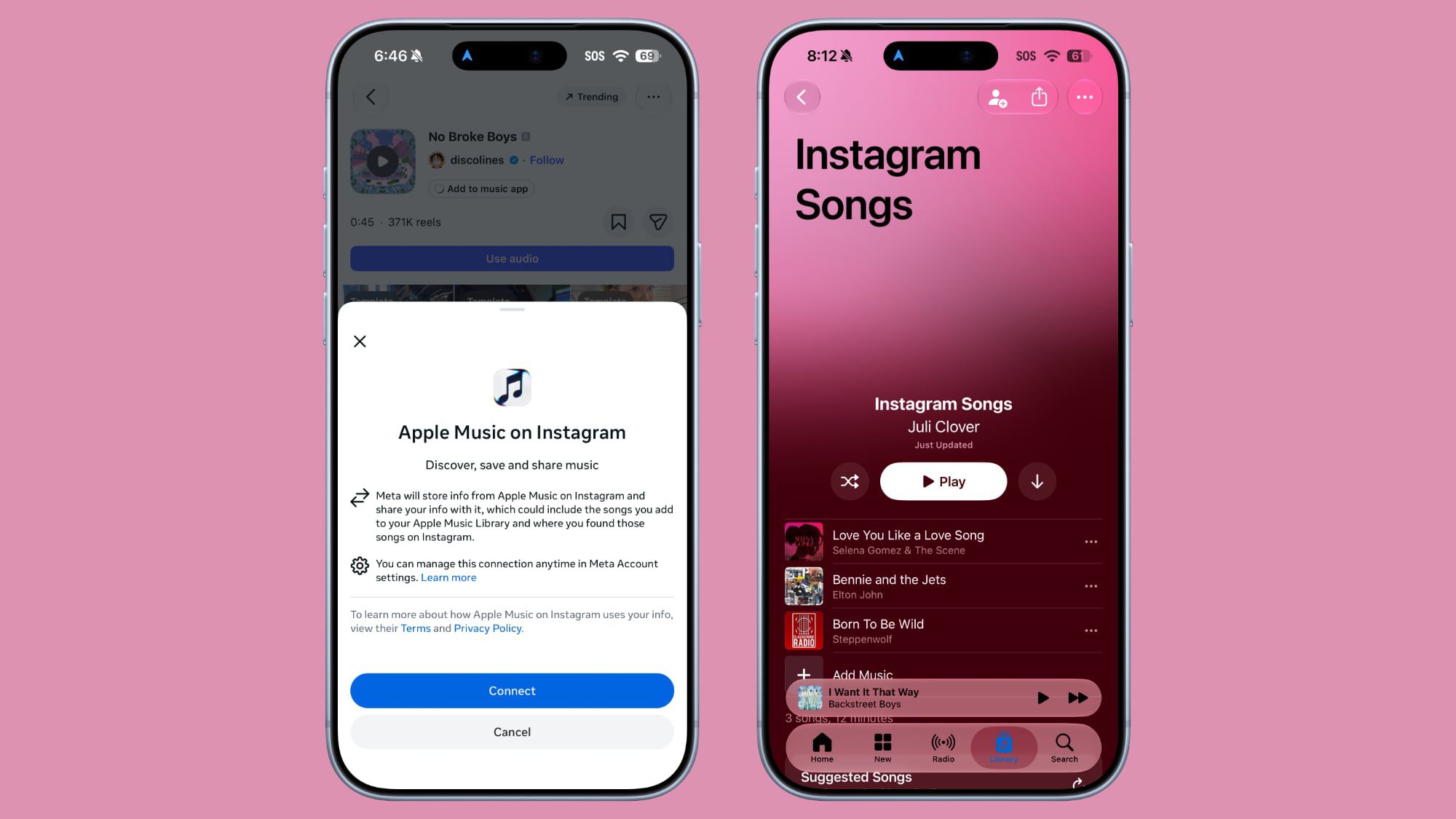
When officially unveiling the updated branding, Apple shared details regarding the creative concept behind the transformation, explaining that the new visual identity was "made by sound." In a promotional video released by the company, Apple illustrated how the team played specific audio tracks directly through a container of water. The sound frequencies caused the liquid to vibrate and form intricate geometric patterns corresponding to the pitch and resonance of the played notes. These naturally occurring fluid patterns were captured visually and used as the foundation for the service’s revamped graphic identity.
Following the initial announcement, the new visual branding quickly went live across Apple’s web properties. On Apple’s official website, the main Apple Music landing page was updated to reflect the sleek black-and-white design language, officially replacing the classic red accents that had previously adorned the service’s web presence. The rebrand signaled a unified design direction aimed at creating a modern, neutral backdrop that emphasizes album art and artist imagery.
In addition to macro-level branding changes and social platform links, Apple has continued to maintain unique user experience elements within the web version of Apple Music. Among these is an interactive Easter egg embedded within the web player that pays homage to Apple’s groundbreaking history in portable digital audio.
When visitors navigate to an invalid or broken link on the Apple Music web interface—such as a 404 "Page Not Found" error screen—the platform displays a functional digital emulator of the original classic iPod. Accompanied by the message "Page Not Found," the page invites visitors with the line, "Give this a spin instead." A similar interactive experience appears if users deliberately navigate to specific web paths such as music.apple.com/ipod, where the page greets them with "Looking for something?" before loading the vintage media player interface.
The web-based iPod emulator features a working click wheel, allowing users to scroll through and interact with the virtual hardware device directly inside their web browser. This nostalgic feature serves as a playful reminder of the hardware legacy that paved the way for modern cloud-based streaming services, balancing Apple’s contemporary technical additions with subtle nods to its corporate history.
The combination of social platform integrations, sweeping visual rebrands, and interactive web elements points to a comprehensive effort to keep Apple Music deeply woven into the daily digital routines of its subscriber base. By enabling Instagram users to capture music on the fly, Apple and Meta have simplified the bridge between passive social scrolling and active music listening.
For artists and record labels, the integration offers a more reliable pathway for converting social media buzz into sustained listening metrics. When listeners encounter a song on Instagram, the ability to save it immediately with a simple button tap minimizes drop-off rates, helping ensure that social media exposure translates into actual plays and long-term placement in user libraries.
As cross-platform integrations become increasingly sophisticated, the ability to link social browsing with personal media services continues to define the user experience for digital media consumers. With Apple Music now seamlessly connected to Instagram’s direct save features, users no longer have to worry about missing out on new tracks discovered in their feeds, ensuring that memorable audio clips found while scrolling can be revisited anytime within their personal playlist collections.
 macOS & Apple IT Support
Apple’s $250 Million Siri AI Lawsuit Settlement: Payout Estimates Reach $61 Per Device as Claim Deadline Nears
With just one month remaining for eligible consumers to submit claims, details...
 macOS & Apple IT Support
Apple Mandates Developer Disclosures for Location Sharing and Dating Features to Update App Store Age Ratings
Apple has announced a new set of developer requirements designed to refine...
 macOS & Apple IT Support
Apple Executive Addresses Lack of 120Hz ProMotion Display on New OLED iPad Mini
Apple has officially unveiled its long-awaited new iPad mini, featuring a landmark...







