
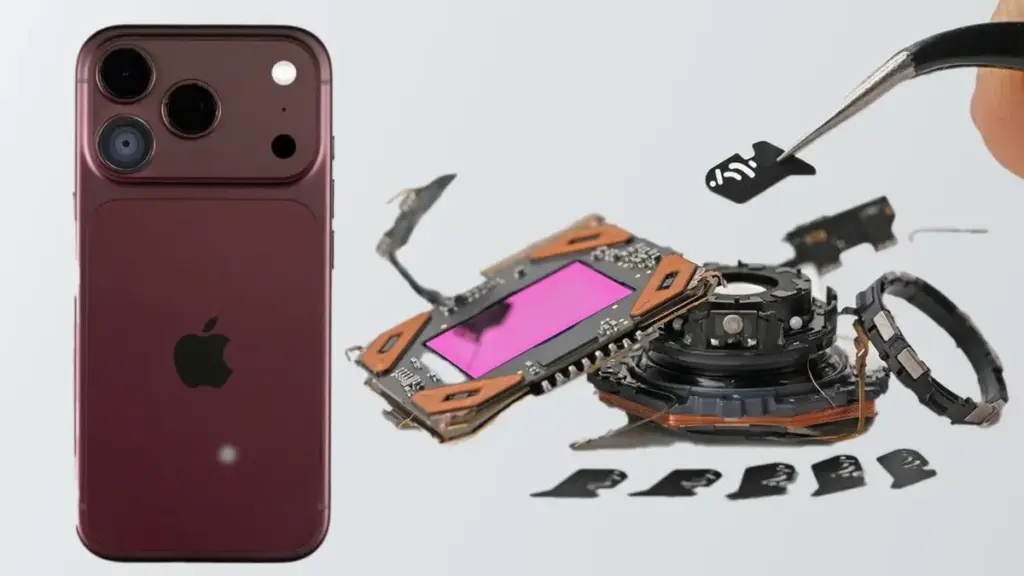
In-depth device teardowns offer an unfiltered window into the intricate engineering hidden beneath sleek glass and titanium exteriors. Following the official commercial release of Apple’s latest flagship smartphone lineup, electronics repair authority iFixit has published its comprehensive teardown of the iPhone 18 Pro and iPhone 18 Pro Max. Released simultaneously in both detailed article and video formats, the teardown provides a thorough examination of the internal architecture powering Apple’s most advanced smartphones to date. While the teardown shines a light on impressive hardware innovations—including an expanded thermal management system and a complex variable aperture camera assembly—it also highlights significant structural changes that present new challenges for independent repair technicians and hardware enthusiasts alike.
The disassembly process provides critical verification of the internal hardware differences across global variants, particularly regarding power delivery and cellular connectivity components. iFixit’s breakdown officially confirms the exact battery capacities designated for the eSIM-only iterations of the iPhone 18 Pro and iPhone 18 Pro Max. These trayless configurations are distributed across select international markets, whereas models manufactured for other regions continue to feature a traditional physical SIM card tray. The confirmation of these internal battery specs follows earlier leaks detailing the capacities of the physical SIM variants, painting a complete picture of how Apple balances internal space, power management, and regional cellular infrastructure requirements across its global supply chain.
Beyond battery specifications, the internal layout reveals notable shifts in how Apple constructs its high-end smartphones. Among the most impactful changes uncovered during the teardown is the redesigned dual-layer logic board structure, which now houses the NAND flash storage nestled deep within its sandwiched architecture. According to iFixit’s technical analysis, embedding the NAND flash memory inside the dual-layer logic board drastically complicates storage-related repairs and component-level data recovery procedures.
In prior generations, storage chips were situated in locations that, while still requiring specialized micro-soldering expertise, were considerably more accessible to advanced technicians. By placing the NAND chip between the stacked layers of the main logic board, repairing or replacing failed storage chips now requires technicians to perform a delicate board-separation process, heating and desoldering the interposer layers just to gain access to the memory module. This design choice creates a substantially higher barrier to entry for third-party repair shops, potentially rendering component-level storage repairs and data recovery efforts far less practical or economically feasible for consumers.
Repairability concerns are further compounded by an unexpected structural fragility observed during the initial display removal process. iFixit noted that during the teardown of four distinct iPhone 18 Pro units, the plastic frame supporting the screen assembly cracked or severed entirely away from the display on three of the devices. This structural cracking represents a novel issue that technicians did not encounter during disassemblies of previous iPhone generations.
When opening modern smartphones, specialized heat sources and suction tools are applied to soften the water-resistant perimeter adhesives, allowing the display to be lifted cleanly from the chassis. Under normal circumstances, the plastic sub-frame holding the display glass intact remains structural throughout this procedure. However, the recurring breakage across multiple iPhone 18 Pro units suggests a potential vulnerability in the plastic frame material, a modification in structural tolerances, or a shift in the adhesive formulation binding the screen to the chassis.
While the high rate of frame failure raises immediate questions regarding repair accessibility, iFixit exercised professional caution in its preliminary assessment. The repair organization emphasized that further empirical testing is required to determine whether the fragile display frames are the result of a widespread manufacturing tolerance issue, an inherent design flaw, or simply an anomaly limited to early production batches. Nevertheless, for independent repair shops and consumers seeking to perform DIY screen replacements, the finding serves as an early warning that servicing the display on the iPhone 18 Pro line may require heightened care, altered heating routines, or re-engineered disassembly tools to prevent collateral damage to the surrounding bezel structure.
Despite these repairability hurdles, the teardown offers a fascinating look at the sophisticated engineering solutions Apple implemented to enhance hardware performance and thermal efficiency. Central to these internal upgrades is a significantly larger vapor chamber cooling system integrated into the central frame. Modern mobile processors generate considerable thermal energy under sustained workloads, such as console-quality mobile gaming, high-bitrate spatial video recording, and intensive computational image processing.
By expanding the footprint of the vapor chamber, Apple has created a far more effective thermal dissipation pathway inside the tight confines of the enclosure. Liquid inside the sealed metal vapor chamber absorbs heat from the primary processing units, vaporizes, and condenses as it spreads across the cooler regions of the chamber, rapidly drawing thermal energy away from the main logic board. This hardware enhancement aims to prevent aggressive thermal throttling, enabling the device to sustain peak CPU and GPU performance levels for extended periods without overheating.
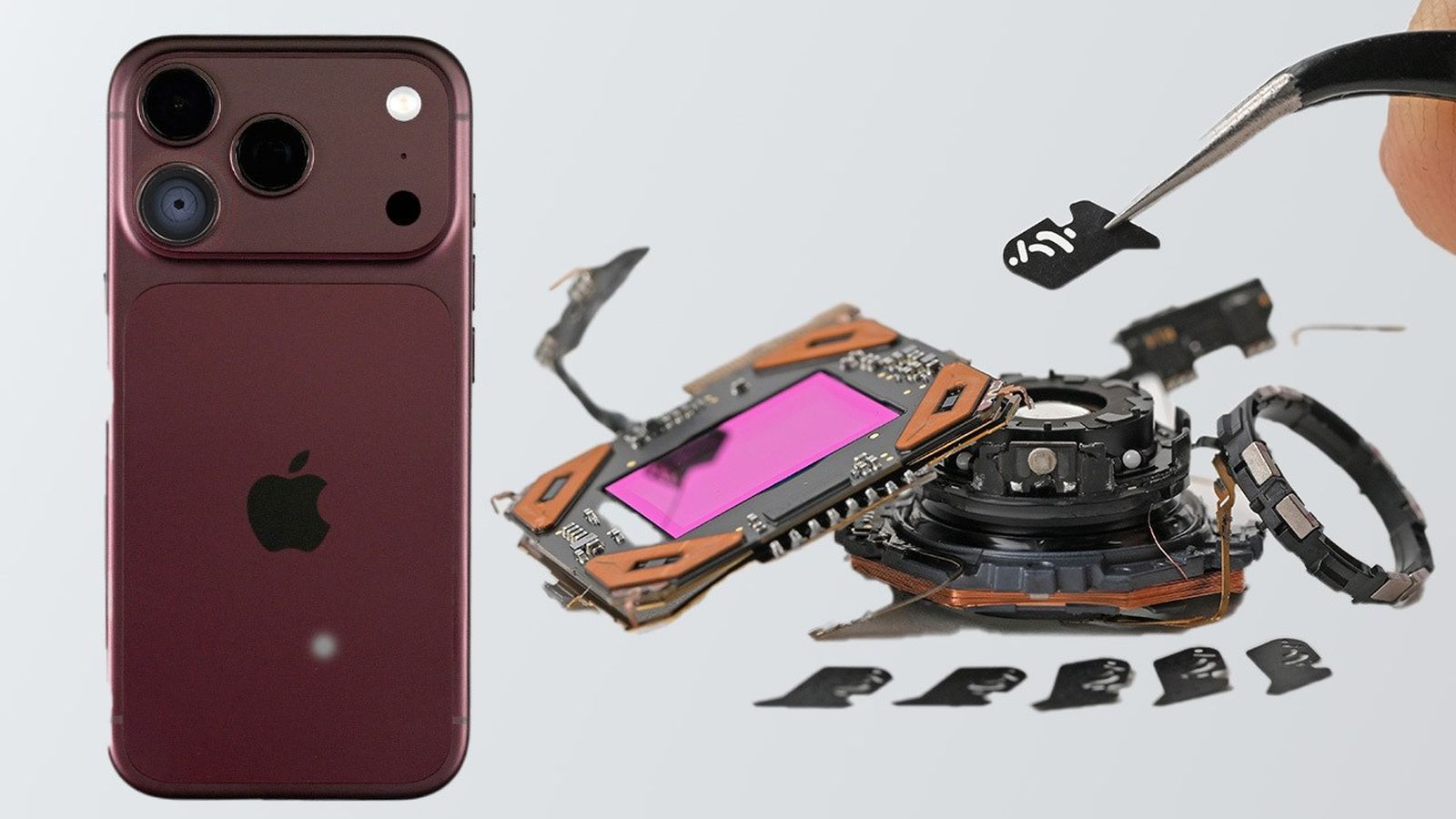
Another engineering highlight uncovered during iFixit’s teardown is the intricate variable aperture mechanism built directly into the primary camera array on both the iPhone 18 Pro and iPhone 18 Pro Max. Variable aperture technology represents a notable hardware leap forward for Apple’s mobile photography stack, allowing the camera to physically adjust its lens opening to control the amount of light reaching the sensor and natively alter the physical depth of field.
The teardown offers a rare, high-resolution view of the miniature mechanical blades, precise actuators, and control systems packed into the tightly constrained camera housing. Seeing the physical movement of the mechanical aperture inside such a small form factor underscores the mechanical complexity required to bring traditional DSLR-style optical controls to a modern smartphone chassis, marking one of the most mechanically dense camera modules Apple has produced.
The teardown also illuminates Apple’s ongoing global transition toward purely digital cellular connectivity, detailing the exact geographic distribution of its trayless device design. The eSIM-only versions of the iPhone 18 Pro and iPhone 18 Pro Max are distributed across a specific set of international markets, including the United States, Canada, Mexico, Japan, Saudi Arabia, the United Arab Emirates, Qatar, Oman, Bahrain, and Kuwait. In these specific regions, Apple has completely eliminated the physical SIM card tray and its associated internal reader module from the device architecture. Conversely, for all other markets around the globe, Apple continues to ship devices outfitted with a standard physical SIM tray, maintaining backward compatibility with legacy physical SIM cards.
Removing the physical SIM card reader in select regions grants Apple valuable internal real estate, which can be repurposed for other internal components, structural reinforcement, or optimized battery placement. This divergence in internal construction effectively creates two distinct structural layouts for the same smartphone model depending on the point of sale. By comparing the eSIM-only units against their physical SIM counterparts, teardown specialists can observe how Apple reorganizes internal components when freed from the physical constraints of an external card slot and tray mechanism.
The technical insights provided by iFixit’s teardown complement the broader context of Apple’s flagship product rollouts, which debuted at the company’s "Surprise and Shine" launch event earlier in September 2026. During that presentation, Apple unveiled the iPhone 18 Pro line alongside a slate of landmark hardware announcements, including the foldable iPhone Duo, the Apple Watch Series 12, the Apple Watch Ultra 4, and fifth-generation AirPods. While the public launch presentation focused primarily on user experience, display capabilities, software features, and exterior aesthetics, the physical disassembly conducted by iFixit reveals the underlying engineering trade-offs and structural adjustments needed to make those end-user features a reality.
Modern smartphone design is an endless exercise in compromise, pitting sleek industrial aesthetics, high-performance silicon, and advanced camera optics against thermal constraints and repairability. The findings from iFixit reveal a dual narrative for the iPhone 18 Pro and iPhone 18 Pro Max. On one hand, the addition of a robust vapor chamber and a mechanical variable aperture camera system demonstrates Apple’s relentless push to expand the boundaries of mobile hardware capability. On the other hand, the placement of the NAND flash memory within the dual-layer logic board and the brittle plastic display frames present real-world obstacles for component-level repairability and the broader right-to-repair movement.
As the iPhone 18 Pro and iPhone 18 Pro Max reach consumers worldwide, third-party repair communities and independent technicians will continue to analyze and stress-test these internal components under real-world conditions. iFixit’s detailed teardown video and accompanying teardown guide provide an essential baseline for technicians attempting to navigate the nuances of the new internal layout. Whether Apple will address the display frame fragility in future manufacturing runs remains to be seen, but for now, the teardown provides the definitive technical look inside Apple’s latest Pro-tier smartphones, confirming that internal structural complexity continues to rise alongside mobile processing power.
 macOS & Apple IT Support
Apple Smart Home Launch Details Surface Ahead of NYC Event: New Home Hub, HomePod Mini 2, and Apple TV 4K Revealed in Leaks
Just two days before Apple hosts its "Welcome home" experience in New...
 macOS & Apple IT Support
Apple Expands watchOS 27.0.1 Update to All Compatible Apple Watch Models Following Targeted Initial Patch
Apple has officially broadened the distribution of watchOS 27.0.1, making the software...
 macOS & Apple IT Support
Amazon Launches First Discounts on Apple Watch Ultra 4 and Series 12 Following Official Release
Following the official market arrival of Apple’s newest wearable lineup, retail channels...







