
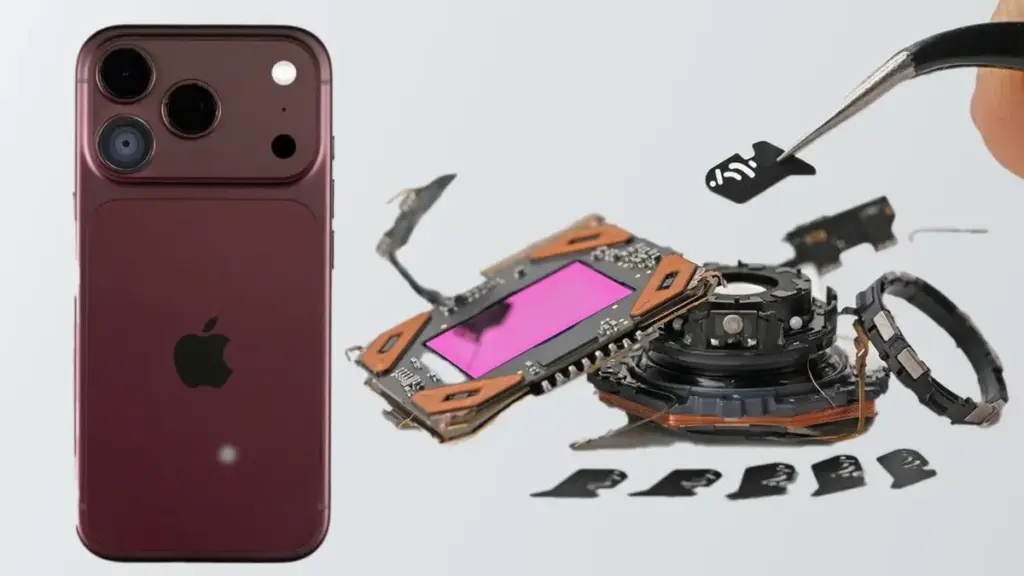
The teardown also illuminates Apple’s ongoing global transition toward purely digital cellular connectivity, detailing the exact geographic distribution of its trayless device design. The eSIM-only versions of the iPhone 18 Pro and iPhone 18 Pro Max are distributed across a specific set of international markets, including the United States, Canada, Mexico, Japan, Saudi Arabia, the United Arab Emirates, Qatar, Oman, Bahrain, and Kuwait. In these specific regions, Apple has completely eliminated the physical SIM card tray and its associated internal reader module from the device architecture. Conversely, for all other markets around the globe, Apple continues to ship devices outfitted with a standard physical SIM tray, maintaining backward compatibility with legacy physical SIM cards.
Removing the physical SIM card reader in select regions grants Apple valuable internal real estate, which can be repurposed for other internal components, structural reinforcement, or optimized battery placement. This divergence in internal construction effectively creates two distinct structural layouts for the same smartphone model depending on the point of sale. By comparing the eSIM-only units against their physical SIM counterparts, teardown specialists can observe how Apple reorganizes internal components when freed from the physical constraints of an external card slot and tray mechanism.
The technical insights provided by iFixit’s teardown complement the broader context of Apple’s flagship product rollouts, which debuted at the company’s "Surprise and Shine" launch event earlier in September 2026. During that presentation, Apple unveiled the iPhone 18 Pro line alongside a slate of landmark hardware announcements, including the foldable iPhone Duo, the Apple Watch Series 12, the Apple Watch Ultra 4, and fifth-generation AirPods. While the public launch presentation focused primarily on user experience, display capabilities, software features, and exterior aesthetics, the physical disassembly conducted by iFixit reveals the underlying engineering trade-offs and structural adjustments needed to make those end-user features a reality.
Modern smartphone design is an endless exercise in compromise, pitting sleek industrial aesthetics, high-performance silicon, and advanced camera optics against thermal constraints and repairability. The findings from iFixit reveal a dual narrative for the iPhone 18 Pro and iPhone 18 Pro Max. On one hand, the addition of a robust vapor chamber and a mechanical variable aperture camera system demonstrates Apple’s relentless push to expand the boundaries of mobile hardware capability. On the other hand, the placement of the NAND flash memory within the dual-layer logic board and the brittle plastic display frames present real-world obstacles for component-level repairability and the broader right-to-repair movement.
As the iPhone 18 Pro and iPhone 18 Pro Max reach consumers worldwide, third-party repair communities and independent technicians will continue to analyze and stress-test these internal components under real-world conditions. iFixit’s detailed teardown video and accompanying teardown guide provide an essential baseline for technicians attempting to navigate the nuances of the new internal layout. Whether Apple will address the display frame fragility in future manufacturing runs remains to be seen, but for now, the teardown provides the definitive technical look inside Apple’s latest Pro-tier smartphones, confirming that internal structural complexity continues to rise alongside mobile processing power.
 macOS & Apple IT Support
Amazon Launches Early Prime Day Sales Across Apple’s Latest Lineup, Cutting Prices on MacBooks, iPads, AirPods, and Apple Watches
Amazon has officially kicked off an extensive wave of early discounts ahead...
 macOS & Apple IT Support
Apple Reverts to Soldered Storage on M6 and M5 Pro Mac Mini Models, Halving Base SSD Speeds via Single NAND Setup
Apple’s latest update to the Mac mini line brings a significant architectural...
 macOS & Apple IT Support
Anthropic Updates Usage Policy to Ban Cruel and Abusive Treatment of Claude AI Models
Artificial intelligence safety startup Anthropic has officially updated its Acceptable Use Policy,...







