
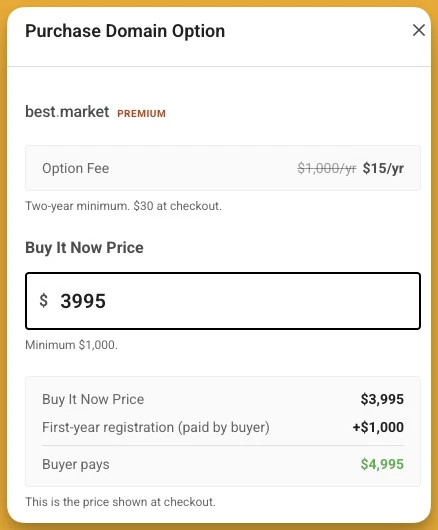
Furthermore, the sales ecosystem for these options is currently a closed loop. For the time being, investors who secure an option must sell the domain through the Deqo platform. This means the domains will not be automatically distributed through other major aftermarket marketplaces or their respective distribution networks. The primary paths to a sale are either through direct traffic to the domain’s landing page on Deqo or through the investor’s own outbound sales efforts. If a buyer is found, the transaction is processed, and the buyer then takes over the full registration of the domain at the agreed-upon price.
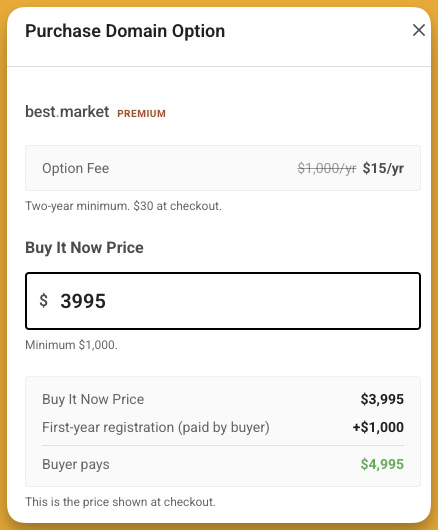
Pricing for these domains is also subject to specific guidelines. While investors have the freedom to set their own asking prices for the domains they hold options on, there is a floor to these valuations. For registry premium domains, the minimum sale price is currently set at twice the annual registration fee. This ensures that the registry receives a fair market value for its assets while still allowing the investor to realize a profit margin that justifies their marketing efforts.
The launch of this product addresses a long-standing friction point in the domain industry: the liquidity of high-end inventory. Registry premium domains are often priced at levels that reflect their perceived value to a large corporation or a well-funded startup. However, because these domains often sit on the registry’s "shelf" at high prices, they may never be seen by the specific buyer who needs them. By allowing investors to "rent" the rights to these domains for a fraction of the cost, Identity Digital is essentially outsourcing the sales and marketing of its premium inventory to a global network of independent brokers.
This model also mitigates the risk for the investor. In the traditional "buy and hold" strategy, an investor might spend thousands of dollars on a premium domain only to find that the market demand isn’t there, or that the "holding period" lasts much longer than anticipated. If the domain doesn’t sell within a few years, the investor faces the difficult choice of either continuing to pay high renewal fees or dropping the domain and losing their initial investment. With the $30 two-year option, the "loss" in a worst-case scenario is capped at a very low level, allowing investors to take more shots on goal across a wider variety of extensions and keywords.
Identity Digital’s Lonergan expressed optimism that this is only the beginning for the domain options product. While Deqo is the launch partner, the registry is open to the idea of other aftermarket platforms eventually supporting the options model. If other major marketplaces integrate this functionality, it would significantly expand the potential sales channels for investors, making the options even more valuable. Such an expansion would allow for broader visibility across the "sedo-style" or "afternic-style" networks that many domain buyers use to search for inventory.
The introduction of domain options could also influence the broader strategy of domain speculators. Traditionally, "domaining" has been divided between those who focus on high-volume, low-cost "hand-registrations" and those who focus on high-value, high-cost "liquid" assets like short .com names. This new product creates a middle ground, allowing investors to play in the high-value premium space of new TLDs without the traditional capital requirements of that tier.
 Web Hosting & Domain Management
Digital Identity Crisis: The Human Cost of Terminating Third-Level .name Domains
The decision by the Internet Corporation for Assigned Names and Numbers (ICANN)...
 Web Hosting & Domain Management
Executive Leadership Transition at fTLD: Craig Schwartz to Retire as Search for Successor Begins
The landscape of the specialized domain name industry is preparing for a...
 Web Hosting & Domain Management
The Tightening Margins of the Domain Industry: Navigating the Race to the Bottom in Registrar Pricing
For decades, the business of domain name registration has functioned on a...







