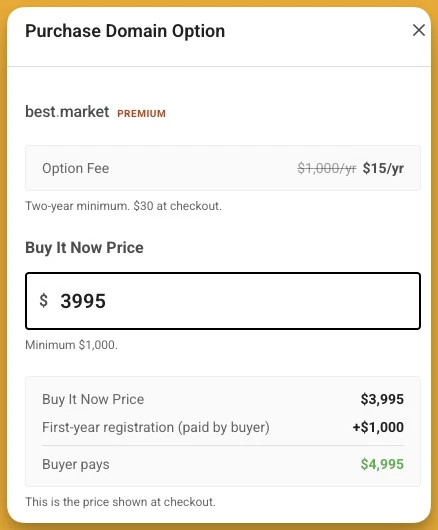
The first partner to facilitate these options is Deqo, a newly developed domain investment management platform. Deqo is spearheaded by the experienced team behind BrandBucket, a well-known marketplace in the domain industry specifically tailored for brandable assets. According to the announcement, these options will be officially available for purchase starting November 16, marking a new chapter in the relationship between registries and the secondary market.
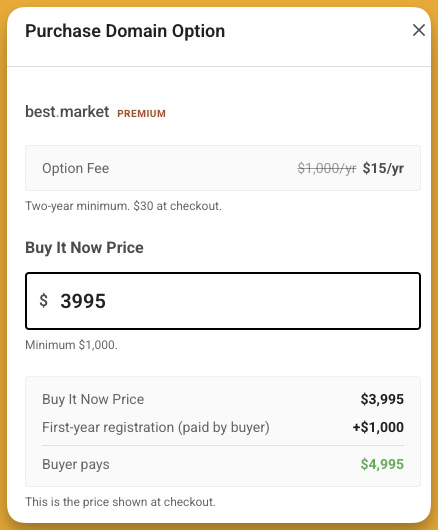
Under the mechanics of this new offering, an investor can pay a nominal fee—$20 for a standard domain or $30 for a premium domain—to secure a two-year option. This fee grants the investor the exclusive right to market and sell the domain name during that window. This model stands in stark contrast to the traditional registration process, where an investor must pay the full annual registration or renewal fee to hold the domain. For many premium domains, those annual costs can reach into the thousands of dollars, often acting as a deterrent for even seasoned investors.
The financial appeal of this product is rooted in the concept of capital efficiency. In the traditional domain investing model, a registry premium domain that carries an annual registration cost of $3,000 requires a massive capital outlay just to "hold" the asset. If an investor holds that domain for two years while looking for a buyer, they would typically be out $6,000 in renewal fees alone, in addition to the initial acquisition cost. Under the new Identity Digital model, that same investor could theoretically control the rights to that $3,000-per-year domain for a total of $30 over a two-year span. This allows the investor to list the domain for sale at a higher price and attempt to find an end-user without the crushing weight of annual carrying costs.
Brian Lonergan, the Vice President of Product Strategy at Identity Digital, noted that the product was specifically designed to provide investors with more flexibility. By reducing the upfront investment required to "shelve" valuable domains, the registry hopes to see more of its premium inventory actively marketed to potential end-users. From the perspective of Identity Digital, the program functions as a force multiplier. Rather than premium domains sitting dormant and unpurchased in the registry’s database, they are placed in the hands of motivated investors and brokers who are incentivized to find buyers through outbound sales, specialized marketing, and brokerage services.
The initial rollout of the domain options product will cover a selection of 17 top-level domains (TLDs) from Identity Digital’s extensive portfolio. This list includes a mix of high-demand and niche extensions such as .live, .io, .group, .pro, .social, .bet, and .travel. By including .io, which has become a staple for the technology and startup sectors, and .social, which appeals to the modern creator economy, Identity Digital is targeting segments of the market where premium names often command significant resale values.
However, the "option" model comes with a specific set of rules and limitations that distinguish it from outright ownership. Unlike a standard domain registration, where the registrant has full control over the technical settings of the domain, option holders cannot change the domain’s nameservers. This means the domain cannot be used to host a website, set up an email server, or be redirected to another existing project. The domain remains "parked" or essentially inactive for the duration of the option period, unless it is sold and fully registered by a buyer.
Furthermore, the sales ecosystem for these options is currently a closed loop. For the time being, investors who secure an option must sell the domain through the Deqo platform. This means the domains will not be automatically distributed through other major aftermarket marketplaces or their respective distribution networks. The primary paths to a sale are either through direct traffic to the domain’s landing page on Deqo or through the investor’s own outbound sales efforts. If a buyer is found, the transaction is processed, and the buyer then takes over the full registration of the domain at the agreed-upon price.
Pricing for these domains is also subject to specific guidelines. While investors have the freedom to set their own asking prices for the domains they hold options on, there is a floor to these valuations. For registry premium domains, the minimum sale price is currently set at twice the annual registration fee. This ensures that the registry receives a fair market value for its assets while still allowing the investor to realize a profit margin that justifies their marketing efforts.
The launch of this product addresses a long-standing friction point in the domain industry: the liquidity of high-end inventory. Registry premium domains are often priced at levels that reflect their perceived value to a large corporation or a well-funded startup. However, because these domains often sit on the registry’s "shelf" at high prices, they may never be seen by the specific buyer who needs them. By allowing investors to "rent" the rights to these domains for a fraction of the cost, Identity Digital is essentially outsourcing the sales and marketing of its premium inventory to a global network of independent brokers.
This model also mitigates the risk for the investor. In the traditional "buy and hold" strategy, an investor might spend thousands of dollars on a premium domain only to find that the market demand isn’t there, or that the "holding period" lasts much longer than anticipated. If the domain doesn’t sell within a few years, the investor faces the difficult choice of either continuing to pay high renewal fees or dropping the domain and losing their initial investment. With the $30 two-year option, the "loss" in a worst-case scenario is capped at a very low level, allowing investors to take more shots on goal across a wider variety of extensions and keywords.
Identity Digital’s Lonergan expressed optimism that this is only the beginning for the domain options product. While Deqo is the launch partner, the registry is open to the idea of other aftermarket platforms eventually supporting the options model. If other major marketplaces integrate this functionality, it would significantly expand the potential sales channels for investors, making the options even more valuable. Such an expansion would allow for broader visibility across the "sedo-style" or "afternic-style" networks that many domain buyers use to search for inventory.
The introduction of domain options could also influence the broader strategy of domain speculators. Traditionally, "domaining" has been divided between those who focus on high-volume, low-cost "hand-registrations" and those who focus on high-value, high-cost "liquid" assets like short .com names. This new product creates a middle ground, allowing investors to play in the high-value premium space of new TLDs without the traditional capital requirements of that tier.
As the industry prepares for the November 16 launch, many eyes will be on Deqo to see how the user interface and the sales process function in practice. Because the team behind BrandBucket is involved, there is an expectation of a high-quality, professional presentation for the domain landing pages, which is critical for converting potential buyers who arrive at a domain.
For the domain industry, this represents a notable experiment in asset management. It borrows a concept from the real estate and financial markets—the "lease-option" or "call option"—and applies it to the digital world. By decoupling the right to sell an asset from the right to use the asset, Identity Digital is creating a new asset class within the domain name system.
The long-term success of the program will likely depend on the "sell-through" rate. If investors find that they can successfully move these premium domains through outbound sales within the two-year window, the demand for options will likely surge. Conversely, if the lack of nameserver control or the limited distribution through a single platform proves to be a hurdle, the registry may need to adjust the terms to attract more participation.
This development also highlights the ongoing evolution of Identity Digital as a company. Since its formation through the consolidation of major registry players, the company has consistently looked for ways to innovate within the "New gTLD" space. By focusing on products that support the investor ecosystem, they are strengthening the secondary market for their extensions, which in turn can drive more awareness and adoption of non-.com endings.
As the launch date approaches, the domain community is expected to scrutinize the list of available domains and the specific terms of the Deqo partnership. For those interested in a deeper dive into the mechanics and the strategic thinking behind this move, further insights are expected to be shared in the upcoming Domain Name Wire Podcast, where the nuances of this "options" product will likely be discussed in greater detail. For now, the move stands as one of the most significant structural changes to premium domain sales in recent years, offering a low-risk, high-reward path for those willing to put in the work to find the right buyers for the internet’s most valuable addresses.
 Web Hosting & Domain Management
The Paradox of the Dot-Brand: Why Corporations are Rushing to Secure TLDs Despite a Decade of Disappointments
The landscape of the internet’s naming system is currently witnessing a strange...
 Web Hosting & Domain Management
The High-Stakes Mystery of the Internet’s Most Expensive Ghost Domains
In the fast-paced world of digital real estate, where a single word...
 Web Hosting & Domain Management
Verisign Announces Launch Dates for .web Following Decade-Long Legal Stalemate
After more than ten years of administrative hurdles, high-stakes auctions, and protracted...