
The endorsement from Apple’s marketing chief highlights a continuing trend in which top Hollywood creative talent relies on standard iOS devices to streamline high-budget film sets. While iPhones have frequently been showcased for their direct video recording capabilities in high-profile commercial shoots and feature films, Cregger’s process underscores a different, equally vital aspect of modern film production: pre-production planning and on-set communication.

In traditional Hollywood filmmaking, directors and cinematographers historically relied on bulky, standalone optical viewfinders, manual light meters, and physical viewfinders fitted with heavy prime lenses to scout locations and plan out shots. Dedicated director’s viewfinders allowed filmmakers to visualize how a particular scene would look through specific camera formats and focal lengths, but the process was often time-consuming, expensive, and difficult to share instantly across large, multifaceted production departments.
Apps like Cadrage transform the iPhone into a customizable digital viewfinder. By calibrating the smartphone camera to match the exact sensor size, aspect ratio, and lens packages of professional cinema cameras—such as those manufactured by ARRI, RED, or Sony—the app allows a director to stand on a location and see precisely what a 35mm, 50mm, or 85mm cinema lens will capture on set. Cregger’s workflow leverages this capability to bridge the gap between abstract creative vision and practical set management. By translating those digital lens previews into physical printouts, Cregger provides his cinematographers, key grips, gaffers, and script supervisors with concrete reference photos, eliminating guesswork during tight shooting schedules where every minute on set carries substantial financial cost.
Cregger’s rise as a prominent voice in contemporary genre cinema has been characterized by sharp suspense, precise framing, and carefully calibrated visual reveals. His breakthrough horror thriller Barbarian earned widespread critical praise and box office success for its masterful handling of spatial tension, tight camera perspectives, and unpredictable narrative shifts—qualities that depend heavily on rigorous composition and deliberate visual planning. His subsequent project Weapons similarly demanded precise spatial organization to maintain tone and narrative rhythm. Cregger’s confirmation that both films were comprehensively photographed on an iPhone prior to principal photography underscores how crucial rigorous pre-visualization is to executing high-stakes visual suspense.
 macOS & Apple IT Support
Apple Mandates Developer Disclosures for Location Sharing and Dating Features to Update App Store Age Ratings
Apple has announced a new set of developer requirements designed to refine...
 macOS & Apple IT Support
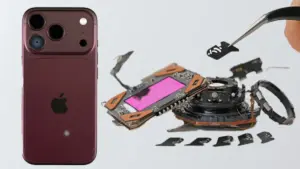
IFixit Teardown Highlights Variable Aperture, Vapor Chamber Cooling, and New Repairability Challenges in iPhone 18 Pro
In-depth device teardowns offer an unfiltered window into the intricate engineering hidden...
 macOS & Apple IT Support
Apple Confirms iPhone 18 Pro Max Cellular Outage on AT&T Network, Recommends Full Device Replacement for Affected Hardware
Apple has officially acknowledged a persistent technical issue impacting its latest flagship...