Apple’s senior vice president of worldwide marketing, Greg Joswiak, has shared a video featurette detailing how filmmaker Zach Cregger integrates the iPhone into his director’s workflow. The video, released alongside the digital launch of Cregger’s latest feature film, Resident Evil, offers an insider’s look at the pre-visualization and shot-planning techniques that the director relies on before rolling cameras on major motion picture sets.
In the featurette, Cregger explains that the ubiquitous smartphone has become one of the most critical instruments in his director’s toolkit. Long before principal photography begins on a project, Cregger utilizes his personal iPhone equipped with Cadrage, a specialized director’s viewfinder application designed for cinematographers and filmmakers. Using this combination of hardware and software, Cregger scouts locations, establishes framing, and determines exact lens focal lengths for every shot in a production. Once these digital frames are captured and curated on the device, Cregger prints physical hard copies of the image sequence to distribute directly to his camera crew, department heads, and production staff, ensuring that the entire team shares an unambiguous visual blueprint ahead of filming.
The practice of thoroughly pre-visualizing feature films using mobile technology is not a new experiment for the director. Cregger revealed that he relied on this identical photo-based workflow throughout the making of his critically acclaimed original horror film Barbarian as well as his follow-up feature Weapons. According to Cregger, every single scene across both productions was meticulously blocked, framed, and photographed in advance using his iPhone setup. By mapping out every visual element—from camera positioning and field of view to specific lens choices—prior to stepping onto set, Cregger enters production with a highly detailed photo storyboard that guides the camera operators, lighting directors, and set dressers through every frame of the shooting schedule.
Reflecting on the accessibility and power of modern mobile technology for visual storytelling, Cregger emphasized how radically the barrier to entry for filmmaking has shifted over recent years. He noted that the tools required to compose, plan, and construct a full-length cinematic motion picture are now readily accessible to virtually anyone carrying a modern smartphone. In his comments during the Apple featurette, Cregger summarized this philosophy plainly, stating that everybody can make a movie with what is in their pocket, emphasizing that the necessary capabilities are right there in the device.
Sharing the video spotlight on his official social media account, Greg Joswiak commended Cregger’s innovative reliance on consumer technology to drive high-level feature film production. Joswiak noted that while he could not match Cregger’s affinity for genre-based fear and horror storytelling, he could certainly match the director’s enthusiasm for utilizing the iPhone as an essential tool throughout the filmmaking process.
 macOS & Apple IT Support
Apple Explores Major Siri Overhaul to Build Autonomous AI Agent Rivaling Competitors
Apple’s virtual assistant ecosystem may be approaching its most fundamental architectural shift...
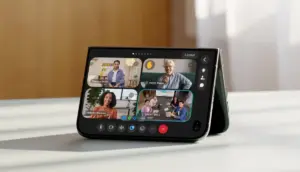 macOS & Apple IT Support
Cisco Webex Updates iOS App With Dedicated iPhone Duo Support, Flexible Display Modes, and AI Notetaking
Popular video conferencing platform Webex has officially rolled out a major software...
 macOS & Apple IT Support
Apple Expands ‘True Apple Watch Story’ Campaign with New Accounts of Emergency Medical Alerts and Life-Changing Fitness Transformations
Apple has officially released the latest installments in its ongoing "True Apple...