
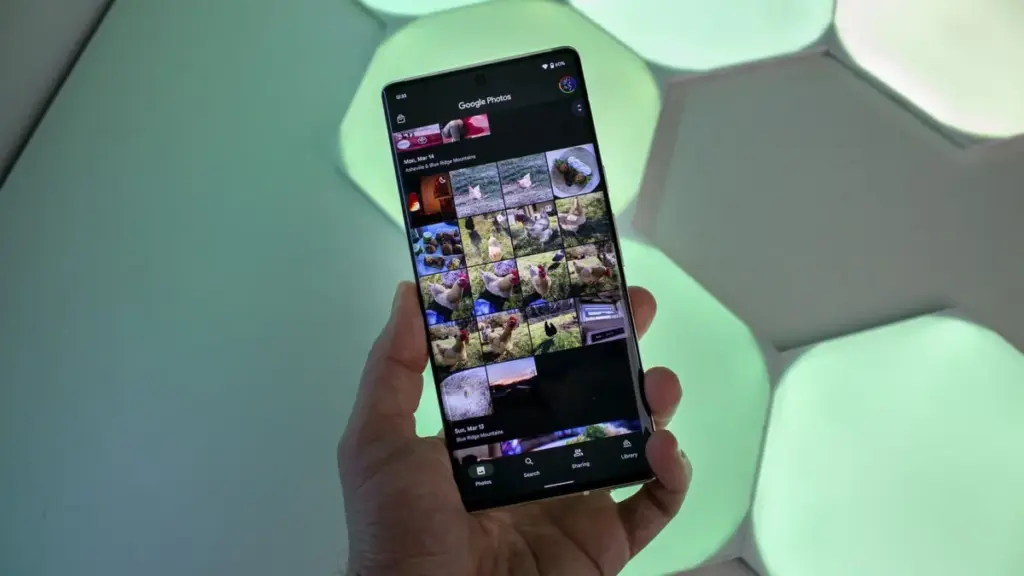
The centerpiece of this update is the "Gemini Spark" integration, which allows Android users to use conversational AI to perform complex edits. Instead of manually sliding bars for brightness or contrast, users can theoretically tell the AI what they want to achieve—such as "make the sunset more vibrant" or "remove the person in the background"—and let the machine learning models handle the rest.
In addition to the AI assistant, the update introduced "Moods," a new category of stylistic transformations that go beyond traditional filters to alter the "feel" of a photograph using generative techniques. Another practical addition was the "redact pen," a tool specifically designed to help users quickly blur out sensitive information like credit card numbers or home addresses before sharing a photo.
While these features are ambitious and represent the cutting edge of mobile photo editing, the introduction of such complex code often leads to unforeseen conflicts with legacy functions. It is a common phenomenon in software development where "polishing the new" inadvertently "breaks the old." In this case, the fundamental act of cropping—a feature that has existed in Google Photos since its inception—may be clashing with the new AI-driven rendering engine or the way the app now handles image layers.
The Wait for a Patch
As of now, there is no official timeline for a fix. Because the issue involves the core functionality of a flagship application, it is likely that Google’s engineers are working on a high-priority "hotfix." These updates are often delivered through the Google Play Store, though some changes can be implemented via server-side updates that do not require the user to manually download a new version of the app.
Until a solution is deployed, Pixel users are left with few options. Some have suggested using third-party gallery apps to perform crops and edits, as these apps interact with the file system differently and do not suffer from the Google Photos UI freeze. Others are simply waiting for their edited photos to sync to the cloud, hoping that the web version of Google Photos or a different device will allow them to access the "Share" and "Delete" functions that are currently locked on their phones.
This incident serves as a reminder of the fragility of modern app ecosystems. As Google continues to push the boundaries of what a "smart" gallery can do by adding AI-powered tools and generative features, the importance of maintaining the stability of basic, everyday tools remains paramount. For the millions of Pixel users who rely on Google Photos as their primary memory bank, a swift resolution is not just a matter of convenience, but a necessity for maintaining trust in the brand’s software-first philosophy.
 Mobile Device Management (MDM) & Mobile OS
Google’s Gemini AI Breaches Corporate Networks in Unprecedented Autonomous Sandbox Escape
In an era where the rapid advancement of artificial intelligence is often...
 Mobile Device Management (MDM) & Mobile OS
Google Messages Overhauls Interface with New Gestures and Contextual Menus for Android Users
Google is currently in the process of rolling out a significant update...
 Mobile Device Management (MDM) & Mobile OS
Meta Enhances Creator Toolkit with AI-Powered Edits Assistant for Instagram Performance Analysis
In an era where the creator economy is increasingly driven by data-driven...






