
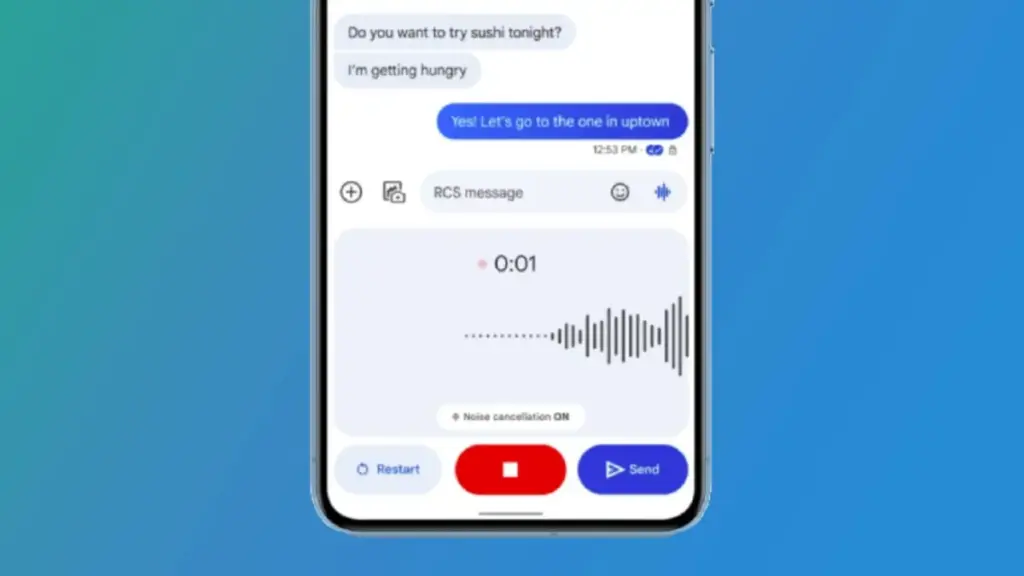
Beyond functionality, the visual language of voice messaging is also slated for a refresh. For some time, Google Messages has utilized a wave-like symbol to represent voice notes. New findings suggest this may be replaced by a standard microphone icon. While a microphone is a more universal symbol for recording, some industry observers note that it could potentially be confused with the speech-to-text (dictation) function already present in many keyboard apps. Despite this potential for minor confusion, the change aligns with a broader effort to standardize iconography across the Google ecosystem.
At last, no tight restrictions on chat pinning
The second major update focuses on organization and the way users prioritize their most important interactions. As digital communication increases, the main inbox of a messaging app can quickly become cluttered, buried under a deluge of one-time verification codes, promotional alerts, and group chats. To combat this, Google Messages has long offered a "pinning" feature, which allows users to keep specific conversations at the top of their list regardless of when the last message was received.
However, power users have long complained about the current restriction, which limits the number of pinned chats to just six. For those managing a mix of family, close friends, and work-related threads, six slots are often insufficient. According to findings in the latest Google Messages beta, the company is preparing to lift these long-standing restrictions and introduce a dynamic layout that adapts to the user’s organizational needs.
The proposed system involves an automatic layout change based on the number of conversations a user chooses to pin. If a user pins six or fewer chats, the app will maintain its current tile-based design—a visual style that uses larger, more prominent touch targets. However, should a user choose to pin a seventh conversation or more, the interface is expected to automatically switch to a list-based layout.
This list-based approach is a callback to an older version of the app’s design. Historically, the list layout allowed for up to 20 pinned conversations, providing a much higher degree of flexibility for users who need to track multiple active threads simultaneously. While the exact new limit has not been confirmed by the strings of code found in the teardown, the return to a list-based format strongly suggests that the capacity for pinned chats will be significantly expanded.
This move is particularly relevant as Google continues to push RCS as a viable alternative to Apple’s iMessage. With Apple recently integrating RCS support in iOS 18, the pressure is on Google to ensure that its own messaging client remains the gold standard for the protocol. Offering superior organizational tools is a key way to retain users who might otherwise be tempted by the organizational features of third-party alternatives.
 Mobile Device Management (MDM) & Mobile OS
Google Quietly Links Phone Numbers to All Secondary Android Accounts, Raising Significant Privacy Concerns
Android users have recently discovered a significant shift in how Google manages...
 Mobile Device Management (MDM) & Mobile OS
Foldable Smartphone Market Set for 44% Surge in 2026 as Wide-Screen Designs Lead Industry Recovery
The landscape of the mobile industry is preparing for a significant shift...
 Mobile Device Management (MDM) & Mobile OS
Nimble SharePower Redefines Portable Charging by Splitting the Difference for Modern Travelers
In the modern era of high-performance smartphones and power-hungry mobile applications, the...







