
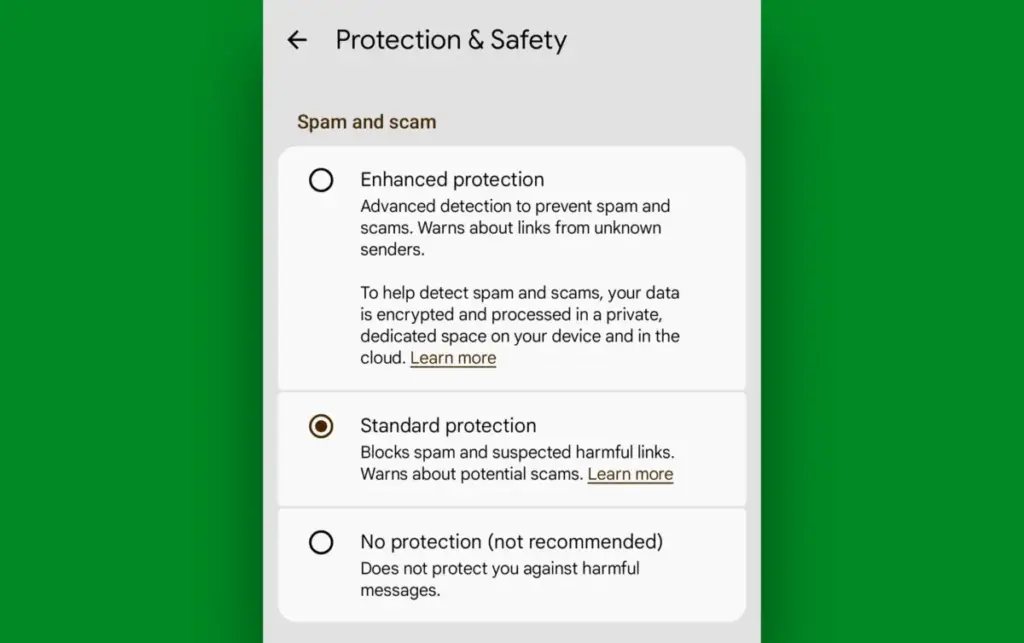

First, the system implements advanced link scanning. When a message arrives containing a URL, the app analyzes the destination without compromising user privacy. If the link exhibits characteristics common to known phishing sites or suspicious domains, the user is presented with a clear warning. This is particularly vital in combating quishing and smishing, where the goal is almost always to drive the user to a malicious external site.
Second, the update improves the identification of suspicious senders. By analyzing patterns of behavior—such as messages coming from unrecognized international numbers or senders that fit the profile of automated scam bots—the system can flag conversations before the user even reads the content. This serves as a psychological barrier, immediately putting the recipient on high alert.
Finally, the system includes sensitive content protection. This involves identifying messages that appear to be soliciting high-risk information, such as passwords, one-time verification codes, or financial details. By recognizing the language of a scam, the app can warn the user that the request is highly unusual for a standard SMS or RCS interaction.
A critical component of this rollout is Google’s commitment to a privacy-first architecture. The company has stated that these features rely on a combination of on-device processing and secure, cloud-based computing. The cloud elements occur within an encrypted, dedicated space, ensuring that the content of the messages remains inaccessible to third parties, including Google itself. This balance allows for high-level security analysis without sacrificing the end-to-end privacy that modern messaging users expect.
The Path to Early Adoption
While Google typically rolls out these features in stages, Android users do not necessarily have to wait for the official global release to reach their specific device or carrier. Because the Enhanced Protection mode is tied to the Google Messages app and the underlying Google Play Services, users can manually opt into the latest security versions to gain immediate access.
The first step in this process involves the Google Messages beta program. The beta channel allows users to test upcoming features before they are finalized for the general public. While beta software can occasionally be less stable than final releases, for a security-focused update like Enhanced Protection, the benefits of early access often outweigh the risks for power users and those concerned about the current wave of smishing attacks. Joining the beta is a straightforward process through the Google Play Store, typically requiring only a few taps to enroll the account and update the app.
 Small Business IT & Cloud Computing
WordPress Issues Emergency Patch for Critical RCE Vulnerability as Attackers Strike Within Hours of Disclosure
The global cybersecurity community is on high alert following the release of...
 Small Business IT & Cloud Computing
Alibaba Unveils Qwen4-Max with Claims of Massive Cost Reductions and Enhanced Cyber Defenses Amid Analyst Skepticism
Alibaba has officially pulled back the curtain on its latest flagship artificial...
 Small Business IT & Cloud Computing
Microsoft Issues Record-Breaking 1,408 Security Updates in October, While SharePoint Flaw Faces Active Attacks
The cybersecurity landscape shifted dramatically this month as Microsoft released its October...







