
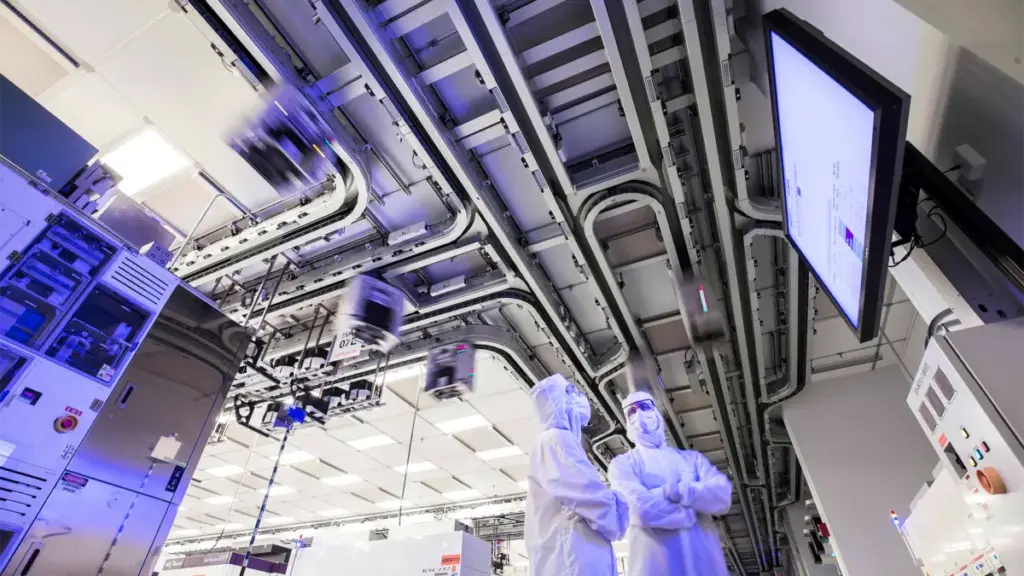
The automotive sector, in particular, is a primary target. Modern vehicles are becoming "servers on wheels," requiring high-performance processing for Advanced Driver Assistance Systems (ADAS) and autonomous driving features. However, automotive chips must also be incredibly durable, heat-resistant, and cost-effective over long production runs—areas where FD-SOI excels. By 2030, the demand for 7nm-class performance in the automotive space will be massive, and FDX Fusion is being positioned to meet that need without the price premium of mobile-focused FinFET nodes.
Beyond automotive, GlobalFoundries sees a significant opportunity in the expansion of "Edge AI." As artificial intelligence moves from massive data centers to localized devices—such as smart industrial sensors, medical wearables, and infrastructure controllers—there is a growing need for chips that can perform complex AI inference tasks while consuming minimal battery power. FDX Fusion’s ability to offer 7nm performance at lower power envelopes makes it a strong candidate for this burgeoning market.
The 2030 target also accounts for the extensive research and development required to push planar FD-SOI to these new limits. The company will need to innovate in materials science, potentially introducing new gate dielectrics or strained silicon techniques to ensure that the planar transistors can keep up with the switching speeds of their 3D counterparts.
A Different Definition of Leadership
The FDX Fusion roadmap highlights a divergence in the semiconductor industry’s philosophy. While the "Big Three" (TSMC, Samsung, Intel) continue to pursue "Moore’s Law" in its traditional sense—doubling transistor density every two years—GlobalFoundries is championing a version of leadership based on application-specific optimization.
By the time 2030 arrives, the leading-edge foundries will likely be producing 1nm or "angstrom-era" chips using Gate-All-Around (GAA) nanosheets and High-NA EUV. In that landscape, GlobalFoundries’ FDX Fusion will not be competing for the hearts of smartphone manufacturers or GPU designers. Instead, it will be competing for the foundational components of the global economy: the chips that keep cars on the road, factories running, and communications networks active.
The strategy is a bet on the idea that as the cost of the bleeding edge continues to skyrocket, a large portion of the market will seek a "middle ground"—a technology that offers the speed and efficiency of modern nodes without the prohibitive costs and complexity of the most advanced manufacturing techniques. If FDX Fusion delivers on its promise of 7nm performance through a simplified, EUV-free planar process, GlobalFoundries may find itself as the primary provider for the next generation of essential global technology.
 Hardware Reviews & PC Building
PsiQuantum Leverages Quantum Silicon Photonics to Transform AI Data Center Networking with High-Efficiency Optical Switching
In a strategic move that highlights the growing convergence between quantum computing...
 Hardware Reviews & PC Building
Judge denies motion to dismiss DRAM price-fixing lawsuit against Micron, Samsung, and SK hynix — says chipmakers…
The core of the defendants’ argument for dismissal rested on the claim...
 Hardware Reviews & PC Building
Acer Predator QD-OLED monitor now 36% off — 500 Hz refresh rate and True Black 500 certification slashed to…
The latest development in this space comes from a significant price adjustment...







