
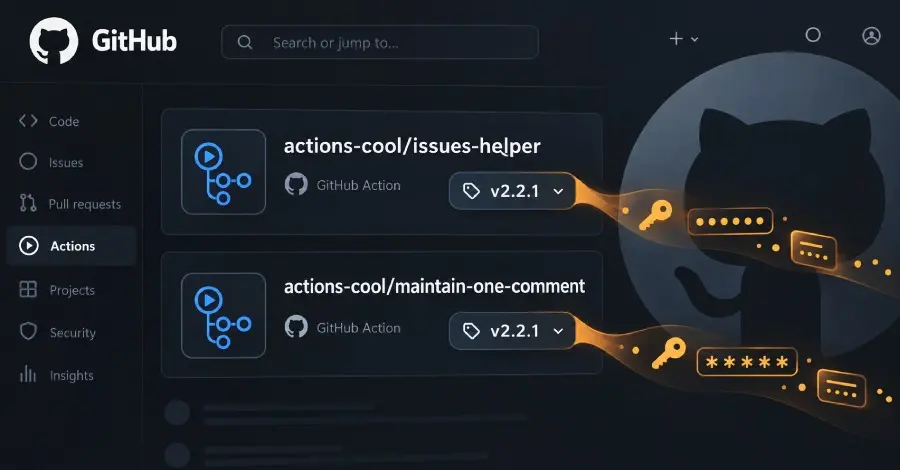
For those currently using GitHub Actions for repository management, the recommendation is clear: audit all external actions and ensure they are pinned to specific commit hashes rather than version tags. Additionally, any organization that may have run the "actions-cool" tools during the brief window of exposure on September 16 should treat their CI/CD secrets as potentially compromised. This involves rotating API keys, changing tokens, and reviewing access logs for any unusual activity originating from their build environments.

The recurrence of the Mini Shai-Hulud threat also places a spotlight on the responsibilities of platform providers like GitHub. While the swift second disabling of the repositories prevented a longer-term catastrophe, the fact that they were allowed to return to a public state while still containing malicious release tags suggests a need for more robust "tombstoning" procedures. When a repository is flagged for a security violation of this magnitude, the process for re-enabling it must involve a rigorous verification that all malicious artifacts have been purged from the version history.
As the industry continues to move toward more automated and interconnected development workflows, the surface area for supply chain attacks continues to expand. The "actions-cool" incident demonstrates that even "minor" tools—those that simply manage comments or clean up old issues—can become high-value targets if they are granted permissions to run within sensitive environments. The ability of the Mini Shai-Hulud actors to harvest credentials through such innocuous-seeming tools is a testament to the creativity of modern threat actors.
Ultimately, this second disabling of the compromised actions serves as a reminder that in the realm of cybersecurity, "gone" does not always mean "deleted." Threats can lie dormant in the version history of a repository, waiting for a lapse in administrative oversight or a mistake in repository management to resurface. For developers, the lesson is one of constant vigilance and a shift toward more defensive coding practices, such as SHA pinning, to insulate their projects from the unpredictable lifecycle of upstream dependencies. The software supply chain is only as strong as its weakest link, and as this incident proves, sometimes that link is a tool that was thought to have been neutralized months ago.
 Cybersecurity Basics & Security News
Critical Check Point Flaw Grants Unauthenticated Root Access to Management Servers
A severe security vulnerability has been identified within Check Point’s Security Management...
 Cybersecurity Basics & Security News
Google Pixel 10 and Samsung Galaxy S26 Breached as Ikotas Labs Claims Top Honors at Pwn2Own Ireland 2026
The competitive landscape of cybersecurity research reached a fever pitch this week...
 Cybersecurity Basics & Security News
Active Exploitation of Two New Unpatched Zero-Day Vulnerabilities Discovered in Citrix NetScaler Appliances
Security researchers and enterprise IT departments are on high alert following reports...







